📌 Lemon olive oil cake: the mixing technique that changes everything for an airy texture
Posted 8 March 2026 by: Admin
Preparation And Preheating: The Basics Of A Successful Cake
The success of a lemon olive oil cake begins long before the first whisk. Preheating the oven to 170°C is the fundamental step that many cooks neglect, thus compromising the final structure of their cake. This moderate temperature guarantees a gradual rise of the batter and even baking from the center to the crust, avoiding the classic trap of a burnt exterior masking an undercooked interior.
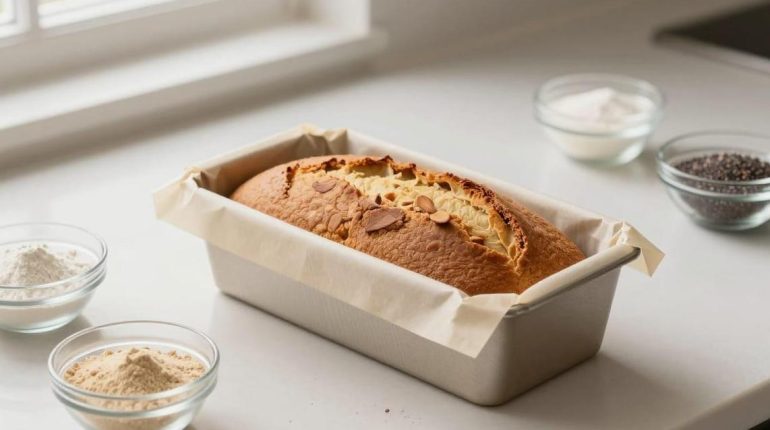
Lining the cake tin represents the second technical key to this preparation. This operation, often perceived as a simple formality, actually determines the quality of the unmolding and the final appearance of the pastry. A properly prepared tin releases the cake without tearing or deformation, preserving its visual integrity.
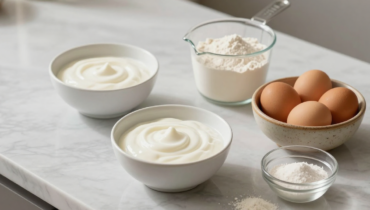
Assembling the dry ingredients deserves special attention. Flour, almond powder, poppy seeds, baking powder, and salt must be uniformly mixed before any liquid incorporation. This preliminary step ensures a homogeneous distribution of leavening agents and prevents the formation of stubborn lumps that resist subsequent whisking. The almond powder provides a melting texture while the poppy seeds introduce a subtle crunchy contrast.
These preparatory gestures, far from being trivial, directly condition the success of the emulsion that will transform these ingredients into a smooth batter.
The Perfect Emulsion: Eggs, Sugar, And Lemon Olive Oil
This emulsion phase transforms distinct ingredients into a smooth base that will determine the final texture of the cake. Whisking the eggs with the sugar until a slightly frothy consistency is obtained creates an airy structure that traps air, guaranteeing the lightness of the cake. This step requires enough vigor to whiten the mixture without reaching the ribbon stage, a delicate balance that differentiates a moist cake from a sponge cake.
Incorporating lemon olive oil marks the aromatic turning point of the recipe. Unlike traditional butter which sets at room temperature, this flavored oil keeps the cake moist for several days after baking. Its Mediterranean flavor profile intertwines naturally with the lemon acidity, creating a distinctive signature that sets this pastry apart from conventional cakes.
Adding the zest and juice of lemons occurs immediately after the oil. The zest releases its essential oils upon contact with the fats, exponentially intensifying the aromas. The juice, for its part, provides the acidity necessary to activate the baking powder and balance the richness of the oil. This triple oil-zest-juice combination generates an aromatic depth impossible to reproduce with artificial extracts.
The resulting mixture, shiny and fragrant, now awaits the incorporation of the dry ingredients to reveal its full texture.
Assembly And Baking: The Science Of Texture
Incorporating the dry ingredients represents the critical moment where the cake’s texture is decided. Mixing without overmixing is the golden rule: as soon as the flour, almond powder, poppy seeds, baking powder, and salt disappear into the liquid preparation, the movement must stop. Each additional turn of the spatula develops gluten, progressively transforming an airy batter into a compact and elastic structure. Professionals use a flexible spatula to gently fold the mass rather than whisking vigorously.
Pouring into the lined tin precedes a calibrated baking of 40 to 45 minutes at 170°C. This moderate temperature allows for a gradual rise of the cake without burning its surface before the center is cooked. Thermal fluctuations are the enemy: opening the oven prematurely causes an irreversible collapse of the still fragile structure.
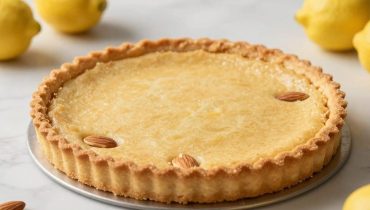
The dry blade test scientifically determines the end of baking. When a knife inserted into the center comes out without a trace of raw batter, the egg proteins have coagulated and the structure has solidified. The golden appearance of the crust visually confirms this chemical transformation. This cake, still warm and fragrant, now awaits its final sublimation, a step that will transform its presentation while accentuating its lemony character.
The Final Touch: A Radiant Lemon Glaze
The glazing occurs on a still warm cake, a strategic detail that differentiates a professional finish from a simple decoration. The mixture of icing sugar and lemon juice forms a translucent emulsion which, upon contact with residual heat, partially penetrates the golden crust. This selective absorption creates a striking contrast: a crystalline and crunchy surface covers the moist interior preserved by controlled baking.
The acidity of the lemon in the glaze amplifies the lemon notes already present in the batter thanks to the zest and flavored olive oil. This aromatic repetition builds a coherent flavor signature, from the core to the crust. The icing sugar, upon cooling, solidifies into a thin shiny film that visually enhances the cake without weighing down its texture.
The coating must be done immediately after unmolding, while steam is still escaping from the cake. Waiting for complete cooling would prevent the glaze from adhering, as it would slide off a cold, impermeable surface. This precise thermal window guarantees a harmonious integration between the cake and its protective sugar layer, sealing in the aromas while providing a brilliant aesthetic touch that announces the refined character of this Mediterranean pastry.