📌 Leek, goat cheese, and walnut patties: the easy 15-minute recipe for a melting result
Posted 8 March 2026 by: Admin
Ingredients And Preparation Of The Leeks
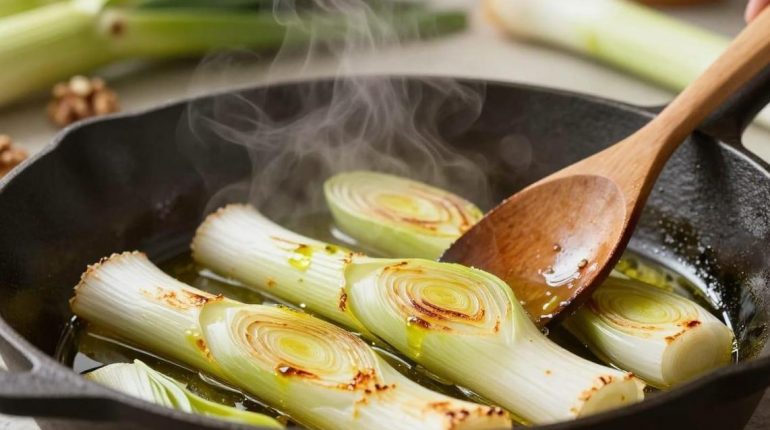
The success of these patties rests on a fundamental step: cooking the leeks. After washing and slicing them thinly, the essentials happen in the pan. Cooking over low heat for 10 to 12 minutes transforms these crunchy vegetables into a creamy and melting base, the true aromatic signature of the recipe.
This slow technique allows the leeks to reveal their natural sweetness without caramelizing. Olive oil facilitates this metamorphosis by coating each slice. Salt and pepper seasoning at the end of cooking enhances the flavors without altering the texture.
Cooling time is not a mere formality: it prevents the eggs from coagulating prematurely during subsequent mixing. While the leeks cool, coarsely crushing the walnut kernels prepares the ground for assembly. This simultaneous double preparation optimizes the realization time.
The patience invested in this first phase determines the final quality. Insufficiently cooked leeks would bring an unpleasant fibrous texture, while overcooking would make them watery. This right balance between melting and structure constitutes the foundation on which the gustatory harmony of the patty will be built.
Assembling The Batter: A Balancing Act
Once the leeks have returned to room temperature, the construction of the batter is organized methodically. In a large bowl, the melting vegetables meet the crushed walnuts, flour, baking powder, and eggs. This progressive mixing aims for a homogeneous texture where each ingredient integrates without dominating.
The cohesion of the mixture rests on a precise balance between dry and wet elements. The leeks, still slightly oily, facilitate the incorporation of the flour while the eggs bind the whole. The walnut kernels, coarsely crushed, provide relief without disrupting the structure.
Adding the crumbled goat cheese is the most delicate step. Unlike the previous energetic mixings, this one requires restraint and lightness. The goal: to preserve distinct pieces of cheese which, when cooked, will form melting pockets. Excessive mixing would emulsify the goat cheese into the mass, diluting its gustatory impact.
This minimal mixing technique guarantees a contrasting mouthfeel: the soft batter reveals touches of creamy cheese bursts. Each patty thus becomes a mosaic of textures, where the melting leek dialogues with the crunch of the walnuts and the intermittent creaminess of the goat cheese. The batter, now ready, only awaits the heat of the pan to be transformed.
Mastered Cooking Of The Patties
The final transformation takes place in the pan. A layer of oil heated over medium heat constitutes the cooking medium, its calibrated temperature guaranteeing progressive browning without charring. Waiting for the right heat determines success: an insufficiently hot pan will produce soft and soggy patties.
The precise dosage of two tablespoons of batter per patty determines the ideal thickness. This quantity allows uniform cooking to the core while developing a golden surface. Depending on the size of the pan, three to four patties can cook simultaneously without touching, thus preserving their circular shape.
The cooking time follows a rigorous pace: two minutes per side, no more. The first cooking sets the structure and browns the base. The flip, performed with a firm gesture, exposes the second side which undergoes the same treatment. This calibrated duration ensures a contrast of textures: crispy crust on the outside, soft heart where the leeks retain their melt and the goat cheese just begins to melt.
Each completed batch joins a waiting plate. The operation is repeated until the batter is exhausted, the pan maintaining its constant temperature. The freshly removed patties exhale their aromas of toasted walnuts and warm cheese. They only await an accompaniment to fully reveal their gustatory potential.
Service And The Perfect Pairing
The patties leave the pan to immediately join the plate. Service is performed without delay: the heat preserves the contrast between the golden crust and the smooth heart where the goat cheese finishes melting. Letting them cool would destroy this duality of textures that characterizes the recipe.
The accompaniment is not a matter of chance. A green salad with walnuts creates a gustatory dialogue with the patties. The kernels, present in both components of the dish, establish an aromatic coherence that amplifies their toasted flavor. The crunchy freshness of the leaves contrasts with the soft warmth of the patties, balancing the palate between richness and lightness.
This association transforms a vegetarian dish into a complete experience. The lemony vinaigrette of the salad cuts through the subtle fat of the cheese and the cooking oil. The walnuts, repeated but never redundant, weave a common thread between hot and cold, cooked and raw.
The plating requires no sophistication: the patties stacked or arranged side by side, the salad as a direct accompaniment. The essential lies in the timing. Serve hot, accompany with fresh, marry the textures. This trilogy is enough to reveal the refined simplicity of a recipe where each ingredient finds its right place.