📌 Leaf infusions: how guava, avocado, and bay laurel naturally support your metabolism and circulation
Posted 28 February 2026 by: Admin
Traditional Leaves: Natural Allies For Metabolism And Circulation
For millennia, cultures around the world have harnessed the properties of plants to support digestion, energy, and blood circulation. Long before the emergence of modern medicine, leaf infusions were first-line remedies for maintaining body balance. Today, as aging and sedentary lifestyles naturally slow down metabolism and cause heavy leg sensations, these ancestral practices are regaining scientific relevance.
Leaf infusions do not replace a balanced diet or regular physical activity, but they offer subtle metabolic support when integrated into a healthy lifestyle. Their primary benefit lies in the hydration they promote, an essential element for proper circulatory and digestive function. Beyond the water they provide, these leaves concentrate antioxidants that protect cells against oxidative stress and contribute to metabolic balance.
Preliminary research suggests that certain plant compounds in these leaves can influence the body’s management of sugars and fats. However, their effectiveness depends entirely on the regularity of consumption and their association with thoughtful dietary choices. These infusions are not miracle solutions, but natural supplements that, when consumed consistently, can participate in a progressive improvement of overall well-being.
Three Exotic Leaves With Little-Known Virtues: Guava, Avocado, And Mango
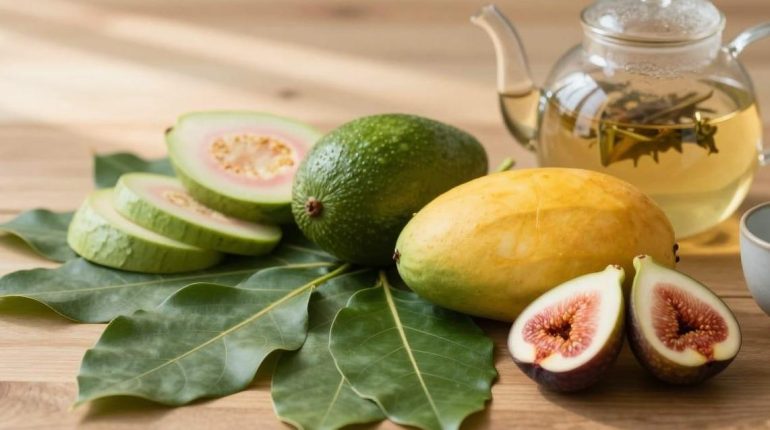
Beyond classic aromatic plants, certain leaves from tropical fruits hold unsuspected metabolic properties. Guava leaves, in particular, concentrate polyphenols that preliminary research suggests influence carbohydrate metabolism. These plant compounds seem to facilitate blood sugar regulation when accompanying a controlled diet, thus offering natural support for those monitoring their sugar balance.
Avocado leaves, less known than the fruit itself, release a deep, vegetal aroma. Traditionally infused in the evening, they are associated with improved peripheral circulation and a relaxing effect. Although clinical studies remain limited, many users report a soothing sensation that makes it a popular nightly ritual, especially for those suffering from mild circulatory tension.
As for mango leaves, their subtle flavor makes them a plant-based alternative to sugary drinks. Some traditional sources and exploratory studies mention benefits for digestion and glucose control, although these effects require confirmation through further research. Their main advantage lies in their ability to diversify the intake of plant compounds while maintaining constant hydration, a fundamental element for an efficient metabolism.
These three exotic leaves share a common point: they act gently over time and require consistent integration into a global lifestyle focused on nutritional balance.
Fig And Bay Laurel: Classics Of Herbal Tradition
Long before the rise of tropical leaves, two Mediterranean plants held a central place in ancient pharmacopoeias. Fig leaves, present in Greek and Middle Eastern herbal texts, were sought after for their action on metabolic balance. Their slightly bitter taste testifies to their concentration of active principles, which explains why traditional practitioners recommended moderate consumption – generally one to two cups per day, never on an empty stomach.
This characteristic bitterness is not a flaw, but a sign of plant compounds interacting with the digestive system. Fig leaves are thus part of a progressive approach, where effects manifest after several weeks of regular use, always as a complement to a controlled diet.
Bay leaves, omnipresent in kitchens worldwide, deserve recognition beyond their simple culinary use. Infused after meals, they facilitate digestion thanks to their aromatic essential oils, notably cineole and linalool, which soothe gastric tension and reduce feelings of heaviness. This digestive action is accompanied by mild circulatory support, as volatile compounds promote better peripheral blood fluidity.
Bay laurel presents a major practical advantage: available year-round in dried form, it keeps without losing its properties and integrates naturally into a daily routine.
Instructions For Use And Precautions For Optimal Use
Preparing a leaf infusion requires no sophisticated equipment. Simply pour simmering water (not boiling, to preserve volatile compounds) over 2 to 3 fresh leaves or a teaspoon of dried leaves. The infusion should steep for 5 to 10 minutes depending on the desired intensity, then be filtered. No added sugar: the goal is precisely to avoid the glycemic peaks that these leaves help regulate.
To maximize benefits, alternate varieties throughout the week. A rotation between guava, bay, and fig exposes the body to a wider spectrum of polyphenols and bioactive compounds, each acting on complementary metabolic mechanisms. This diversity also prevents habituation and maintains long-term effectiveness.
Three precautions are necessary. First, always wash the leaves with clear water, even organic ones, to remove residues and dust. Second, start with small quantities – one cup per day for a week – to observe your body’s reaction. Some sensitive individuals may experience mild laxative effects with mango or fig leaves. Third, consult a healthcare professional if you are pregnant, breastfeeding, taking diabetes medication, or suffer from liver pathologies.
Tangible results appear after four to six weeks of regular use, always integrated into a coherent whole: balanced meals, moderate physical activity, and stress management. The leaves amplify existing efforts; they never replace them.