📌 Knee pain: cabbage leaves as effective as some pain-relieving gels according to studies
Posted 14 March 2026 by: Admin
The Surprising Remedy That Intrigues Scientists: Cabbage On The Knee
Every year, millions of people consult for joint pain in the knee. Osteoarthritis, overuse, aging: these ailments complicate daily movements, turning a simple climb up the stairs into an ordeal. However, an unexpected solution is emerging from kitchens and laboratories.
Recent clinical trials confirm what traditional European medicine has practiced for generations: wrapping a painful knee in a cabbage leaf provides measurable relief. This ancestral practice, passed down orally in homes, is now the subject of rigorous scientific analysis validating its anti-inflammatory effectiveness.
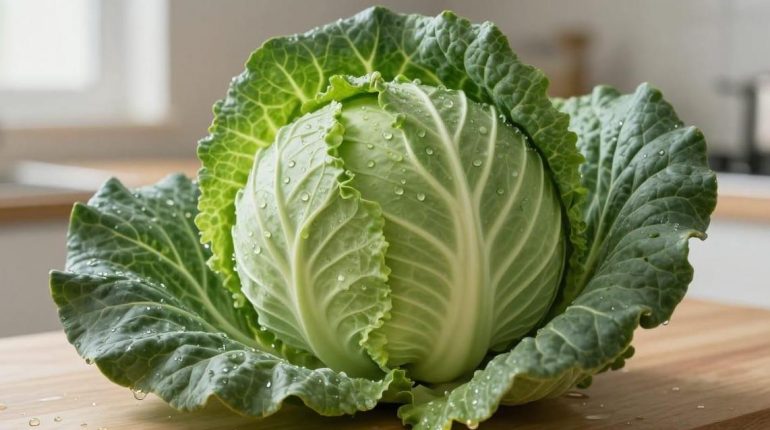
The approach appeals through its simplicity. Accessible in any market, common cabbage proves to be an unsuspected therapeutic ally. Applied directly to the skin and held by a bandage, the leaf releases active compounds for thirty to sixty minutes. Studies conducted on patients with osteoarthritis demonstrate a significant reduction in pain, comparable to results obtained with certain pharmaceutical gels.
This convergence between folk knowledge and scientific validation illustrates how overlooked remedies deserve a second look. Far from medical folklore, cabbage leaves are establishing themselves as a documented, safe, and economical complementary option for managing daily joint discomfort.
What Clinical Studies Reveal About Cabbage’s Effectiveness
This scientific validation is based on rigorous protocols. A randomized clinical trial compared three therapeutic approaches in patients suffering from knee osteoarthritis: cabbage leaf compresses, a topical diclofenac gel, and standard care without specific treatment.
After four weeks of daily application, the results surprised researchers. The group treated with cabbage leaves recorded a significantly greater decrease in pain than the control group. Even more remarkable: performance proved equivalent to that of the pharmaceutical anti-inflammatory gel, which is well-recognized for its effectiveness.
A second study confirmed these observations by measuring the functional improvement of the knee. Mobility and pain scores improved comparably to cooling patches, even surpassing some topical drug treatments. Researchers conclude that this low-cost complementary treatment deserves its place in the management of mild to moderate osteoarthritis.
This data transforms a traditional remedy into a credible therapeutic option. While scientists call for larger-scale studies, current results establish three facts: measurable pain reduction, improvement in joint stiffness, and a favorable safety profile for short-term use. Specific biological properties of cabbage explain these documented benefits.
The Natural Compounds Of Cabbage: Why It Works
These biological properties are based on a unique combination of active nutrients contained in cabbage leaves. Phytochemical analysis reveals the presence of powerful antioxidants that neutralize inflammatory processes at the cellular level. Vitamin C, present in high concentrations, stimulates collagen synthesis and accelerates the repair of damaged tissues around the joint.
Vitamin K plays a distinct but complementary role. Essential for bone health, it participates in the mineralization of cartilage and maintains the structural integrity of the knee. The sulfur compounds characteristic of cruciferous vegetables act directly on periarticular swelling, reducing the accumulation of inflammatory fluids.
Beyond these chemical actives, the physical application of the leaves generates a double mechanical effect. The gentle compression exerted by the bandage promotes lymphatic drainage, while the natural freshness of the vegetable produces a vasoconstrictive action similar to cold therapy. This physico-chemical combination explains why patients report almost immediate relief.
The interaction between these different mechanisms—biochemical anti-inflammatory and physical cooling effect—creates a therapeutic synergy that isolated conventional treatments struggle to reproduce. It remains to be determined how to correctly apply this remedy to maximize its benefits while avoiding usage errors.
Instructions And Precautions For Safe Application
In practice, preparation requires seven simple steps. Select fresh green cabbage leaves, wash them thoroughly, then remove the thick central vein to soften the plant tissue. Lightly crush the leaf with a roller or your hands to release the active compounds, apply it directly to the painful knee, secure it with a clean bandage, and leave it for 30 to 60 minutes. This procedure can be repeated once or twice daily depending on skin tolerance.
Maximum effectiveness is observed in cases of mild arthritis, temporary post-exercise swelling, or transient joint stiffness. However, this treatment has objective limits: it does not reverse cartilage degeneration nor treat severe joint pathologies. Studies document only minor skin irritations in rare patients, a profile comparable to commercial topical gels.
Before any application, perform a test on a small area of skin. Absolutely avoid open wounds or broken skin. If unusual redness appears, discontinue immediately. Consult a doctor for persistent intense pain, swelling lasting several weeks, or difficulty bending the knee—symptoms requiring professional diagnostic evaluation.
This method works as a complement to standard medical care, never as a substitute. Intelligently integrated into a global approach including strengthening exercises, maintaining a healthy weight, and an anti-inflammatory diet, this ancestral remedy offers a validated natural option for managing daily joint discomfort.