This is the recipe I pull out when friends show up unannounced on a June evening, or when I want to start a meal on an Italian note without spending time in the kitchen. Five minutes, six ingredients, one bowl — and a table where everyone lingers. The pesto and lemon dipping oil is the appetizer you always finish down to the last drop.
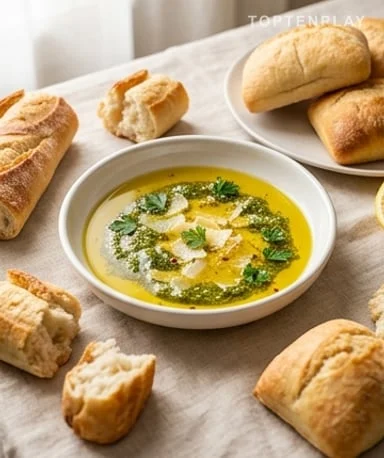
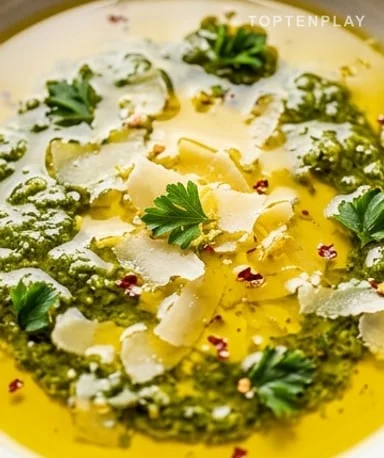
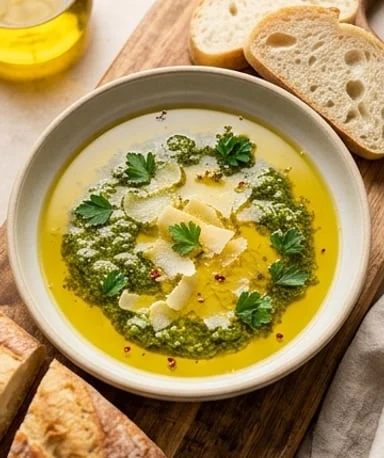
The bowl arrives at the table and you notice it before even touching it: the golden olive oil carries streaks of bright green pesto, white Parmesan shards, a few parsley leaves placed nonchalantly. The smell rises — basil, cheese, a hint of citrus — rich and fresh at the same time. You dip a piece of ciabatta and the crumb absorbs the oil in a second, loading up with pesto and zest. That’s when you understand why this recipe doesn’t need to be more complicated than this.
Why you’ll love this recipe
Ingredient Notes
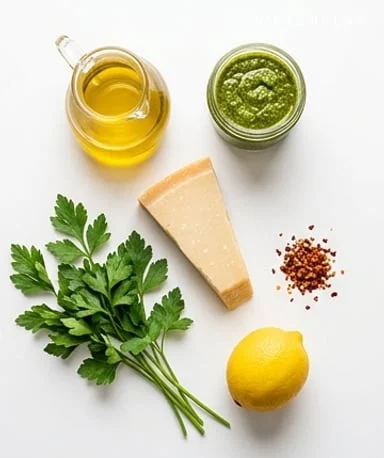
Only six ingredients: extra-virgin olive oil, pesto, Parmesan, fresh parsley, lemon zest and chili. Nothing superfluous.
- Extra-virgin olive oil : This is the base, and it must be good. Not a generic tasteless oil: look for an extra-virgin with herbaceous and slightly peppery notes, which leaves a slight sensation at the back of the throat. A mild or neutral oil will disappear behind the pesto and give nothing. If you only have a mediocre oil on hand, slightly double the amount of pesto to compensate.
- Basil pesto : Homemade or store-bought, both work — as long as the pesto is of decent quality. An overly vinegary or salty industrial pesto will unbalance the whole. Smell it before using: it should smell of fresh basil, not canned. If you make it at home, no need to prepare it the same day — pesto from the day before works perfectly.
- Grated Parmesan : Its role is twofold: it adds salty umami depth and creates little islands of texture in the oil. Grate it fresh — pre-grated Parmesan in bags contains anti-caking agents that prevent it from blending properly into the oil. A 24-month Parmigiano Reggiano, finely grated, is the best option here.
- Fresh flat-leaf parsley : It brings freshness and color, and especially a clean vegetal finish that lightens the richness of the oil and cheese. Dried parsley has no place here — it’s visually dull and tastes like dust. Chop it coarsely so it remains visible in the bowl.
- Lemon zest : This is the surprising ingredient. Grated directly over the bowl at the last moment, it releases essential oils that cut through the round richness of the olive oil and pesto. A small amount is enough — a level half-teaspoon — but its effect is immediate: the whole thing suddenly becomes brighter, more alive.
- Red pepper flakes : Optional, but recommended if you like flavors with edge. They don’t overpower the rest — they just add a slight warmth that lingers at the back of the mouth and makes you want to dip more bread. Start with a small pinch and adjust.
Start with an oil that deserves to be the star
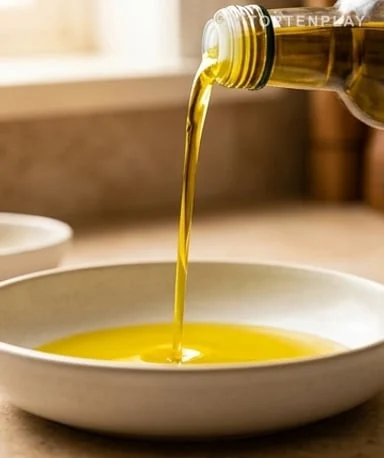
In this recipe, the oil is not a sauce base or a cooking lubricant — it is the dish. What flows into the bowl, what the bread will absorb, is it. So take the time to choose an extra-virgin with character: herbaceous notes on the nose, a slight spiciness in the mouth that indicates good polyphenol content. First pour the oil into the bowl and look at it: it should have that golden slightly green color of good cold-pressed olives. An oil that is too pale and odorless will give you a flat result, no matter the quality of the other ingredients.
Add each ingredient with the final texture in mind
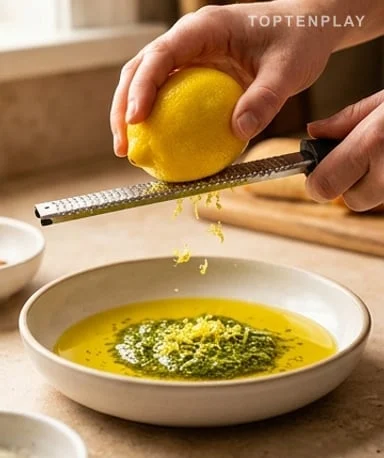
Assembling this bowl is about visual balance as much as taste. Pour the pesto directly into the oil without stirring immediately — it settles in green streaks that remain distinct, and that’s exactly the desired effect. Then add the grated Parmesan, coarsely chopped parsley, and red pepper flakes if using. Do not stir yet. Everything should remain suspended, visible, identifiable. It is only at the moment of zesting the lemon on top — the final gesture, over the bowl — that you give a light stir to marry the flavors. The result: an oil laced with green and white, smelling of basil and cheese with that discreet but present citrus undertone.
Don’t skip the zest, even if you’re in a hurry
Lemon zest is the step many skip because it seems anecdotal, and that’s a mistake. Without it, the dipping oil is good — rich, herbaceous, flavorful. With it, it becomes memorable. The essential oils in the zest are released when you grate directly over the bowl, and their citrus aroma immediately merges with the warmth of pesto and cheese. It’s not a lemon taste you perceive — it’s a lightness, a liveliness that prevents the whole from being heavy. Grate only the yellow part, never the white pith which is bitter, and use a fine zester to get delicate filaments.
Choose a bread that holds up
The dipping oil is generous: it soaks, wets, clings. A bread that is too soft collapses on contact, a bread that is too dense doesn’t let the oil penetrate. Ciabatta is the ideal choice here — its airy crumb acts like a sponge, absorbs the oil and pesto without disintegrating, and its slightly crispy crust adds bite. A traditional baguette also works very well, especially if still slightly warm. Whichever option, slice thick — thin baguette rounds don’t capture enough oil to be interesting.
Handle leftovers without losing freshness
If there is leftover oil, cover the bowl and refrigerate — it keeps for up to three days. When cold, the olive oil will slightly solidify and turn white: that’s normal, it will regain its consistency and color at room temperature. Take the bowl out about fifteen minutes before serving and give it a stir. The flavors will have even slightly evolved — the pesto and Parmesan will have had time to meld into the oil, and the result will be more homogeneous than the day before. The parsley, however, may lose some of its brightness: add a few fresh leaves before returning to the table if you want to restore the visual of the first serving.
Tips & Tricks
- Use a wide, shallow bowl rather than a deep one: the greater the contact surface between bread and oil, the better each piece is coated. A deep bowl forces you to fish for the oil with the bread instead of naturally scooping it.
- Grate the Parmesan on-site rather than using pre-grated Parmesan: pre-grated cheese contains anti-caking agents that form clumps in the oil and give it an unpleasant powdery texture. Two minutes of grating makes a real difference.
- If you prepare the bowl ahead, wait until the last moment to zest the lemon: the volatile aromas of the zest evaporate fairly quickly at room temperature. Zest just before bringing the bowl to the table for maximum effect.
- For a spicier version, add half a clove of pressed garlic directly to the oil — keeping in mind that the pesto already contains garlic. The result will be frankly garlicky, which is not a flaw if that’s what you’re after.
How long does the dipping oil keep?
Covered and refrigerated, it keeps for up to three days. The olive oil will slightly solidify when cold — that’s normal, it returns to liquid consistency after fifteen minutes at room temperature. The flavors deepen slightly from one day to the next.
Can I substitute dried parsley for fresh?
Technically yes, but the result will be visually dull and less fresh in taste. Dried parsley is more concentrated, so use half as much — about half a teaspoon. For a closer substitute, fresh chives work very well.
Can I add garlic?
Yes, half a clove grated or pressed directly into the oil integrates perfectly. Keep in mind that pesto already contains garlic, so the result will be quite garlicky — which many love, but something to anticipate if you have guests.
Is the lemon zest really essential?
It’s not essential, but it makes a real difference. Without it, the oil is rich and good. With it, the whole is brighter, less heavy, and it’s usually the thing that makes people ask ‘what’s your secret?’. Grate it at the last moment for maximum aroma.
What else can this oil be used for?
Many things: brushed on bread slices before grilling for quick garlic bread, drizzled over burrata or fresh mozzarella, used as a light dressing on roasted vegetables or arugula. You can even toss it with pasta as a quick sauce.
Can I prepare this bowl in advance?
Yes, up to an hour before serving, leaving the bowl covered at room temperature. For anything longer than an hour, refrigerate and take it out fifteen minutes before serving. In any case, wait until the last moment to grate the lemon zest — its aromas evaporate quickly.
Italian Pesto and Lemon Dipping Oil
Italian
Appetizer
An Italian-style dipping oil ready in five minutes: extra-virgin olive oil, basil pesto, Parmesan, fresh parsley and lemon zest combined in a bowl. The simplest and most effective appetizer when you have good bread on hand.
Ingredients
- 120 ml extra-virgin olive oil (good quality, with herbaceous notes)
- 4 tbsp basil pesto (homemade or quality store-bought)
- 30 g freshly grated Parmesan (preferably Parmigiano Reggiano)
- 1 bunch fresh flat-leaf parsley, coarsely chopped
- 1 lemon (zest only, preferably organic)
- 1 pinch red pepper flakes (optional, to taste)
Instructions
- 1Pour the olive oil into a wide, shallow bowl — the contact surface with the bread should be generous.
- 2Add the pesto on top without stirring: it settles in distinct green streaks in the oil.
- 3Scatter the grated Parmesan, chopped parsley, and red pepper flakes if using.
- 4Grate the lemon zest directly over the bowl to release the essential oils.
- 5Give a light stir to unify without fully homogenizing — the elements should remain visible.
- 6Serve immediately with thick slices of ciabatta or baguette, preferably still warm.
Notes
• Storage: cover and refrigerate for up to 3 days. The oil will solidify when cold — take it out 15 minutes before serving and stir.
• For a spicier version: add half a clove of pressed garlic. The pesto already contains garlic, so the result will be quite garlicky.
• Other uses: brush on bread before grilling, drizzle over burrata, use as a vinaigrette or over roasted vegetables.
• Always zest at the last moment if preparing in advance: lemon aromas evaporate quickly.
Nutrition Facts (per serving, estimated)
| 210 kcalCalories | 3 gProtein | 1 gCarbs | 22 gFat |