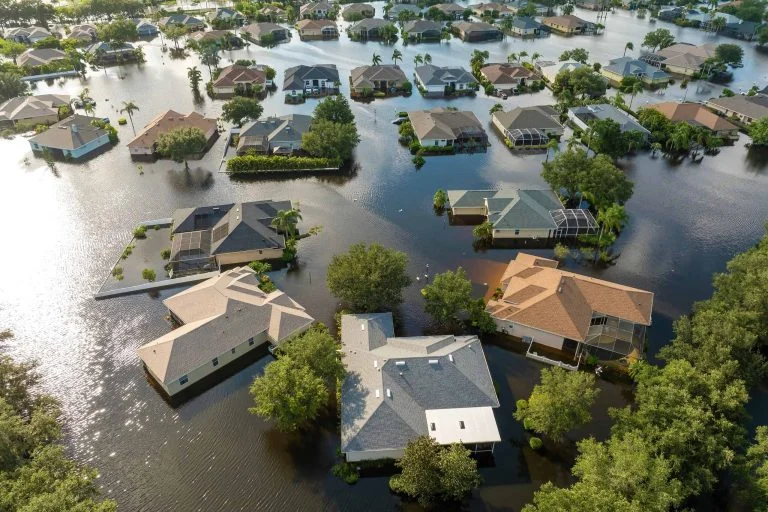
Lebanon may be the most exposed of the three. According to GlobalData‘s market analysis, war risk insurance and reinsurance are now the defining pressures on the Lebanese market, with reinsurers introducing cancellation provisions tied to regional escalation — meaning coverage that exists on paper can be withdrawn as conditions deteriorate. A Credit Libanais analysis of data from Lebanon’s Insurance Control Commission shows the country’s entire insurance market generated only around $1.3 billion in gross written premiums in 2025, with property and casualty accounting for less than 20% of that total. The figures reflect how little corporate and property risk is insured in Lebanon even in peacetime.
Why standard policies were not built for this conflict
Commercial insurance policies were drafted for an era of conventional warfare: declared conflicts between identifiable states on defined battlefields. Modern hybrid warfare — drone strikes, missile attacks, government-ordered port closures, Houthi interdiction of commercial vessels — falls into legal grey zones that carriers increasingly classify as acts of war and exclude from standard coverage. The 2017 NotPetya episode was an early warning: years of litigation followed before courts and markets settled on how to treat state-backed cyber operations. The Iran conflict is producing a similar reckoning across multiple lines simultaneously.
Cyber, physical damage, and the clauses CFOs never read
Beyond marine and property lines, the conflict has exposed a cluster of coverage gaps that Wilde argues most corporate finance teams have never seriously examined. Business interruption without direct physical damage is among the most significant. Courts have consistently required a physical loss nexus to trigger coverage, and most geopolitical disruptions produce none: a supplier goes offline because its port is closed, a shipment is delayed because a vessel operator declines to transit the strait, revenue disappears — but nothing physically broke, and no policy responds.

Confiscation and political risk coverage carries a parallel problem. Companies often assume these policies cover government interference with overseas assets, but many carve out losses tied to sanctions compliance or dealings with already-restricted jurisdictions. Contingent business interruption shows a similar gap: upstream supplier disruption may be unrecoverable if the supplier’s assets touch a sanctioned entity or territory.
Cyber exposure is, in Wilde’s assessment, "possibly the least understood risk on most corporate balance sheets." He is unambiguous: "Companies are significantly underestimating it." After the 2017 NotPetya attacks, Merck and other large corporations fought their insurers over whether Russian state-backed malware constituted an act of war. Lloyd’s of London subsequently issued market guidance requiring explicit exclusions for state-backed cyber activity; those exclusions have since migrated through the London market and into U.S. carrier forms.
Attribution compounds the problem. Determining whether an attack was state-sponsored can take months, giving carriers grounds to hold payment pending a determination. Yasir Andrabi, global head of Agentic AI Solutions at professional services firm Genpact, warns that state-affiliated cyber attacks may test conflict exclusion clauses in ways current policy language has not anticipated. The practical upshot, Wilde concludes, is that carriers are now "classifying an expanding range of events as acts of war" — a form of coverage tightening that never appears in a premium quote but becomes visible only when a claim is denied. "The biggest misconception," he says, "is that having insurance is the same as having protection."
The immediate question for the insurance market is how carriers will update policy language as the conflict evolves — and whether the expanding definition of acts of war will be formalized in standard commercial forms or continue to surface only at claims time. For CFOs, the next stress test is practical: mapping existing policy terms against the specific exposures their companies carry in energy, freight, and cyber, before a claim makes the gaps impossible to ignore. Whether courts will ultimately side with policyholders or carriers on the new generation of hybrid-warfare exclusions remains an open legal question, with the first major test cases likely still months away.
Suggested Posts
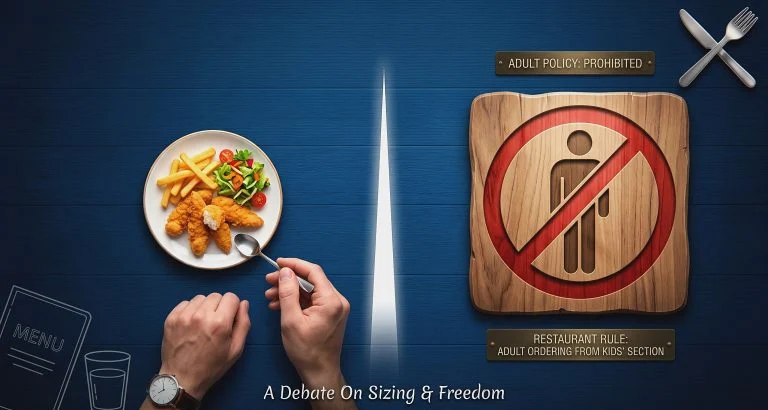
Kids’ meals for adults: the restaurant debate over portions and price
A simple question — "Is that for a child?" — has sparked a genuine debate in the restaurant world. When adults want to order…