It’s a Wednesday night, dinner is less than an hour away, and everyone is craving something hearty. This is exactly where this Instant Pot lasagna comes in. No pot of water boiling for twenty minutes, no oven turning the kitchen into a sauna—just a dish that looks like you spent two hours preparing it.
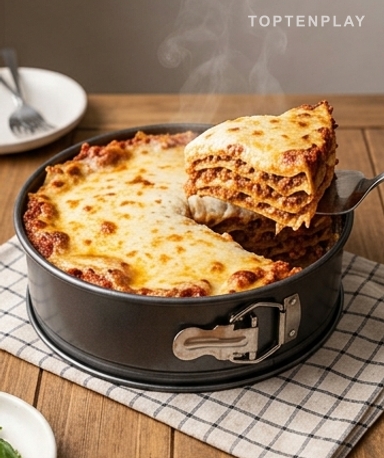
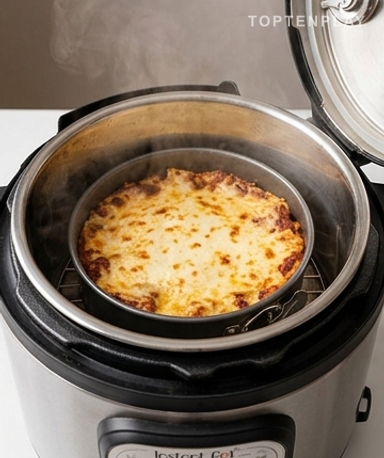
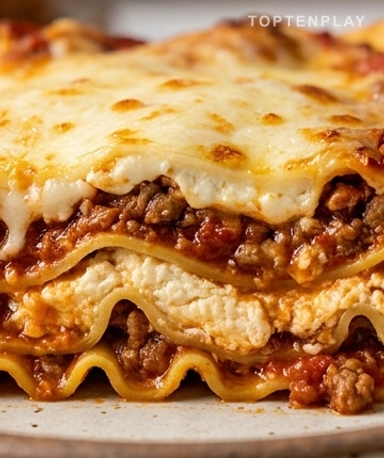
When you lift the lid of the springform pan, the mozzarella on top, having spent two minutes under the broiler, forms an amber-honey crust with small, slightly charred bubbles at the edges. The layers beneath are perfectly compact—the tomato sauce has permeated every pasta sheet during the pressure cooking, transforming them into something dense and fluffy at the same time. It smells of sautéed garlic, Italian herbs, and that warm, slightly milky scent of steaming ricotta. You cut the first slice and the cheese pulls away.
Why you’ll love this recipe
Ingredient Notes
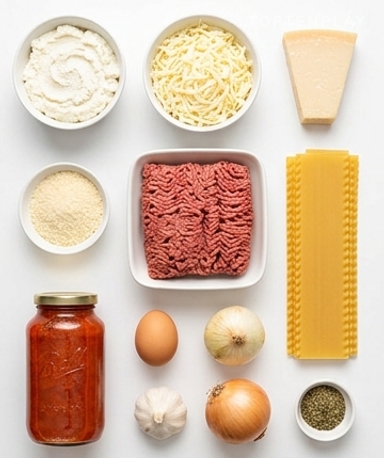
Everything you need for successful homemade lasagna: three cheeses, ground beef, marinara sauce, and no-boil noodles.
- Whole Milk Ricotta : This is the backbone of the cheese filling. Use whole milk ricotta, not low-fat—the 0% version gives a grainy, dry texture that doesn’t melt properly under heat. Supermarket brands work great, no need to visit a specialty deli.
- Shredded Mozzarella : It plays two roles: it goes into the filling to bind it, and it covers the top to form the crust under the broiler. Have a bit more on hand than you think you’ll need—we always run short when covering the top.
- No-Boil Lasagna Noodles : Non-negotiable for this recipe. Traditional noodles are too thick and cook poorly under pressure. ‘Oven-ready’ or ‘no-boil’ noodles are designed to absorb liquids directly—which is exactly what happens in the Instant Pot. Break them without hesitation to fit them into the pan.
- Jarred Marinara Sauce : A good jar really makes the difference here. Avoid ‘light’ versions which often taste flat. Barilla, Mutti, or any Italian brand you can find—the tomato-herb balance is important since it flavors the entire lasagna during pressure cooking.
- Ground Beef : Aim for a fat content around 15-20%. Leaner beef results in dry, grainy meat after cooking. A little fat is what allows the meat to stay tender and melt into the sauce without hardening.
Why I never make oven lasagna anymore
Oven lasagna takes at least an hour and a half. The water to boil, the noodles to pre-cook, the oven to preheat, and that anxiety of not knowing if it’s truly done in the center. The Instant Pot fixes all that. Pressure cooking sends steam through the entire pan uniformly, meaning the center cooks exactly like the edges. Twenty-two minutes at high pressure, and the pasta has a slight resistance under the fork—neither too firm nor soggy. That’s the result we’re looking for, and it’s reproducible every time.
The step no one takes seriously: Deglazing
When the beef is browned—truly browned, not gray, with that slightly caramelized crust that smells of garlic and melted onions—you must drain the excess fat from the pot. Not all of it, just the extra. Then comes the deglazing: pour in the water and scrape the bottom with a spatula until no stuck residue remains. This is not optional. If you skip this step, the Instant Pot will trigger the burn alert halfway through, and you’ll have to take everything apart. It happens once, never twice.
Assembling the layers without the hassle
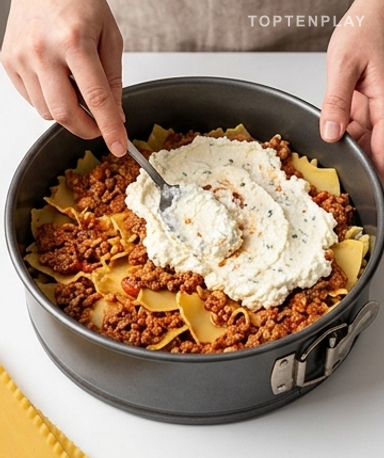
Assembly in the springform pan is simple: noodles broken into pieces to cover the bottom, sauce, beef, cheese mixture—and repeat. Two full rounds. Don’t be tempted to do three to ‘maximize’: the pan will be too full and the bottom noodles won’t cook right. Press each layer lightly with a spatula to pack it down—this helps the layers hold together. Then cover with foil, slightly tented upward, so condensation rolls down the sides rather than falling directly onto the cheese.
The broiler finish: Don’t you dare forget it
After pressure cooking, the surface of the lasagna is soft. Not bad, but soft. Two minutes under the broiler at 220°C completely changes the game: the mozzarella on top melts first, then starts to bubble, then turns that light amber-gold that crunches slightly under the fork. Watch it closely—it can go from perfect to overcooked in a minute. Then let the pan rest on a wire rack for ten minutes. The layers need to firm up, otherwise the first slice will collapse when you lift it out.
Tips & Tricks
- Always unlatch the springform pan before taking it out of the inner pot—the steam causes it to expand slightly, and forcing it without unlatching risks damaging the top layers.
- If you want to prepare the lasagna in advance and freeze it cooked, wrap it in plastic wrap and then aluminum foil. It keeps for two months in the freezer. To reheat directly from frozen in the Instant Pot, allow 45 minutes at high pressure followed by 10 minutes of natural release—it comes out as if freshly made.
- The ideal pan is 18 cm in diameter. A 20 cm pan is too large: the layers will be too thin and the pasta will cook irregularly. If you only have a 20 cm pan, add a third layer and reduce the time to 20 minutes.
Can I use a different pan than a springform pan?
An 18 cm springform pan is truly the most suitable: it fits perfectly in a 6L Instant Pot and unlatches easily to unmold without damaging the layers. A classic cake pan can work, but you’ll have more trouble removing slices without breaking everything. Avoid glass dishes: they don’t handle the thermal shock of pressure cooking well.
The Instant Pot triggered a burn alert—what should I do?
This is almost always due to beef residue stuck to the bottom of the pot before deglazing. If it happens, stop the cooking, remove the pan, deglaze the pot properly with hot water by scraping well, then restart. The lasagna in its pan doesn’t burn—it’s only the bottom of the inner pot causing the issue.
How do I store and reheat leftovers?
Leftovers keep for 4 days in the fridge, well covered. To reheat, microwave the slices for 2 minutes with a little water or sauce to prevent drying. For a crispy crust, 5 minutes in the oven at 180°C works great. Lasagna also freezes very well: in individual portions, it lasts 2 months.
Are no-boil noodles really mandatory?
Yes, it’s non-negotiable for this recipe. Traditional noodles are too thick and don’t absorb liquids the same way under pressure—you’ll end up with overcooked noodles on the outside and chalky hearts. ‘Oven-ready’ noodles are designed exactly to absorb sauce during cooking: it’s the same mechanism at work in the Instant Pot.
Can I add vegetables to this recipe?
Yes, easily. Fresh spinach can be added directly into the cheese filling without pre-cooking. Sliced mushrooms can be sautéed with the beef. However, avoid very watery vegetables like zucchini or fresh tomatoes: they release too much water during pressure cooking and make the whole dish too liquid.
How far in advance can I assemble the lasagna?
You can assemble the pan up to 24 hours in advance and keep it in the fridge, covered with foil. When you’re ready to cook, take the pan out 15 minutes to reach room temperature before starting the Instant Pot—this ensures more even cooking. The pressure cooking time remains the same.
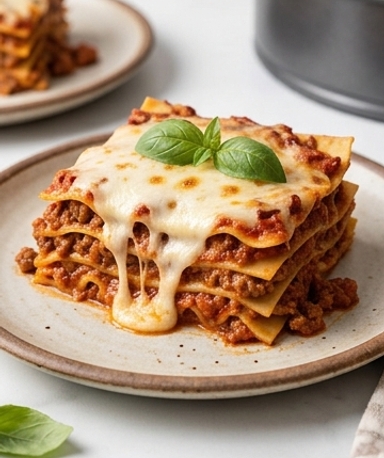
Instant Pot Lasagna
Italian
Main Course
A generous beef and three-cheese lasagna, pressure-cooked in 22 minutes. No oven, no pot of water—just the results.
Ingredients
- 1 c. à soupe olive oil
- 500g ground beef (15-20% fat)
- 3 garlic cloves, finely minced
- 1 medium onion, finely minced
- Sel et poivre to taste
- 360ml (1½ tasse) water
- 425g whole milk ricotta
- 200g shredded mozzarella
- 50g grated parmesan
- 1 egg
- 1 c. à café dried basil
- 1 c. à café dried oregano
- ½ c. à café dried thyme
- 1 c. à café Italian seasoning
- ¼ c. à café red pepper flakes
- 700g (1 bocal) marinara sauce
- 200g no-boil lasagna noodles
- 100g shredded mozzarella (for the top)
Instructions
- 1Set the Instant Pot to Sauté mode. Heat the olive oil, then brown the ground beef, crumbling it until well browned, about 5 minutes.
- 2Drain the excess fat. Add the garlic, onion, salt and pepper, and cook for another 2 minutes, stirring often.
- 3Transfer the meat to a bowl. Pour 360ml of water into the inner pot and carefully scrape the bottom with a spatula to remove all residues.
- 4In a bowl, mix the ricotta, 200g of mozzarella, the parmesan, the egg, and all the herbs. Set aside.
- 5Lightly grease an 18 cm springform pan. Break the lasagna sheets to cover the bottom. Spread 200g of sauce, half the meat, and half the cheese mixture. Press down gently.
- 6Repeat the same layers (noodles, sauce, meat, cheese). Finish with a layer of noodles, the remaining sauce, and 50g of mozzarella. Cover with slightly tented aluminum foil.
- 7Place the trivet in the inner pot. Place the pan on top. Close and lock the lid, valve in Sealing position.
- 8Set to Manual/Pressure Cook High for 22 minutes. When finished, allow the pressure to release naturally for 15 minutes, then release the remaining pressure manually.
- 9Remove the pan and place it on a cooling rack. Remove the foil, and sprinkle with the remaining 50g of mozzarella.
- 10Place under the oven broiler at 220°C for 2 to 3 minutes until an amber-gold crust forms. Let rest for 10 minutes before unlatching and serving.
Notes
• Make ahead: the pan can be prepared up to 24h in advance and stored in the fridge covered with foil. Let sit for 15 minutes at room temperature before cooking.
• Freezing: cooked lasagna freezes very well in individual portions (2 months). To reheat from frozen in the Instant Pot: 45 minutes at high pressure + 10 minutes natural release.
• Pan requirement: use an 18 cm springform pan for a 6L Instant Pot. A 20 cm pan results in thinner layers—reduce cooking time to 20 minutes if using.
Nutrition Facts (per serving, estimated)
| 520 kcalCalories | 36gProtein | 31gCarbs | 27gFat |