It starts with the warm scent of paprika gently clinging to the oil, then the slight sizzle of beef browning at the bottom of the pot. Hungarian goulash is the perfect dish to impress without playing the complicated chef: a good slow cook, a few solid ingredients, and a dark red sauce that does all the work.
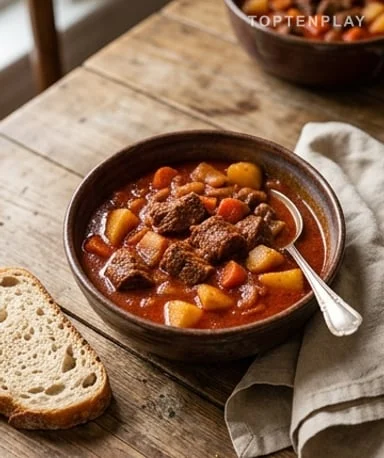
In the pot, the sauce becomes thick, shiny, almost velvety, with that deep red color that immediately promises a hearty dish. The beef relaxes as it cooks, the pieces of pepper melt into the juice, and the smell becomes rounder, softer, less sharp than at the start. You barely hear the simmer, just a few slow bubbles rising to the surface. It’s exactly the kind of dish that makes you feel like you’ve spent all day in the kitchen, when really you’ve mostly let the low heat do its job.
Why you’ll love this recipe
Ingredient Notes
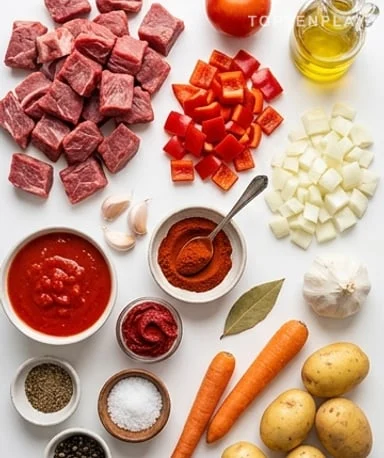
Beef for stewing, paprika, onion, bell pepper, tomato and a few simple vegetables: nothing complicated, but you need good basics.
- Beef for stewing : It provides the base of the dish, with a texture that becomes tender after long cooking. Choose chuck, brisket, or neck rather than a lean cut, otherwise the meat may stay dry despite the sauce.
- Paprika : It’s what defines goulash, with its red color and warm aroma. Choose a good quality sweet paprika, fragrant when opening the jar; if it smells dusty, it will give a flat sauce.
- Onion : It builds the sweet foundation of the dish and rounds out the acidity of the tomato. Let it become translucent and soft before adding the meat, because a rushed onion remains aggressive on the palate.
- Red bell pepper : It reinforces the color and brings a vegetable sweetness that melts into the sauce. If you don’t have one, a finely chopped carrot can help achieve that sweetness, though the flavor will be different.
- Crushed tomatoes and tomato paste : The tomatoes provide the liquid, the paste gives body and a denser flavor. Cook the paste for a minute with the vegetables to remove its raw taste and get a rounder sauce.
- Broth or water : The liquid allows the beef to cook slowly without drying out. Beef or vegetable broth gives more depth than plain water, especially if you serve the goulash with rice or pasta.
Brown without rushing
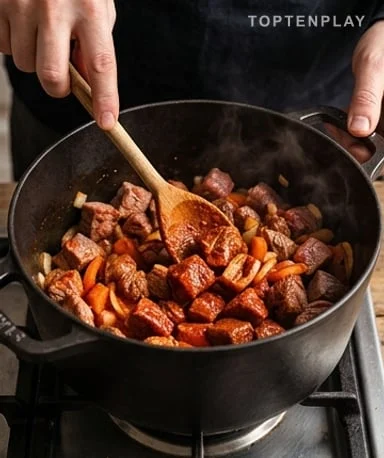
Start by heating the oil in a pot, then let the onion soften slowly until translucent and slightly sweet to the nose. Add the beef cubes and give them time to brown on several sides: that brown at the bottom of the pot is flavor, not a decorative detail. If you add too much meat at once, it will release water and boil instead of searing, resulting in a blander aroma and less pleasant texture. Work in batches if the pot is small. This is the moment the dish starts to develop a real presence.
Add the paprika calmly
Paprika should perfume, not burn. Lower the heat, or even remove the pot for a few seconds, then add it over the browned meat, stirring quickly to coat each piece with a red, fragrant film. If the spice darkens, it becomes bitter, and that bitterness will remain in the sauce until the end. You should feel a gentle warmth, almost peppery, not an acrid smell. It’s a small gesture, but it clearly changes the result.
Build a sauce that holds
Add the bell pepper, garlic, crushed tomatoes, and tomato paste, then stir until everything comes together into a thick red base. The paste must lose its raw edge, the tomatoes should start to release their juice, and the garlic should perfume without dominating. Then pour in the broth little by little, just enough to almost cover the meat, not drown it. A sauce that is too liquid will give a timid dish, whereas we want something coating, shiny, capable of clinging to bread or potatoes. Add the bay leaf, season moderately with salt, and keep pepper for adjusting at the end of cooking.
Let it simmer until truly tender
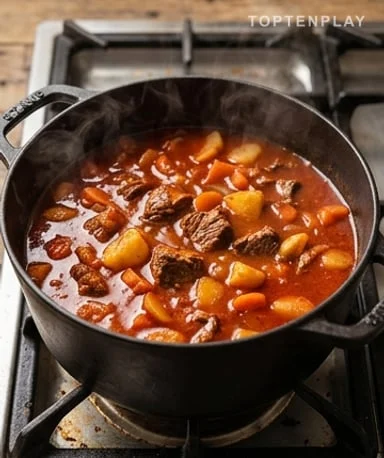
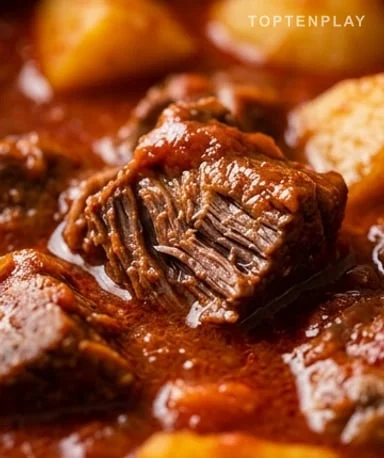
Cover and lower the heat for a slow simmer, with only a few lazy bubbles on the surface. The meat needs to cook for a long time, between one and a half to two hours, because this time breaks down the fibers and transforms a firm piece into a tender bite. Stir occasionally, scraping the bottom, especially when the sauce starts to thicken and smell more concentrated. If you add potatoes or carrots, do so in the last half hour so they remain visible and tender without disintegrating completely. At the end, a fork should enter the beef without resistance.
Serve hot, but not too fast
Once cooking is done, let the goulash rest for ten minutes off the heat. The sauce settles, fat rises slightly to the surface, flavors become sharper and less burning on the palate. Taste only after this rest, then adjust salt, pepper, or a pinch of paprika if the sauce lacks lift. Serve with rustic bread, rice, pasta, or polenta – something that can catch that thick red sauce. The dish should arrive steaming, generous, but with a controlled texture.
Tips & Tricks
- Use recent, fragrant paprika, because a stale spice colors the sauce without giving real depth.
- Keep the heat low during simmering, because a strong boil toughens the meat and reduces the sauce too quickly.
- Prepare the goulash the day before if possible, because resting allows the spices, tomato, and meat juices to meld into a more harmonious sauce.
- Add potatoes only at the end of cooking, otherwise they break up and make the sauce floury instead of staying tender.
Which cut of beef to choose for Hungarian goulash?
Choose a stewing cut like chuck, brisket, neck, or shoulder. These cuts become tender with slow cooking, whereas a lean cut may dry out.
Can goulash be prepared the day before?
Yes, and it’s even a good idea. After a night in the fridge, the sauce becomes deeper and the paprika blends better with the tomato and meat juices.
How to prevent the paprika from becoming bitter?
Add it over low heat, or off the heat, then stir quickly before adding the tomatoes and broth. If it burns at the bottom of the pot, it gives a bitterness that is hard to correct.
Should goulash be very liquid?
No, this version should be between a stew and a thick soup. The sauce should coat the spoon and cling to the beef pieces, without drowning the vegetables.
What to serve with Hungarian goulash?
It goes very well with rustic bread, rice, pasta, polenta, or potatoes. The important thing is to have a side that absorbs the paprika sauce well.
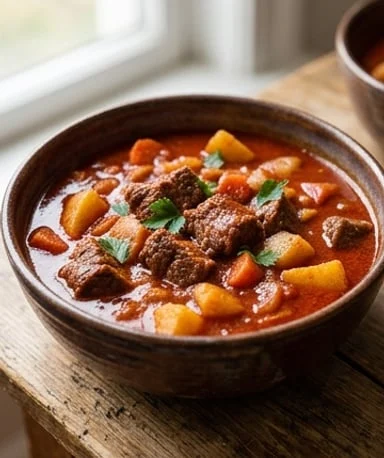
Hungarian Beef and Paprika Goulash
Hungarian
Main course
A hearty Hungarian stew with braised beef, paprika, tomatoes, and vegetables, with a deep red sauce and tender meat.
Ingredients
- 500g beef for stewing, cubed
- 1 large onion, thinly sliced
- 1 red bell pepper, diced
- 2 crushed tomatoes
- 2 cloves garlic, minced
- 2 tablespoons olive oil
- 1 tablespoon tomato paste
- 2 tablespoons sweet paprika
- 1 bay leaf
- 250ml beef or vegetable broth
- 2 potatoes, cut into chunks
- 1 carrot, sliced
- 1 pinch ground cumin
- 1 teaspoon salt
- 1/2 teaspoon black pepper
Instructions
- 1Slice the onion, mince the garlic, dice the bell pepper, then cut the potatoes and carrot if using.
- 2Heat the olive oil in a pot, add the onion and let it soften slowly until translucent.
- 3Add the beef cubes and brown on all sides to develop a more flavorful base.
- 4Lower the heat, add the paprika and stir quickly to coat the meat without burning the spice.
- 5Add the bell pepper, garlic, crushed tomatoes, and tomato paste, then stir for 2 minutes.
- 6Pour in the broth, add the bay leaf, cumin, salt, and pepper, then bring to a gentle simmer.
- 7Cover and simmer over low heat for 1 hour 30 minutes, stirring occasionally.
- 8Add the potatoes and carrot, then continue cooking for 30 minutes, until the meat is very tender.
- 9Taste, adjust seasoning, and let rest 10 minutes off the heat before serving hot.
Notes
• Add paprika over low heat to avoid bitterness.
• The dish is even better prepared the day before and gently reheated.
• For a thicker sauce, simmer uncovered for a few minutes at the end.
• Serve with rustic bread, rice, pasta, or polenta.
Nutrition Facts (per serving, estimated)
| 460 kcalCalories | 32gProtein | 28gCarbs | 24gFat |