📌 Honey and Rosemary Roast Lamb with Hasselback Potatoes
Posted 29 March 2026 by: Admin
A roast lamb on a weeknight—sound ambitious? Not with this recipe. Twenty minutes of prep, one roasting pan, and you get something that truly feels like a holiday feast.
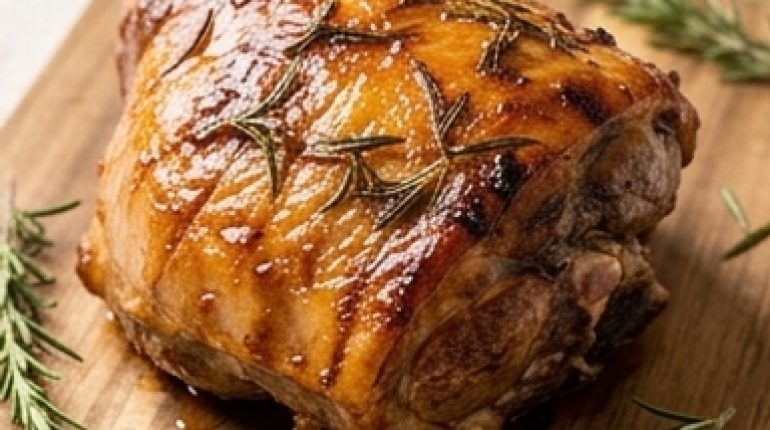
The lamb’s crust takes on a deep mahogany color under the caramelized glaze—not the bland gold of an ordinary roast, but something darker and more intense. Underneath, the meat remains pink. The Hasselback potatoes have absorbed all the cooking juices, their thin slices slightly crispy on the edges and melting in the center. And when you open the oven, the scent of rosemary that has heated for forty-five minutes greets you like a fragrant slap.
Why you’ll love this recipe
Ingredient Notes
All ingredients assembled: a beautiful roast lamb, fresh rosemary, garlic, honey, and potatoes for a complete meal.
- Roast Lamb : Shoulder or rack, the choice is yours involving the occasion and budget. The shoulder is fattier, tastier, and more forgiving if overcooked. The rack is more tender and expensive. For 600 g and four people, both work very well with this recipe.
- Honey : Choose a honey with a bit of character: chestnut, buckwheat, or forest honey. A light acacia honey will disappear during cooking—it adds sweetness without leaving character. The goal is for it to remain present after forty-five minutes in the oven so you can really taste it.
- Rosemary : Fresh is preferred, but dry also works. Fresh holds up better to heat and releases a more powerful scent. If using dry, reduce the quantity slightly to avoid bitterness.
- Potatoes : Choose a waxy variety: Charlotte, Amandine, or Ratte. Floury ones like Bintje will crumble during the Hasselback slicing before they even reach the oven. Waxy is non-negotiable here.
Potatoes go in first
This is the detail that changes everything. The potatoes need fifteen minutes alone before the roast joins them. For the Hasselback cut, a simple tip: place each potato in the hollow of a tablespoon. The spoon naturally blocks the knife before it cuts all the way through. Slice at about 3 mm intervals—regular but not perfect—it doesn’t need to be surgical. A small knob of butter tucked into the slits, salt, pepper. Into the oven at 180°C for fifteen minutes.
The two-minute glaze
Thirty grams of butter and two tablespoons of honey in the microwave for thirty seconds. The mixture should be fluid, slightly foamy, with that nutty butter smell starting to emerge. Brush the roast generously—top, bottom, and sides. The meat should look moist and glossy, like it’s been varnished. Salt and pepper after glazing, not before: salt draws moisture to the surface and prevents the crust from forming correctly.
Everything in the pan
Remove the dish from the oven after the potatoes’ first fifteen minutes. Place the glazed roast between them. Cut the head of garlic in half horizontally—no need to peel anything; the cloves will confit gently in their skins during cooking. Scatter the rosemary sprigs around the roast, not directly on top: they would burn and become bitter. Thirty more minutes in the oven. Halfway through, if you remember, another brush of glaze on the roast won’t hurt.
Removing at the right time
For a 600 g roast at 180°C, forty-five minutes in total yields a medium-pink result. Five minutes less for rare, ten more for well-done. If you want to feel the meat: it should have a slight resistance under finger pressure, firm without being hard as wood. Above all, let it rest for five to ten minutes under foil before slicing. This is when the juices redistribute—cut too soon and everything ends up on your cutting board.
Tips & Tricks
- The resting time under foil is not optional. Five minutes ensures the meat stays juicy when sliced. If you slice immediately out of the oven, the juices escape at once and you lose everything the cooking built.
- The roasted garlic in the pan is a bonus many forget. Squeeze the cooked cloves directly onto your bread or mix them into the pan juices for an effortless express sauce.
- If your oven is temperamental and runs hot, cover the dish with foil for the last twenty minutes, then remove it for the final ten. Guaranteed caramelized crust with meat that stays moist inside.
How do I know if the roast lamb is cooked perfectly?
For medium-pink, count on 45 minutes at 180°C for 600 g. The most reliable test is finger pressure: the meat should resist slightly without being hard. If you have a thermometer, aim for a core temperature of 60°C for pink, 70°C for well-done.
Do I really need to use the Hasselback technique, or are normal potatoes enough?
The Hasselback technique isn’t just for looks: the slits allow the butter and meat juices to seep deep inside during cooking. Whole potatoes work, but they will take longer to cook and won’t have that melting interior and slightly crispy surface.
Can I use dried rosemary instead of fresh?
Yes, but reduce the quantity by half—dried rosemary is much more concentrated. Prefer fresh rosemary when possible; it holds up better to oven heat and releases a subtler scent without bitterness.
How to store and reheat leftovers?
Store leftovers in the refrigerator in an airtight container for up to 3 days. To reheat, cover the dish with foil and bake for 15 minutes at 160°C—avoid the microwave as it dries out the meat. Cold lamb slices are also excellent in a sandwich with a little sauce.
Can I prepare this dish in advance?
You can prepare the Hasselback potatoes and the honey-butter glaze a few hours in advance, then assemble everything when it’s time to bake. Avoid glazing the roast too far in advance, as the salt in the glaze can draw moisture out of the meat.
Which potato variety is ideal for this recipe?
Choose a waxy potato: Charlotte, Amandine, or Ratte. Floury varieties like Bintje crumble when sliced and fall apart during cooking. Size also matters: medium, uniform potatoes cook evenly.
Honey and Rosemary Roast Lamb with Hasselback Potatoes
French
Main Course
A honey and rosemary glazed roast lamb, cooked in the same pan as melting Hasselback potatoes. Elegant to serve, simple to prepare.
Ingredients
- 600g roast lamb (shoulder or rack)
- 8 waxy potatoes (such as Charlotte or Amandine)
- 50g butter
- 2 tbsp honey (chestnut or forest preferred)
- 1 whole head of garlic
- 5 sprigs fresh rosemary
- 1 tsp salt
- ½ tsp ground black pepper
Instructions
- 1Preheat the oven to 180°C (fan oven). Wash and dry the potatoes without peeling them.
- 2Place each potato in the hollow of a tablespoon and make regular cuts every 3 mm without slicing all the way through.
- 3Arrange the potatoes in a large ovenproof dish. Tightly tuck a small knob of butter (20g total) into the slits, season with salt and pepper. Bake for 15 minutes.
- 4Meanwhile, melt 30g of butter with the honey in the microwave (30 seconds). Mix and brush the roast lamb on all sides. Season with salt and pepper.
- 5Remove the dish from the oven. Place the glazed roast between the potatoes. Cut the head of garlic in half horizontally (without peeling) and add it to the dish.
- 6Arrange the rosemary sprigs around the roast. Return to the oven for an additional 30 minutes.
- 7Let the roast rest for 5 to 10 minutes under foil before slicing. Serve with the potatoes and confit garlic cloves.
Notes
• Resting time is essential: it allows the juices to redistribute in the meat. Without it, the meat will be dry when sliced.
• The confit garlic cloves in the pan are delicious squeezed directly onto bread or mixed into the juices for a quick sauce.
• Storage: up to 3 days in the refrigerator. Reheat covered in the oven at 160°C for 15 minutes.
Nutrition Facts (per serving, estimated)
| 620 kcalCalories | 32gProtein | 52gCarbs | 30gFat |