📌 Homemade tortillas in 15 minutes: the recipe for soft and golden flatbreads successful every time
Posted 7 February 2026 by: Admin
Preparing Homemade Tortilla Dough
The artisanal production of tortillas relies on a base that is surprisingly simple: flour, baking powder, and salt make up the trio of dry ingredients to be mixed in a bowl. This first step, accessible to everyone, completely demystifies the preparation of these flatbreads often bought ready-made. The addition of warm water and oil gradually transforms this powder into a supple and homogeneous dough, without requiring intensive kneading or complex techniques.
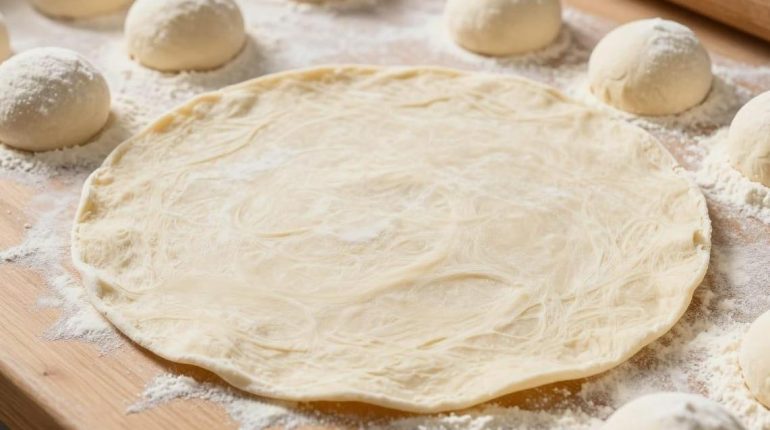
The secret to an optimal texture lies in a single number: 15 minutes of rest under a cloth. This minimal time allows the dough to relax, greatly facilitating subsequent rolling and guaranteeing perfectly flexible tortillas. Unlike traditional bakery preparations that require several hours of rising, this recipe stands out for its speed of execution.
Dividing into 8 equal balls ensures essential uniformity during cooking. Each calibrated portion will produce a tortilla approximately 15 cm in diameter, the ideal size to generously accommodate the fusion filling that follows. This preliminary shaping step structures the preparation and considerably simplifies the work ahead, transforming a single dough into individual ready-to-work supports.
Shaping and Cooking Tortillas
Rolling out the rested dough balls requires precision and regularity: each portion must form a thin circle 15 cm in diameter. This step transforms the previously worked texture into perfectly calibrated flatbreads, ready to support the filling without breaking. A lightly floured rolling pin facilitates the operation, preventing sticking while preserving the flexibility obtained during the rest.
Cooking is the decisive moment: a hot, dry pan, without added fat, guarantees the authenticity of the result. This traditional cooking method, practiced for generations in Mexico, develops the natural aromas of the dough while creating characteristic light golden spots. Timing remains crucial: 1 to 2 minutes per side is enough to obtain a soft and fragrant tortilla, neither overcooked nor insufficiently worked.
The visual result confirms the success: slightly golden flatbreads, soft to the touch, retaining essential flexibility for subsequent folding. This tender texture contrasts radically with industrial versions that are often dry and brittle. Stacked and kept warm under a clean cloth, these homemade tortillas now constitute the ideal base to accommodate a particularly original fusion filling, marrying European and Latin culinary traditions.
Preparing the Fish and Raw Sauerkraut
Processing the sea bream fillets requires meticulousness and delicacy: carefully remove the skin then check every square millimeter to eliminate any residual bones. This preparatory step guarantees a pleasant tasting experience, as raw fish requires a rigorous inspection before cutting. The regular strips subsequently obtained offer a refined presentation, their uniformity allowing for a homogeneous marinade and a professional visual result.
The seasoning of the raw sauerkraut reveals a bold fusion approach, transforming this Alsatian classic into a contemporary vegetable garnish. The mortar comes into play to crush the fresh coriander with the pepper, gradually releasing the essential oils. This ancestral gesture intensifies the aromas far beyond simple chopping with a knife. The addition of olive oil and sesame seeds completes this unexpected taste marriage, bringing roundness and toasted notes to the natural acidity of the fermented cabbage.
This preparation illustrates the strength of cross-cultural cuisines: Germanic tradition meets Latin and Asian influences, creating an unsuspected harmony between ingredients that are a priori distant. Sauerkraut, usually served hot with deli meats, here becomes a crunchy and fragrant garnish. The marinated fish, inspired by ceviche, is now ready to join these vegetable components to form a surprising chromatic and textural assembly.
Assembly and Finishing of the Dish
The still-warm tortilla first receives the seasoned raw sauerkraut, forming a crunchy vegetable bed that contrasts with the softness of the flatbread. This base provides texture and acidity, fundamental elements to balance the richness of the raw fish. The marinated sea bream strips are then arranged harmoniously, their pearly flesh creating an elegant visual interplay on the bright green of the sauerkraut. Each slice reveals the quality of the preparatory work: regularity of the cutting, transparency of the flesh, brilliance of the freshly marinated fish.
Lime zest acts as a final touch, bringing an additional aromatic dimension without weighing down the whole. Its lively acidity amplifies the marine flavors while awakening the herbaceous notes of the crushed coriander. This lemony finish illustrates the influence of ceviche, a technique of Peruvian origin where citrus fruits play a central role in the “cooking” of raw fish.
The complete assembly reveals a remarkable sensory stratification: the melting texture of the marinated fish meets the crunch of the fermented sauerkraut, while the homemade tortilla envelops these contrasting textures. The essential oils released by the mortar gradually diffuse their aromas, the toasted sesame adds its nutty note, and the lime unifies the whole with its freshness. This fusion dish transcends its multiple origins to offer a coherent and surprising taste experience, where artisanal tradition and contemporary creativity meet in every bite.