When the cold sets in or a dinner is taking too long to decide, this homemade tomato soup with Parmesan brings everyone together. It’s simple comfort food, hot, deep red, with that round flavor you’re looking for when you want a truly comforting bowl.
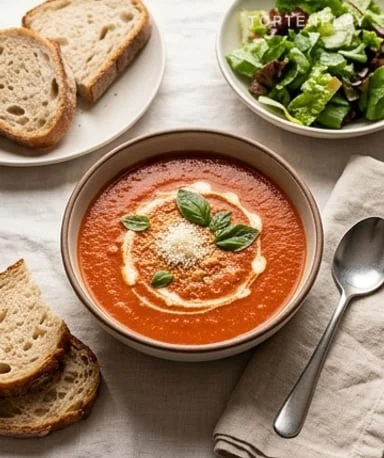
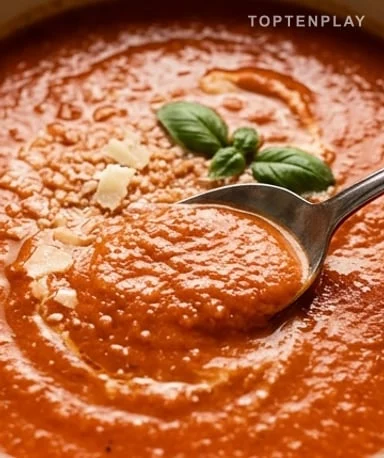
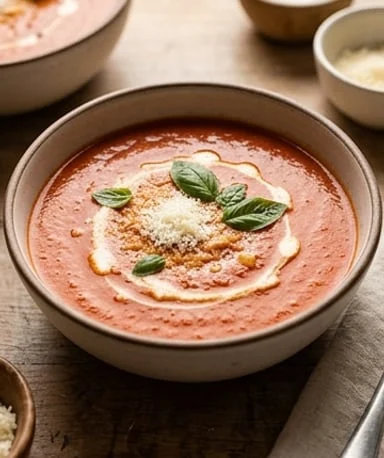
The soup arrives smooth, almost velvety, with a shiny surface and a few Parmesan shavings gently melting. You first taste the cooked tomato, then garlic, basil, and that salty cheese note that lingers. Carrot and celery don’t show themselves much, but they soften everything, like a subtle base. With toasted bread, the contrast between the crispy crumb and the thick soup does the job perfectly.
Why you’ll love this recipe
Ingredient Notes
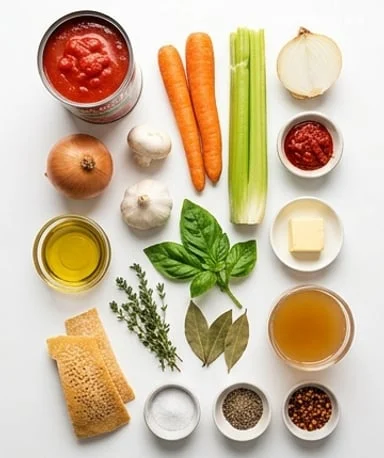
Crushed tomatoes, basic vegetables, garlic, fresh herbs, and a Parmesan rind: simple, but it delivers flavor.
- Crushed tomatoes : They form the base of the soup and give that dense red color. Choose good-quality crushed tomatoes, not too watery; if they are very acidic, a touch of cream or longer cooking helps calm the bite.
- Carrot, celery, and onion : This trio brings sweetness, aroma, and a more cooked base than a simple diluted tomato sauce. Dice them finely so they melt well; if lacking celery, add a bit more carrot and a pinch of pepper to keep the edge.
- Garlic : It pushes the flavor toward something warmer, but it must not burn. Add it after the vegetables are already softened, just long enough for it to smell good without becoming bitter.
- Broth : It stretches the soup while giving it body. Chicken or vegetable broth works very well; use low-sodium if possible, because Parmesan already adds a real saltiness.
- Parmesan rind : It infuses slowly into the pot and gives a salty, almost nutty depth. Keep the rinds in the freezer in a bag; if you don’t have any, simply add a bit of grated Parmesan at the end, but don’t boil it too hard.
- Basil and thyme : Thyme holds up well to long cooking and flavors the base, while basil brings a fresher scent at the end of simmering. If you only have dried basil, use less and add it earlier so it has time to diffuse.
The base that makes all the difference
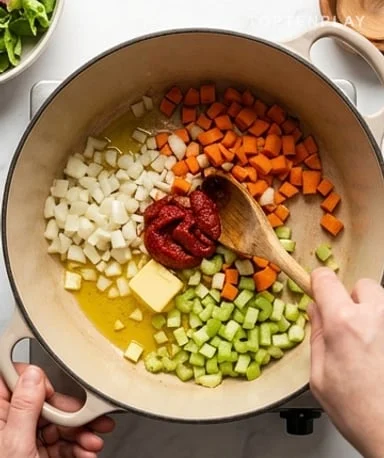
Start by sautéing the onion, carrot, and celery in olive oil with a bit of butter. The pot should smell of soft, almost sweet vegetables, not burnt; if it sticks too quickly, lower the heat and let time do its work. This step seems trivial, but it prevents a flat soup that only tastes of acidic tomato. When the vegetables are tender and shiny, add the garlic and red pepper flakes, just enough to awaken the aroma without turning the soup into a spicy dish.
Tomatoes and simmering
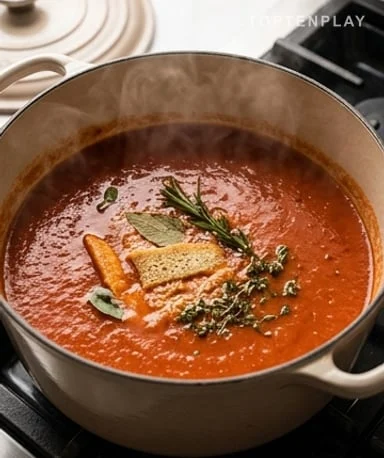
Add the tomato paste and let it cook for a minute to lose its raw taste. Then come the crushed tomatoes, broth, herbs, and Parmesan rind, with that thick sound of soup beginning to simmer. Long simmering rounds off the edges: the tomato becomes sweeter, the vegetables disappear into the background, the cheese gives a salty note that pleasantly clings to the palate. Keep the heat low, because a tomato soup that boils too hard can reduce quickly and become too intense.
The right time to blend
When the vegetables are completely tender and the soup smells of roasted tomato, remove the Parmesan rind, bay leaves, and herb stems. Blend directly in the pot if you have an immersion blender; the texture should go from rustic to silky, with a more uniform reddish-orange color. If using a blender, work in batches to avoid hot splashes. This is also the time to decide if you want a very smooth soup or one with a bit more texture, depending on your mood and the bread you plan to serve with it.
Cheese, cream, and balance
Add the grated Parmesan off the gentle heat, then taste before salting generously. The cheese brings salt, fat, and a more enveloping sensation, so adjust after, not before. If the tomato still stings your tongue a little, a small touch of cream softens the acidity without masking the main flavor. The soup should stay lively, not heavy; you’re looking for a warm, clean velouté, not a thick sauce disguised as a potage.
At the table
Serve the soup piping hot, with fresh basil, a twist of black pepper, and a bit more Parmesan if you like generous bowls. Toasted bread is almost indispensable here: it brings the crunch that a smooth soup lacks, and it mops up the last red traces at the bottom of the bowl. For a more complete meal, add a well-dressed green salad or cheese toasts. The contrast between the sweet soup, golden bread, and fresh salad makes everything far less monotonous.
Tips & Tricks
- Sweat the vegetables well before adding the tomatoes, because their natural sweetness balances the acidity and gives a rounder soup.
- Don’t salt too early: the broth, Parmesan, and reduction already concentrate the flavor, so final seasoning will be more accurate after blending.
- Add the basil towards the end of cooking, as its fresh scent becomes dull if it simmers too long in a very hot soup.
- If the soup is too thick after resting, thin it with a bit of warm broth rather than too much cream, to keep the tomato flavor prominent.
Can you make this soup with fresh tomatoes?
Yes, but it will be better with very ripe, flavorful tomatoes. Out of season, canned crushed tomatoes often give a more consistent and less bland result.
How to fix a tomato soup that’s too acidic?
Let it simmer a bit longer to round out the taste. You can also add a small touch of cream, a bit more cooked carrot, or a pinch of grated Parmesan.
Can you prepare this soup in advance?
Yes, it keeps very well for 3 to 4 days in the refrigerator. As it rests, it thickens a little and the flavors become more integrated.
Can you freeze tomato Parmesan soup?
Yes, ideally before adding the cream if you use it. Let it cool completely, freeze in portions, then reheat gently with a splash of broth if the texture is too thick.
What to serve with this soup?
Grilled sourdough bread, cheese toasts, or a crispy green salad work very well. The goal is to add crunch and a bit of freshness alongside the warm bowl.
Homemade Tomato Soup with Parmesan
American
Soup
A velvety tomato soup, simmered with carrot, celery, garlic, herbs, and Parmesan for a warm, round, comforting bowl.
Ingredients
- 2 tbsp olive oil
- 20g unsalted butter
- 1 medium yellow onion, finely minced
- 2 medium carrots, cut into small dice
- 2 stalks celery, cut into small dice
- 3 cloves garlic, minced
- 1 pinch red pepper flakes
- 2 tbsp tomato paste
- 800g canned crushed tomatoes
- 750ml chicken or vegetable broth
- 1 Parmesan or pecorino rind
- 2 sprigs fresh thyme
- 2 bay leaves
- 15g fresh basil
- 40g grated Parmesan
- 80ml light cream or half-and-half, optional
- 1 tsp salt, to adjust
- 1/2 tsp ground black pepper
Instructions
- 1Heat the olive oil and butter in a large pot over medium heat.
- 2Add the onion, carrots, and celery, and sauté for 8 to 10 minutes until the vegetables are tender and slightly shiny.
- 3Add the garlic and red pepper flakes, stirring for 1 minute without letting the garlic brown.
- 4Stir in the tomato paste and cook for 1 minute to concentrate its flavor.
- 5Pour in the crushed tomatoes and broth, then add the Parmesan rind, thyme, bay leaves, salt, and pepper.
- 6Cover and let simmer over low heat for 1 hour 15 minutes.
- 7Add the fresh basil and continue cooking for 20 to 30 minutes, uncovered if you want a thicker soup.
- 8Remove the Parmesan rind, thyme stems, and bay leaves.
- 9Add the grated Parmesan, then blend the soup with an immersion blender until smooth.
- 10Stir in the cream if using for a softer soup, taste, then adjust salt and pepper before serving hot.
Notes
• For a vegetarian version, use vegetable broth instead of chicken broth.
• If the soup is too acidic, add a little cream or let it simmer a few more minutes over low heat.
• The Parmesan rind adds great depth, but you can replace it with a bit more grated Parmesan at the end of cooking.
• The soup keeps for 3 to 4 days in the refrigerator and reheats gently on the stove.
Nutrition Facts (per serving, estimated)
| 164 kcalCalories | 9gProtein | 16gCarbs | 8.5gFat |