Sugar-free applesauce is the recipe everyone thinks they know how to make — and that almost everyone sabotages at the market, ten minutes before heading home. One apple picked too early, and you’ll spend your afternoon correcting with sugar what you were precisely trying to avoid. Buy the right apples, and the pot does the rest.
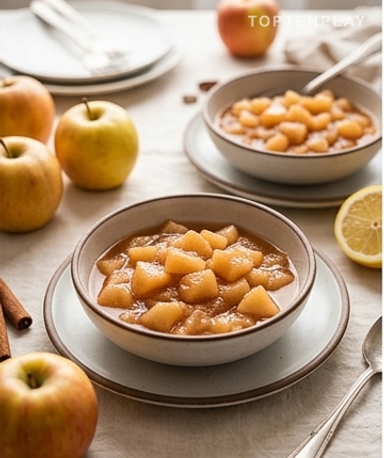
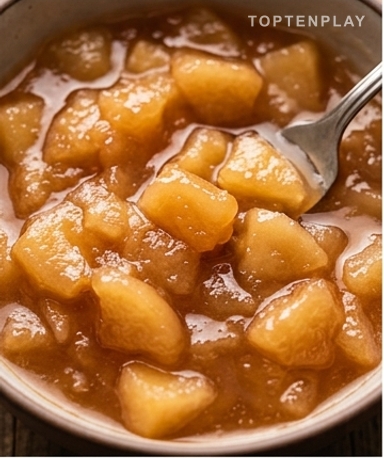
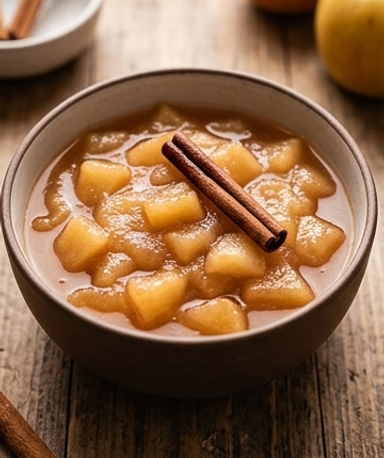
A homemade sugar-free applesauce has neither the pale color of a glass jar nor the liquid texture of industrial versions. This one is amber like a very light caramel, with small chunks that have surrendered without completely disappearing. The smell of cinnamon and warm apple rises from the pot long before it’s ready — a late-season scent, slightly sweet, that needs no help. Under the fork, it offers just enough resistance so you can still feel the fruit.
Why you’ll love this recipe
Ingredient Notes
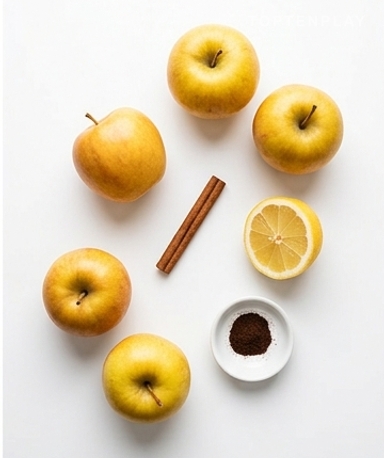
Five ingredients: ripe apples, a cinnamon stick, half a lemon, a little vanilla, and just enough water.
- Apples (1 kg, very ripe) : This is the single ingredient that matters. Golden Delicious, Reine des Reinettes, or Boskoop — all three work well, but in different ways. Golden is sweet and melts fast, perfect if you want something very smooth. Boskoop is more acidic and slightly fibrous; mixed with a Golden, it adds character. Reine des Reinettes is the most balanced if you don’t want to overthink it. Avoid Granny Smith alone in a sugar-free version — its acidity can’t be corrected without sweetener. The test before buying: press your thumb near the stem. If the apple gives slightly without bruising and releases a fruity scent at room temperature, it’s ready.
- Cinnamon stick : One single stick for 1 kg of apples is the right amount. Powdered cinnamon burns and becomes bitter during cooking — stick to the whole stick and remove it before blending. Ceylon rather than Cassia if you have the choice: sweeter, less spicy, it pairs better with the natural fructose of the apples without masking it.
- Lemon (half, juice only) : Not at the start of cooking. This is the most common and least visible error in online recipes. Citric acid slows down the breakdown of pectin and delays the release of fructose — result: a sauce perceived as acidic even though the apples were good. Added off the heat, the same half-lemon does exactly what is asked: set the amber color without interfering with the sweetness.
- Vanilla powder : A pinch, no more. It rounds everything out without being explicitly identifiable — that’s its role here. If you don’t have any, a half scraped pod in the pot works even better.
- Water (only 5 cl) : Just to start the cooking without the bottom sticking. The apples will release their juice very quickly — two to three minutes after the first simmer, you won’t need this external addition anymore. Don’t be tempted to add more: a sauce that’s too liquid is hard to fix without cooking it longer, and you lose aroma along the way.
Press your thumb on the apple before buying
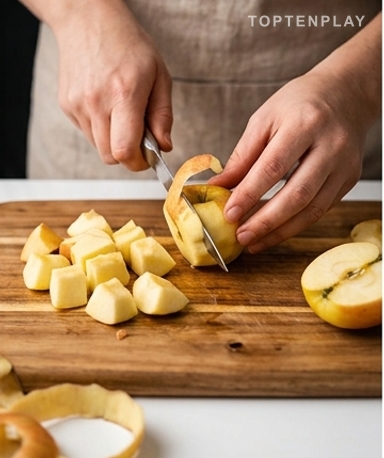
The choice of apple is made before even turning on the stove. A firm, odorless apple will produce a fibrous and acidic sauce, regardless of your technique. What you are looking for: an apple that yields slightly under moderate pressure, without collapsing, and that smells like fruit at room temperature without having to hold it to your nose. This is the only way to know if your sauce will be sweet without adding anything. Once back home, peel them, core them, and cut them into large chunks of about 3 cm. No need for regularity — the pieces will melt anyway, so don’t waste time perfecting them.
Cover and lower the heat at the first simmer
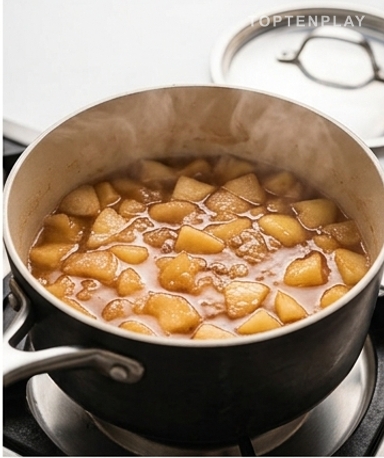
Apples in a heavy-bottomed pot, 5 cl water, the cinnamon stick. Cover and start over medium heat. As soon as it starts to bubble — and it happens fast, in three or four minutes — lower to low heat without touching the lid more than necessary. The apples will release their juice almost immediately: a sweet and slightly tangy smell begins to escape the pot, the liquid turns from transparent to slightly amber. Stir every three to four minutes so the bottom doesn’t stick, but without excess — we aren’t trying to mash yet, just to homogenize.
Listen to the pot instead of looking at the clock
Between 10 and 15 minutes of cooking depending on the ripeness of your apples. But the real indication isn’t the timer. When the lively, steady bubbling turns into a dull, slow hiss — a muffled, almost cottony sound — the pectin has given way. That’s the signal. Remove from heat immediately: one minute too long, and the volatile sweetness evaporates with the rest. The chunks at this stage fall apart at the touch of a wooden spoon; they have lost their resistance, and the color has moved from pale yellow to a warm, uniform amber.
Squeeze the lemon now — not before
Off the heat, over the sauce while it’s still hot but no longer boiling. The acidity sets the color and wakes up the flavors without interfering with the sweetness released during cooking. Added too early, this half-lemon would have blocked part of the pectin transformation. Added now, it does exactly what we expect. Remove the cinnamon stick, then mash with a fork for a rustic texture with chunks — there should remain small islands of apple that you feel slightly crunch under the teeth. For something smoother, use an immersion blender for ten seconds, but it would be a shame to lose that homemade feel.
Tips & Tricks
- Prepare 1.5 kg on Sunday and divide into small 150 g jars. It keeps easily for four days in the fridge. If it has thickened, a spoonful of warm water restores its suppleness — no need to re-cook it.
- Vary the spice from week to week so you don’t grow tired of it: a few star anise stars instead of cinnamon, lime zest in summer, a pinch of cardamom in winter. It’s the same base recipe, but no one will notice.
- If you blend, don’t aim for a perfectly smooth texture — use a few short pulses of the blender rather than a long press. The sauce gains character, and you can still distinguish the aromas of different varieties if you mixed Boskoop and Golden.
Which apple variety should I choose for sugar-free applesauce?
Golden Delicious is the most accessible and melts easily — a good base for beginners. Reine des Reinettes is the most balanced, aromatic, and naturally sweet. Boskoop is more acidic but ideal mixed with a Golden to add character. Avoid Granny Smith alone: its acidity cannot be corrected without added sugar.
Why should I add the lemon off the heat and not at the beginning?
Citric acid slows down the breakdown of pectin and delays the release of the apples’ natural fructose. Added at the start of cooking, it results in a sauce perceived as acidic even if the apples were good. Off the heat, it does its only truly useful job: setting the amber color and waking up the aromas.
How do I know when the applesauce is ready without looking at the clock?
Listen to the pot. When the lively, regular bubbling turns into a dull, slow hiss, the pectin has given way — that’s the signal. The chunks should fall apart at the touch of a spoon without resistance. One minute too long after this stage, and part of the volatile sweetness evaporates.
Is this applesauce suitable for babies?
Yes, without any modification — provided the apples are very ripe and the lemon remains optional. It is one of the first recommended purees during food diversification, precisely because it contains no added sugar or preservatives.
How do I store homemade applesauce, and for how long?
In a closed jar in the refrigerator, it lasts 4 days. If it has thickened by the end of the week — which is normal, as pectin continues to gel slightly — a tablespoon of warm water and a stir will restore its initial suppleness. Avoid re-cooking to reheat: simply use the microwave on low power.
Can I vary the spices?
Very easily. Replace the cinnamon with two or three star anise stars for a licorice scent, or a pinch of cardamom in winter. Lime zest in summer completely changes the profile. The base stays the same — only the spice changes, and that’s enough to make it feel like a different recipe.
Homemade Sugar-Free Applesauce
French
Dessert
A rustic and naturally sweet applesauce with no additions. Five ingredients, twenty-five minutes, and very ripe apples that do all the work.
Ingredients
- 1 kg ripe apples (Golden Delicious, Reine des Reinettes, or Boskoop)
- 5 cl (50 ml) water
- ½ lemon (juice only, added off the heat)
- 1 cinnamon stick
- 1 pinch vanilla powder
Instructions
- 1Peel the apples, remove the cores, and cut them into large chunks of about 3 cm — no need for regularity.
- 2Place the chunks in a heavy-bottomed pot with the water, cinnamon stick, and vanilla. Cover and start over medium heat.
- 3At the first simmer, lower to low heat. Stir every 3 to 4 minutes to prevent the bottom from sticking.
- 4Cook for 10 to 15 minutes depending on the ripeness of the apples. The stop signal: the lively bubbling turns into a dull, slow hiss — remove from heat immediately.
- 5Squeeze the half-lemon over the still-warm sauce, off the heat. Remove the cinnamon stick.
- 6Mash with a fork or a potato masher for a rustic texture with chunks. For a smooth texture, use an immersion blender for a few seconds.
Notes
• Storage: 4 days in the refrigerator in a closed jar. If the sauce has thickened, a tablespoon of warm water is enough to regain the initial texture.
• Batch cooking: prepare 1.5 kg on Sunday and divide into small 150 g jars. Vary the spice from week to week (star anise, cardamom, lime zest) to renew the recipe effortlessly.
• Texture: for a smoother result, use an immersion blender in a few short pulses. To keep the homemade feel, a fork remains the best option — it preserves a few small chunks that can still be felt in the mouth.
Nutrition Facts (per serving, estimated)
| 110 kcalCalories | 0.5gProtein | 27gCarbs | 0.3gFat |