The smell escaping from the oven when a custard flan is baking — warm milk, sweet vanilla, pastry starting to brown — it’s hard to describe without wanting to cut a slice immediately. This strawberry flan takes the classic bakery recipe and adds just what it needs: pieces of strawberries that melt into the cream during baking and perfume it from within. No complicated technique, no special equipment.
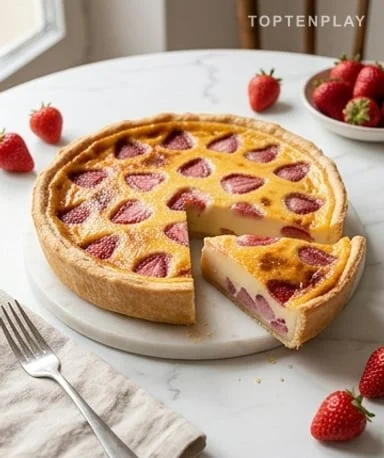
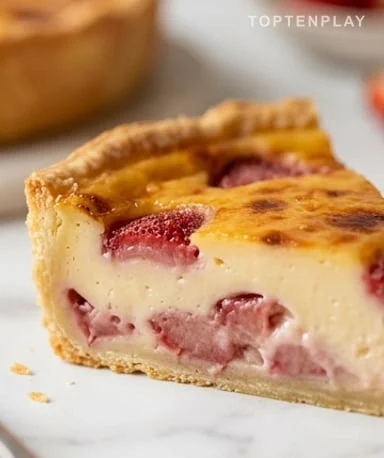
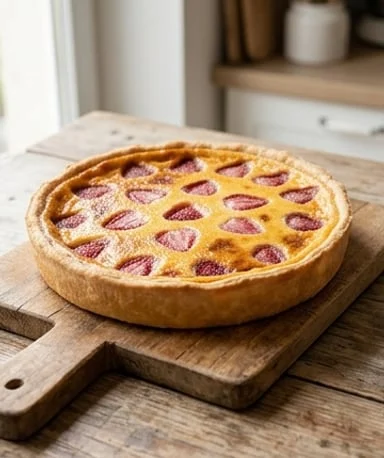
When it comes out of the oven, the surface is slightly puffed and golden, with a few pinkish traces where the strawberries have released their juice into the cream. When cut, the blade slides into a firm but not rigid texture — it trembles slightly, as a well-set flan should. The cream is silky, with melting strawberry pieces that have slightly caramelized on the edges of the mold. It is a dessert that looks like what it is: simple, generous, no fuss.
Why you’ll love this recipe
Ingredient Notes
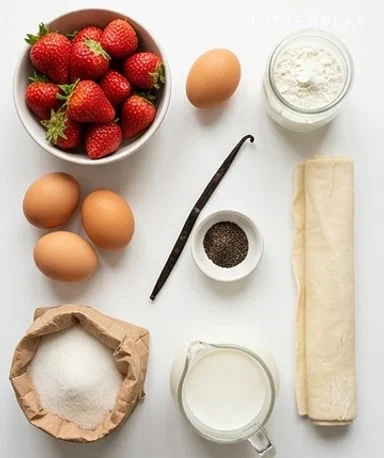
Few ingredients, great results: milk, eggs, cornstarch, and ripe strawberries make all the difference.
- Whole milk (500 ml) : It’s the liquid base that gives the flan its creaminess. Whole milk brings a roundness in the mouth that semi-skimmed milk doesn’t really provide — the texture will be firmer and less creamy with low-fat milk. Avoid plant-based milks: the cream won’t set the same way and the result will remain too liquid.
- Eggs (3) : Eggs are what make the flan hold together. They coagulate during baking and give the cream its firm but still silky texture. Take them out of the refrigerator at least 30 minutes before starting: room temperature eggs incorporate better into the sugar-cornstarch mixture and reduce the risk of lumps.
- Cornstarch (40 g) : Cornstarch thickens the cream without weighing it down, unlike flour which would give a heavier and stickier texture. Sift it before adding: poorly incorporated cornstarch forms small white beads that resist baking and end up in the final cream.
- Fresh strawberries (250 g) : Choose ripe and fragrant strawberries — that’s the only advice that really matters here. Tasteless strawberries bought out of season will remain bland even after baking. Gariguette or Ciflorette varieties are ideal for their acid-sugar balance. If you can’t find good fresh strawberries, thawed and well-drained frozen strawberries also work.
- Vanilla extract (1 tsp) : Vanilla subtly perfumes the cream and amplifies the strawberry flavor. A natural extract makes a difference compared to an artificial aroma that evaporates during baking and leaves a chemical taste. If you have a pod on hand, scrape the seeds and infuse them in the warm milk for 10 minutes before continuing — the fragrance will be much more present.
- Shortcrust or puff pastry : Shortcrust pastry is more stable during baking and absorbs less moisture from the cream, making it the preferable choice for this type of flan. Puff pastry gives a more indulgent result with its crispy layers, but it softens after a few hours in the refrigerator. Both work — it’s a matter of preference and what you have on hand.
Start with the pastry, and don’t overwork it
Roll out the pastry on a lightly floured surface and line a 22-24 cm diameter tart pan, preferably with high sides — the flan needs space so it doesn’t overflow. Press the pastry well up the sides without stretching it: stretched pastry under tension shrinks during baking and the edge collapses inward. Once lined, prick the bottom generously with a fork. This step seems trivial, but it prevents air bubbles from forming under the cream during baking, which would create bulges and destabilize the surface of the flan. Refrigerate while you prepare the custard: cold pastry holds up better to the oven heat and shrinks much less.
A successful flan custard is a matter of order
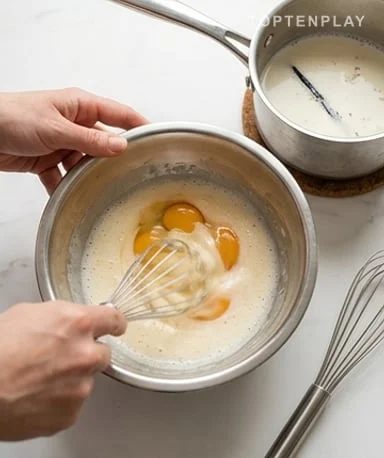
In a saucepan, heat the milk with the vanilla extract over medium heat until the first simmer — not a full boil, just the moment when small bubbles appear on the edges and the milk gives off a sweet, slightly sugary scent. Meanwhile, whisk the eggs with the sugar in a bowl until the mixture turns slightly pale, then incorporate the sifted cornstarch. The following order is crucial: pour the hot milk in a thin stream over the eggs while whisking constantly, never all at once. The mixture will thicken slightly upon contact with the heat, that’s exactly what we want. Then pour everything back into the saucepan and thicken over low heat, stirring constantly with a spatula, scraping the bottom well, until you get a cream that coats the spatula and leaves a clean trace when you run your finger over it.
Strawberries: cut, place, don’t overdo it
Wash the strawberries quickly under cold water and pat them dry with paper towels — a waterlogged strawberry will release too much liquid into the cream and prevent proper setting in the center. Cut them into coarse pieces or slices depending on their size, removing the stems. No need to sugar them or macerate: the oven heat takes care of that during baking. Take the pan out of the refrigerator, pour the flan custard onto the pastry base, then distribute the strawberry pieces, pressing them in slightly. Some pieces will rise during baking — that’s what gives the surface its rustic and appetizing look, with those irregular pinkish areas and slightly caramelized edges around the strawberries that come to the surface.
Baking requires patience, not constant monitoring
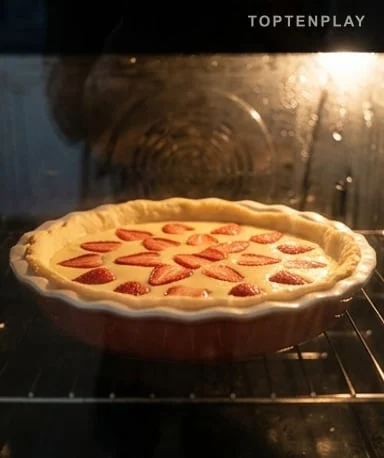
Bake at 180°C (350°F) fan-assisted for 40 to 45 minutes. For the first 30 minutes, don’t open the oven: the cream needs to set gradually, and too sudden a temperature change can crack the surface. After 35 minutes, check the color. The surface should be golden, with a few slightly brown areas where the strawberries come to the surface and caramelize. A well-baked flan still trembles slightly in the center when you shake the pan — it will finish firming up as it cools. In the last minutes, the smell also changes: the strawberries give off a sweet, fruity scent that blends with the aroma of the golden pastry, and that’s a good indicator that baking is almost done.
Resting is as important as baking
Take the flan out of the oven and let it cool completely at room temperature before refrigerating. The cream continues to set as it cools, and cutting too early gives slices that collapse on the plate. Count at least two hours at room temperature, then an additional hour in the refrigerator if you want to serve it well chilled. When cutting, a thin-bladed knife dipped in hot water glides through the cream without tearing it. The flan keeps for three days in the refrigerator covered with plastic wrap, and it’s often better the next day, when the flavors of vanilla and strawberries have fully melded into the cream.
Tips & Tricks
- Always pour the hot milk in a thin stream over the eggs while whisking, never the other way around. If you pour the eggs into the boiling milk, the heat partially cooks them before you can mix, and you end up with a grainy cream that smells like scrambled eggs.
- Don’t overload with strawberries. 250 g is the amount that allows the cream to set properly. Beyond that, the strawberries release too much juice during baking and the cream remains too liquid in the center even after several hours of cooling.
- Wait until the flan is completely cool before unmolding or cutting. The custard continues to set as it cools — two hours minimum prevents collapsing slices and cutting that tears the surface.
- If the surface browns too quickly before the cream is set, place a sheet of aluminum foil over it without pressing down. The heat continues to cook the cream deeply without burning the exposed strawberries or blackening the pastry edges.
Can I use frozen strawberries instead of fresh?
Yes, it’s entirely possible. First, thaw them completely, then drain them carefully and pat them dry with paper towels to remove excess water. Poorly drained frozen strawberries release too much liquid during baking and prevent the cream from setting properly in the center.
How do I know when the flan is done?
The surface should be golden and slightly colored in places, especially around the strawberries. Gently shake the pan: a well-baked flan still trembles slightly in the center, like a set custard. If it’s still liquid in the center, bake for 5 more minutes. If it no longer trembles at all, it has baked a bit too long, but it’s still perfectly good.
Shortcrust or puff pastry: which to choose?
Shortcrust pastry is the best choice for this flan: it absorbs less moisture from the cream and stays crispy for several hours after baking. Puff pastry gives a more indulgent result right out of the oven, but it quickly softens upon contact with the cream once refrigerated.
Can this flan be made without any pastry?
Yes, by pouring the custard directly into a buttered and floured pan. The texture will be different — closer to a baked custard than a tart — but the result is still very good. Baking time is the same, but check a bit earlier since without pastry to absorb heat, the cream may set faster.
How long does this flan keep and how should I store it?
The flan keeps for 3 days in the refrigerator, covered with plastic wrap or in an airtight container. It is often better the next day, when the flavors of vanilla and strawberries have fully melded. Avoid freezing: the creamy texture doesn’t survive thawing well.
Can I replace cornstarch with flour?
Flour can replace cornstarch in slightly larger quantity (50 g instead of 40 g), but the result will be a bit heavier and less smooth in the mouth. Cornstarch gives a finer, silkier texture, which is really what distinguishes a good custard flan from a simple ordinary flan.
Homemade Strawberry Custard Flan
French
Dessert
A creamy custard flan flavored with vanilla, filled with fresh strawberry pieces that melt into the cream during baking. Simple to prepare, even better the next day.
Ingredients
- 1 shortcrust pastry (or puff pastry, about 250 g)
- 500 ml whole milk
- 100 g granulated sugar
- 3 eggs
- 40 g cornstarch, sifted
- 1 tsp natural vanilla extract
- 250 g fresh strawberries, washed and hulled
Instructions
- 1Preheat the oven to 180°C (350°F) fan-assisted. Roll out the shortcrust pastry in a 22-24 cm diameter tart pan with high sides. Press the pastry well up the sides without stretching, then prick the bottom generously with a fork. Refrigerate while preparing the custard.
- 2Pour the milk and vanilla extract into a saucepan. Heat over medium heat until the first simmer — without boiling — then remove from heat.
- 3In a bowl, whisk the eggs with the sugar until the mixture turns slightly pale. Incorporate the sifted cornstarch and mix until smooth and lump-free.
- 4Pour the hot milk in a thin stream over the egg mixture while whisking constantly. Then pour everything back into the saucepan and thicken over low heat, stirring constantly with a spatula, scraping the bottom well, until the cream coats the spatula.
- 5Cut the strawberries into coarse pieces or slices. Take the pan out of the refrigerator, pour the flan custard onto the pastry base, then distribute the strawberries, pressing them slightly into the cream.
- 6Bake for 40 to 45 minutes, until the surface is golden and the center of the flan still trembles slightly when the pan is shaken. Do not cover for the first 30 minutes to allow the surface to brown. If browning too quickly, place a sheet of aluminum foil on top.
- 7Take the flan out of the oven and let it cool completely at room temperature (at least 2 hours) before refrigerating. Cut with a thin-bladed knife dipped in hot water.
Notes
• The flan is better after a night in the refrigerator: the flavors of vanilla and strawberries meld further into the cream.
• For frozen strawberries, thaw them completely and pat them dry thoroughly before use to avoid excess liquid in the cream.
• Do not exceed 250 g of strawberries: beyond that, they release too much juice and the cream struggles to set in the center.
• Keeps for 3 days in the refrigerator, covered with plastic wrap.
Nutrition Facts (per serving, estimated)
| 358 kcalCalories | 7 gProtein | 48 gCarbs | 14 gFat |