📌 Homemade Olive Oil Dip: The Italian Restaurant Technique to Transform Your Bread Basket
Posted 27 March 2026 by: Admin
The Art of Italian Dipping: A Minimalist Recipe with Maximal Flavors
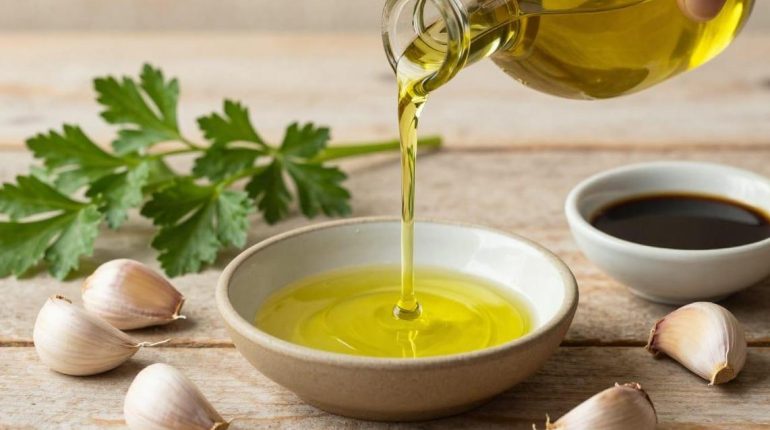
Seven ingredients, five minutes of prep, zero cooking. This olive oil dip reproduces the restaurant bread basket experience without specialized equipment or complex techniques. The secret lies in a closed jar, shaken vigorously, then left at room temperature for thirty minutes to two hours. During this strategic rest, fresh garlic releases its sulfur compounds into ⅔ cup of extra virgin olive oil, while a tablespoon of balsamic vinegar cuts through the fatty richness with its lemony acidity.
The shaken jar method creates a temporary emulsion that coats every fragment of garlic and every sprig of chopped parsley in the fat. Italian seasoning, that standardized blend of dried oregano and basil, instantly injects that recognizable Mediterranean signature. Two minced garlic cloves provide the characteristic aromatic intensity, complemented by ¼ teaspoon of kosher salt and freshly ground black pepper that structure the whole.
For olive oils that are too peppery on the palate, cutting them with a milder variety neutralizes the bitterness without diluting the fruity richness. Grated Parmesan as an optional garnish adds that salty umami dimension, the final touch that transforms a simple dip into a sophisticated tasting ritual. No cooking alters the purity of the raw flavors; each component retains its identity while merging into this Mediterranean harmony.
Ingredient Breakdown: Why Every Component Matters
Extra virgin olive oil accounts for 70% of the final flavor profile. It is impossible to hide mediocre quality behind aromatics: every peppery, fruity, or herbaceous note is expressed directly on the palate. A daily quality oil is sufficient, without investing in premium cuvées reserved for raw finishes. If bitterness dominates, cutting it with a more neutral variety restores balance without sacrificing characteristic richness.
Traditional balsamic vinegar brings that bright acidity that cuts through fatty density, maintaining lightness in the mouth. Balsamic glaze, a concentrated and sweet version, adheres better to the bread thanks to its syrupy viscosity. Two distinct approaches for two different textures: one fluid and penetrating, the other coating and persistent.
Fresh minced garlic deploys maximum aromatic intensity, releasing its sulfur compounds during the rest. Garlic powder offers a milder alternative, eliminating visible fragments for a uniformly smooth texture. Pre-made Italian seasoning instantly reproduces that restaurant signature thanks to its standardized blend of dried oregano and basil. Replacing it with individual fresh herbs works but lengthens the assembly without significant flavor gain.
Fresh parsley visually brightens the amber mixture, while the dried version dissolves discreetly, available year-round without aromatic compromise. Kosher salt and freshly ground black pepper structure the whole, revealing each layer of flavor rather than simply salting. Each component fulfills a precise technical function in this Mediterranean flavor architecture.
Creative Variations and Seasonal Adaptations
The basic structure tolerates strategic adjustments without compromising its fundamental balance. Red pepper flakes inject a progressive heat that builds in intensity with each dip, transforming balsamic sweetness into a spicy contrast. A pinch is enough to avoid masking the garlic under unwanted burn.
Chopped sun-dried tomatoes or kalamata olives introduce a textured Mediterranean dimension, creating concentrated pockets of salty flavor that alternate with milder zones. These fragments lodge between the bread’s holes, offering flavor surprises in every bite rather than continuous uniformity.
Fresh lemon zest is the quintessential summer adaptation: its volatile essential oils burst upon contact with the olive oil, bringing a floral acidity that lightens the fatty richness. Winter calls for balsamic glaze, whose sweet concentration evokes the long reductions of Italian trattorias. Its thickness coats the bread like a shiny varnish, catching the herbs and garlic in visible suspension.
The depth of the serving dish directly determines the experience: too deep, and the bread plunges without capturing the aromatic sediments concentrated at the bottom. A shallow container forces contact with the minced garlic and settled herbs, ensuring each dip loads the bread with solid fragments rather than pure oil. Slightly warmed bread absorbs without saturating, maintaining its porous structure while soaking up the flavors infused during the room temperature rest.
Storage and Restaurant-Style Presentation
Storage modifies the texture without altering the aromatic profile. In the refrigerator, olive oil partially solidifies within 24 hours, forming a cloudy mass that regains its fluidity after 15 minutes at room temperature. A vigorous shake of the airtight container re-emulsifies the garlic and herbs settled at the bottom, restoring initial homogeneity. The maximum three days of storage respect the lifespan of raw garlic before it develops an acrid bitterness.
Freezing in individual portions preserves intensity for up to two months. Flavored oil cubes are placed directly into a preheated dish, melting into an oily surface ready to welcome toasted bread. This method eliminates the need for planning for impromptu gatherings.
Professional finishing relies on two visual details: Maldon flaky salt crystals scattered on the surface create crunchy bursts contrasting with the oily texture, while a generous grind of freshly cracked black pepper draws dark constellations on the golden pool. These last-minute additions avoid dilution in the oil during the rest.
Doubling quantities for large groups requires maintaining a spread-out presentation rather than a single deep bowl. Two separate wide dishes ensure each guest accesses the concentrated sediments without exhausting the central area, reproducing the individual experience of bread baskets in Italian trattorias where each setting receives its own saucer of freshly poured oil.