The Secrets of a Perfect Stuffing: The Composition of the Meatballs
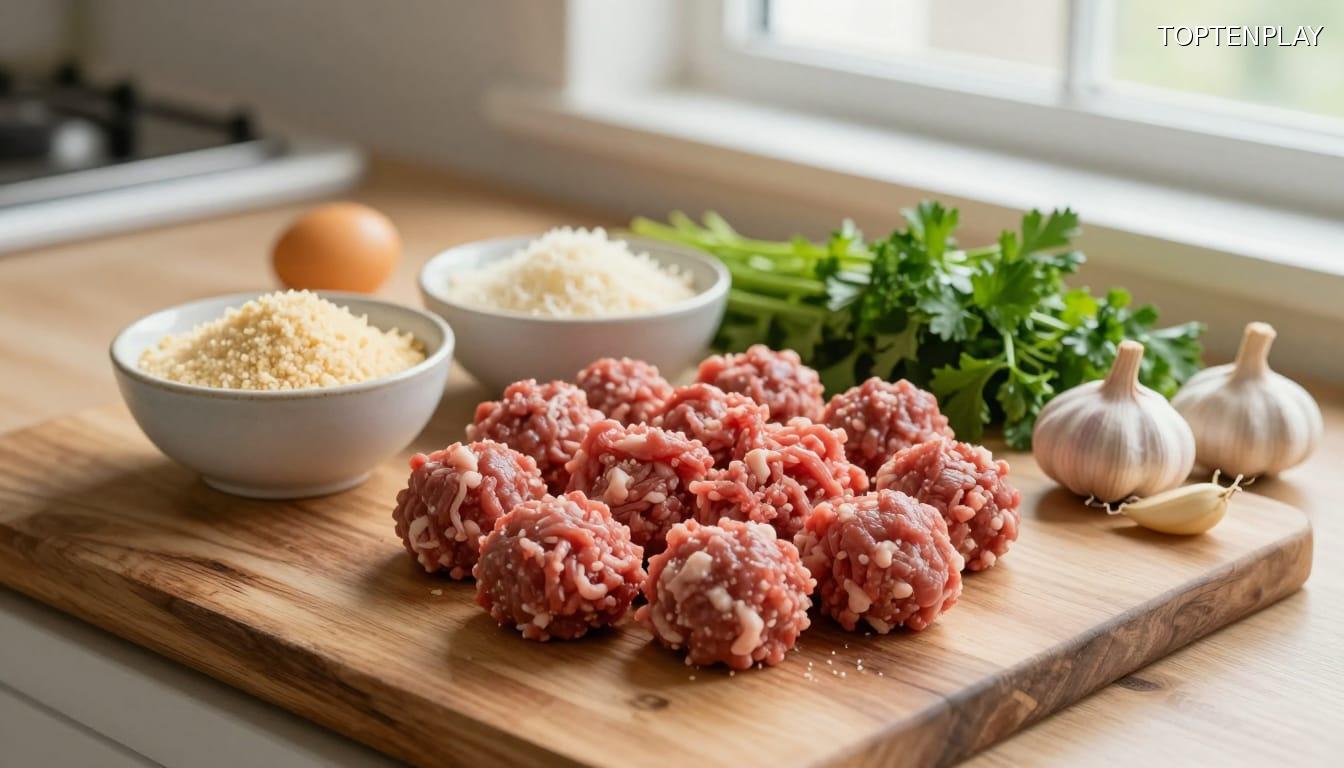
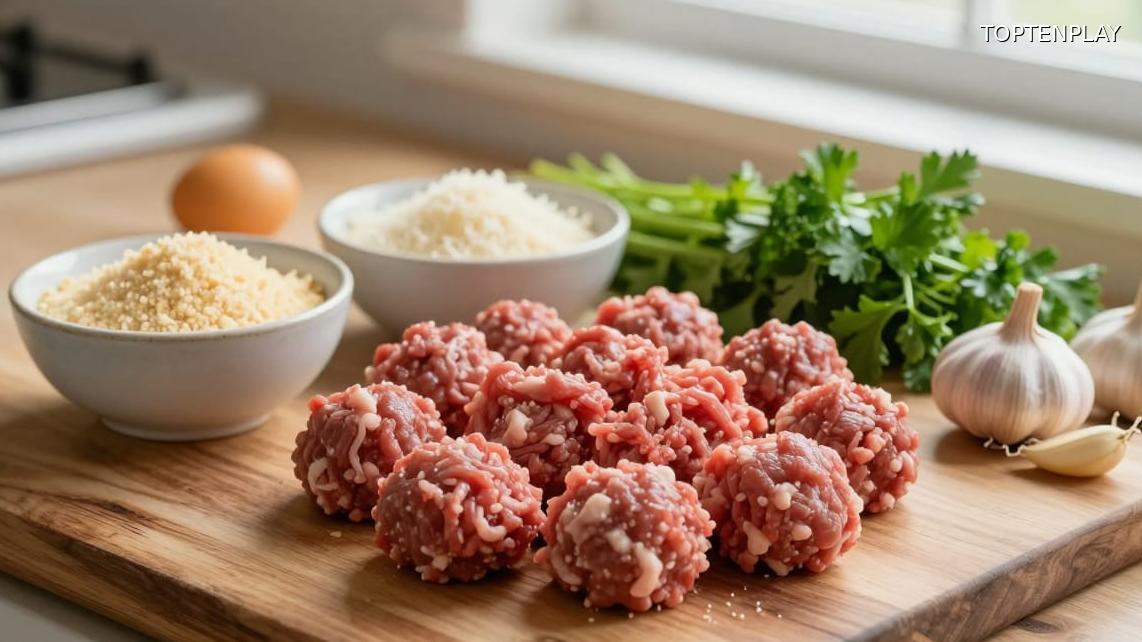
It all starts in the mixing bowl. Even before cooking, it’s the composition of the stuffing that determines whether a meatball will be tender and tasty — or dense and characterless. With 300 g of ground beef as a base, the recipe revolves around two complementary binders: 30 g of fine breadcrumbs and 20 g of grated parmesan. The breadcrumbs absorb moisture and soften the texture, while the parmesan brings a deep umami note that immediately distinguishes these meatballs from an ordinary version.
Finely chopped garlic and onion breathe aromatic character into the preparation. Fresh chopped parsley balances the whole with a slightly peppery vegetal touch. An egg completes the binding, ensuring cohesion and tenderness during cooking.
The decisive gesture remains the kneading. Working the stuffing by hand, delicately and without excess, allows for a homogeneous preparation where each ingredient is well distributed — without compressing the meat to the point of making it compact. It is precisely this lightness in the mixture that guarantees the sought-after moist texture.
The seasoning — a teaspoon of fine salt, a pinch of black pepper — comes in at this stage, integrated directly into the mass to uniformly penetrate the meat even before the heat comes into play.
The Gesture That Changes Everything: Shaping and Browning the Meatballs
The stuffing is ready — time for shaping. A simple tip makes all the difference: slightly moisten your hands before forming each meatball. This gesture prevents the meat from sticking to the palms and allows for regular rolling, guaranteeing round, compact meatballs capable of holding up during cooking without cracking.
Size also matters. Uniform meatballs cook evenly and offer a neat visual result on the plate.
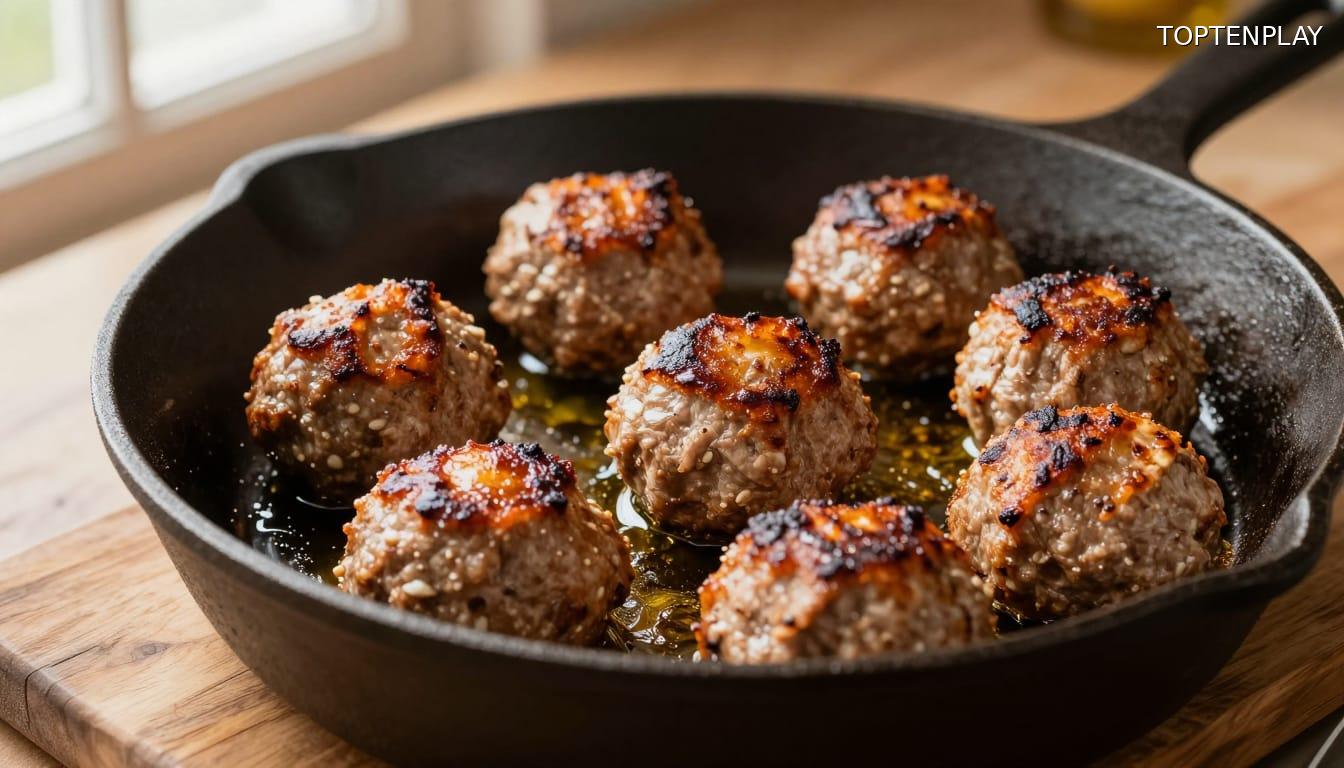
Next comes the browning, a decisive step for the depth of the final taste. In a large skillet, 2 tablespoons of olive oil heated over medium heat welcome the meatballs. Five to seven minutes are enough, provided you turn them regularly to obtain uniform coloring over the entire surface. This slightly golden crust is not just aesthetic: it concentrates the meat juices and develops caramelization aromas that will enrich the sauce.
Once browned, the meatballs are removed and set aside on a plate — never thrown directly into the sauce. This pause preserves their shape and, above all, leaves the cooking juices in the pan which will constitute the aromatic base for the next step.
The pan, thus scented, is ready to receive the tomato sauce.
The Scented Tomato Sauce: Simplicity and Concentration of Flavors
The juices left in the pan by the browned meatballs are no accident — they are the starting point for a tomato sauce of unsuspected richness. It is into this same container, without rinsing it, that the tomato pulp (400 g) is poured directly, accompanied by dried oregano, a pinch of salt and pepper.
This choice of continuity is deliberate: the caramelization juices dissolve into the tomato and immediately transmit a depth of taste that nothing else could reproduce.
Five minutes of simmering over low heat is enough for the sauce to concentrate, thicken slightly and release all its aromas. The oregano, activated by the heat, deploys its herbaceous notes which counterbalance the natural acidity of the tomato.
That’s when the reserved meatballs make their return. Placed delicately in the simmering sauce, they cook covered for an additional 15 minutes, turned halfway through to soak up the aromas uniformly. This two-stage simmering — sauce alone, then sauce with meatballs — is the true key to the dish: the sauce perfumes itself first, then the meatballs feed on it, creating a progressive fusion between the two elements.
At the end of this cooking, each meatball is bursting with tomato, herbs and those juices that, from the beginning, were only waiting for this moment.
Tips, Variations and Plating: Personalizing the Dish Infinitely
This dish, as accomplished as it is, is only a starting point. A few adjustments are enough to transform it radically according to the constraints or desires of the moment.
First reflex to adopt: prepare the raw meatballs in advance and refrigerate them before cooking. This rest in the cold firms up their structure, improves their hold in the pan and preserves that inner moistness that makes all the difference.
For a low-fat version, the oven becomes the ideal ally. Baked at 200°C for 15 minutes before integrating the tomato sauce, the meatballs brown without bathing in oil, while retaining their tenderness. An effective alternative that sacrifices nothing to texture.
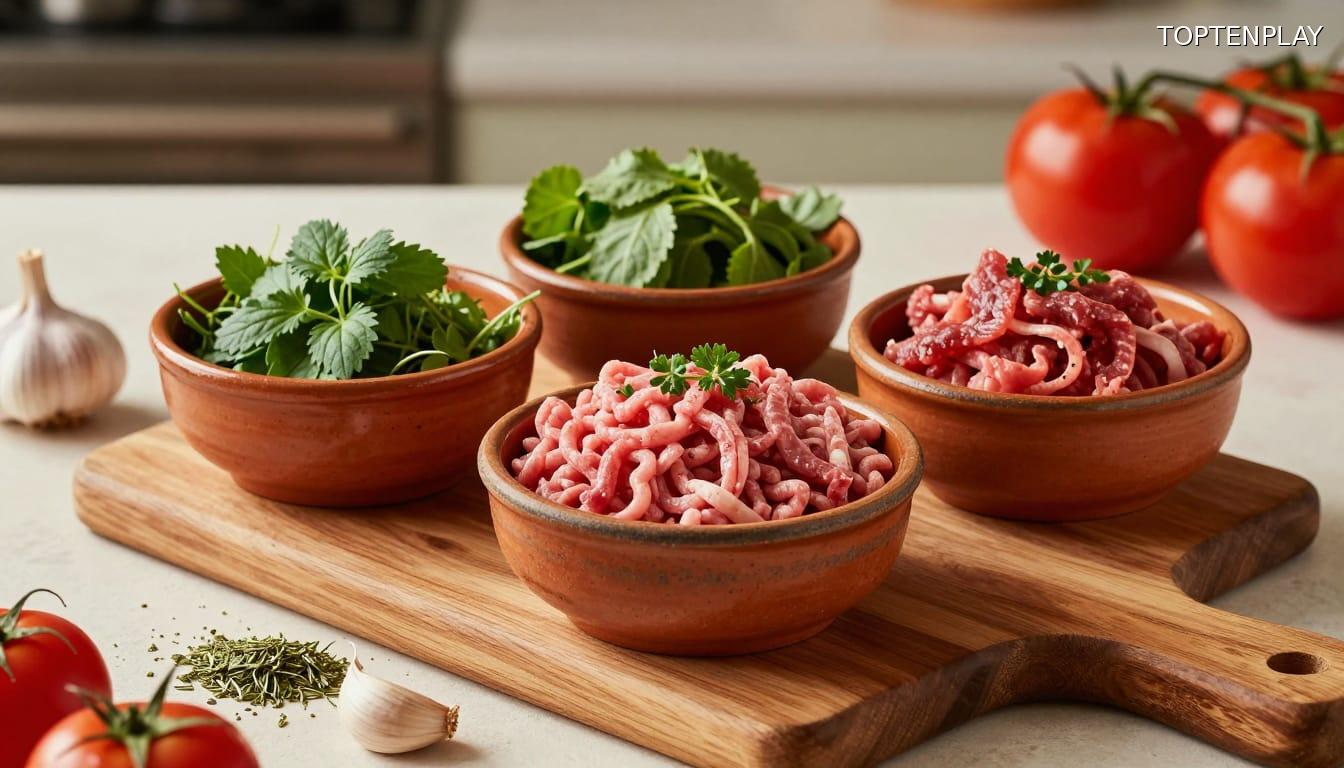
On the aromatic profile side, substituting the meat opens up unexpected horizons. A beef/veal mixture brings more finesse and sweetness, while lamb transforms the dish into a preparation with frankly Mediterranean accents, more fragrant and full of character — a version that goes particularly well with pilaf rice or vegetables roasted in olive oil.
The plating, for its part, is played on the finish: a generous rain of fresh chopped parsley at the moment of serving wakes up the colors and brings a herbaceous note that contrasts with the richness of the sauce. Served hot, accompanied by pasta, rice or seasonal vegetables, this unique dish knows how to adapt to every table.