📌 Homemade infusions: how ginger, lemon, and cinnamon support your immunity and digestion daily
Posted 19 March 2026 by: Admin
Herbal Infusion: This Ancestral Ritual Making A Comeback
In a world where speed dictates our daily choices, a millenary practice is regaining its prestige. Herbal infusion, this simple preparation obtained by pouring hot water over plants, spices, or fruits, is establishing itself as the natural alternative to industrial drinks that saturate our shelves.
The principle? Letting hot water extract the active compounds contained in plants: antioxidants, polyphenols, vitamins, and minerals. These natural molecules, scientifically recognized for their ability to protect our cells from daily oxidative stress, offer discreet but real support to our physiological balance.
This return to basics is no coincidence. Faced with the overconsumption of refined sugars and chemical additives, more and more people are looking for simple gestures to reintegrate nature into their routine. Infusion responds precisely to this quest: accessible, economical, and composed of ingredients that everyone already has in their kitchen.
Unlike the miracle cures promised by certain fleeting trends, this practice does not claim to revolutionize your health overnight. Instead, it offers a gentle commitment, a soothing regularity that fits naturally into a balanced lifestyle. A cup, a break, a moment for oneself – that is what truly lies behind this ancestral ritual that makes sense today.
Everyday Ingredients With Unsuspected Virtues
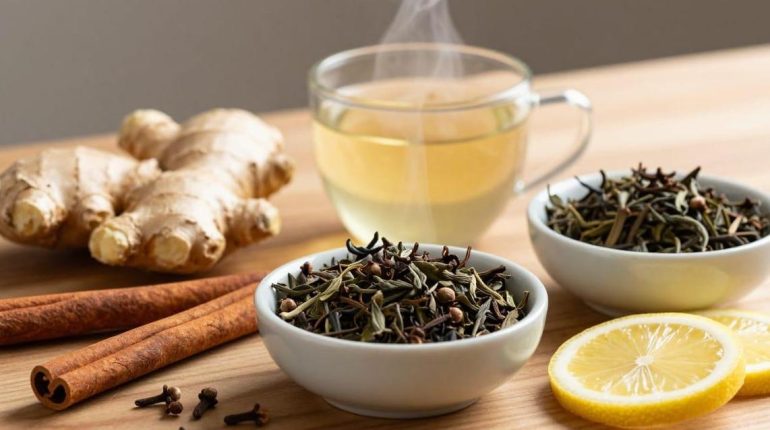
Open your kitchen cupboard. Between the honey jar and the sugar bowl, you will likely find the ingredients for an infusion with properties recognized for centuries: ginger, lemon, cinnamon, cloves. These common foods, which we mechanically use to season our dishes, actually concentrate active compounds valued by medicinal traditions worldwide.
Ginger, for example, is renowned in Asian medicines for its digestive and anti-inflammatory properties. Cinnamon, used since antiquity, contains polyphenols with measurable antioxidant effects. Cloves, far beyond their culinary use, contain eugenol, a compound with documented soothing properties. As for lemon, its richness in vitamin C and flavonoids makes it a natural ally for cellular balance.
What makes these ingredients particularly relevant is their total accessibility and safety of use when consumed in reasonable proportions. No need to order exotic powders or visit specialized shops: everything is already there, within reach.
This generational transmission is not accidental. Traditional cultures observed, tested, and then adopted these plants for their concrete effects on daily well-being. Today, modern science is beginning to decipher the biological mechanisms behind these ancestral uses, validating what human experience already knew.
Potential Benefits Of Regular Consumption
Understanding biological mechanisms is not enough: one must also know what regular infusion can concretely bring to daily life. The observed effects, although variable from person to person, follow a logic of natural support for body functions, without curative claims.
On the digestive level, ginger and cinnamon promote intestinal comfort and reduce occasional bloating sensations. These properties, documented in several phytotherapeutic studies, explain why so many traditions recommend an infusion after a heavy meal.
The intake of antioxidants is another major asset. These molecules help the body manage daily oxidative stress, a cellular process accelerated by pollution, stress, or an unbalanced diet. The polyphenols present in cinnamon and cloves participate in this protective balance.
Beyond physiological effects, there is an often underestimated soothing dimension. Drinking a hot infusion at the end of the day creates a moment of pause, a breath in a busy schedule. This relaxing effect, although partially psychological, remains beneficial for stress management.
Finally, hydration enriched with plant compounds transforms a mundane gesture into a true well-being ritual. Unlike industrial drinks, this infusion provides fluids without added sugars or additives, while naturally stimulating the body.
Instructions And Precautions For Optimal Practice
This understanding of benefits is only valuable if the preparation respects certain simple principles. The basic recipe relies on precise proportions: one teaspoon of each chosen ingredient for 250 ml of boiling water. After infusing for 10 to 15 minutes covered, simply filter before tasting.
Regularity takes precedence over intensity. One to two cups daily, preferably in the morning for a stimulating effect or in the evening to promote relaxation, constitute an ideal rhythm without risk of overdose. Some add a touch of natural honey, but this option remains optional according to individual tastes.
Financial accessibility is a major asset: ginger, cinnamon, and lemon can be found everywhere for a few euros, without requiring sophisticated equipment or deep botanical knowledge. This budgetary simplicity partly explains the renewed interest in these ancestral practices.
However, prudence imposes certain clear limits. This infusion in no way replaces a prescribed medical treatment and should never be considered an autonomous therapeutic solution. Pregnant women, people on medication, or those suffering from chronic pathologies must imperatively consult a health professional before integrating this drink into their routine.
Excess, even natural, can cause digestive discomfort or interact with certain medications. Moderation therefore remains the golden rule of any responsible practice, allowing one to enjoy the virtues without falling into counterproductive consumption.