📌 Homemade Fraisier: the double cream technique that transforms the classic into an airy dessert
Posted 25 December 2025 by: Admin
The Genoise: The Fraisier’s Airy Foundation
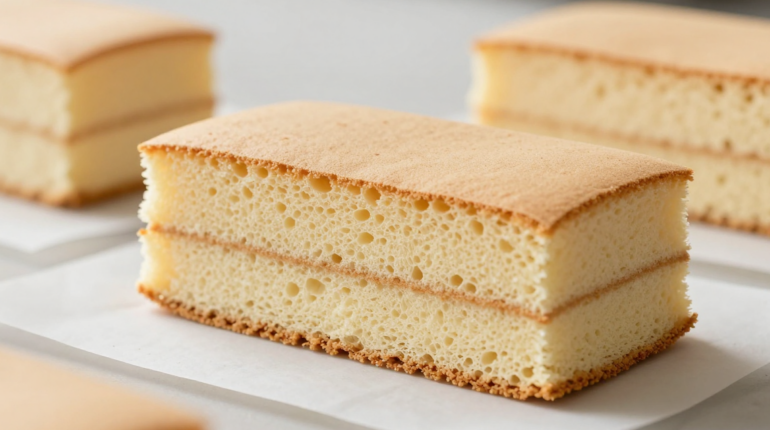
At the heart of this French pastry classic lies a genoise whose lightness determines the success of the whole. The professional technique relies on a precise thermal principle: placing the egg-sugar mixture in a bain-marie allows it to reach an optimal temperature that triples the volume of the batter. This foamy emulsion, whisked until it forms a thick ribbon, constitutes the essential airy structure.
The incorporation of dry ingredients reveals all the delicacy required. The 120 grams of flour sifted with baking powder are added using a flexible spatula, never a whisk. This upward motion, which lifts the batter rather than mixing it brutally, preserves the trapped air bubbles. Any action too vigorous would break this fragile architecture and produce a dense genoise.
Baking at 180°C for 20 to 25 minutes transforms this preparation into a golden and flexible biscuit. Once completely cooled, the cake is cut horizontally into two regular discs, the base for future assembly. For demanding palates, a light vanilla syrup delicately soaks these discs, guaranteeing an ultra-moist texture that melts under the tongue. This optional step distinguishes the homemade Fraisier from its professional version, creating a superior taste experience.
Vanilla Pastry Cream: The Creamy Heart of the Recipe
This perfectly airy genoise calls for a filling of an opposite but complementary texture. The vanilla pastry cream embodies this alliance, transforming 500 milliliters of milk into a silky preparation that coats the strawberries without crushing them. The process begins by infusing a split vanilla bean in hot milk, releasing its authentic aromas that radically differentiate this cream from a version with industrial extract.
While the milk absorbs the vanilla notes, four egg yolks meet 100 grams of sugar under the energetic action of the whisk. This blanching forms the emulsified base that will welcome the 50 grams of cornstarch, an essential thickening agent. The hot milk is added in a continuous stream, one hand whisking relentlessly while the other gradually pours the fragrant liquid.
The return to the saucepan marks the critical step. Over low heat, cooking requires constant whisking, without interruption or distraction. Any pause would cause irreversible lumps or a grainy texture unworthy of a careful pastry. The cream thickens in a few minutes, going from a liquid consistency to a firm creaminess that generously coats the whisk.
As soon as the ideal texture is revealed, plastic wrap applied directly to the hot surface preserves the cream from any oxidation. This simple but essential protection prevents the formation of an unpleasant skin during complete cooling. It is this cooled cream, perfectly smooth and intensely vanillic, that will soon welcome the chantilly to form the creamy heart of the Fraisier.
Architectural Assembly: When Technique Meets Aesthetics
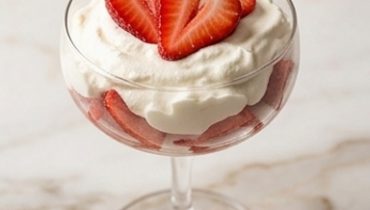
This cooled and smoothed cream finds its true fulfillment in an unexpected transformation. The lightening by incorporating a whipped chantilly distinguishes the amateur Fraisier from the professional one. 200 milliliters of very cold liquid cream whipped with 30 grams of icing sugar produce a firm mousse which, delicately mixed with the pastry cream, generates an airy and light texture, capable of maintaining the strawberries without compressing them.
The adjustable pastry ring becomes the decisive tool for a finish worthy of a shop window. The first genoise disc rests at the bottom, receiving a thin layer of this lightened cream. Then comes the Fraisier’s signature gesture: arranging the strawberry halves vertically against the walls of the ring, their cut side facing outwards. This strategic arrangement will reveal, upon unmolding, an impeccable alignment of bright red fruits.
The remaining strawberries occupy the center, drowned under a generous layer of cream before the second genoise disc seals the whole. A gentle but firm pressure stabilizes the structure, while the spatula smoothes the upper surface to receive the final dusting of icing sugar.
This meticulous architecture will only reveal its perfection after a minimum rest of two hours in the refrigerator. The cold solidifies the cream, sets the layers, and allows for a clean cut where each slice exhibits the geometric succession of genoise-cream-strawberries-cream-genoise, a visual testament to a mastered technique.
Finishing and Storage: The Keys to an Impeccable Result
This prolonged rest in the refrigerator is not a simple recommendation, but the determining step that separates a fragile cake from a structured pastry. Two hours minimum allow the cream to firm up, the flavors to fuse, and the layers to bond. An ideal rest extends beyond that, up to four or five hours, guaranteeing a clean cut without collapsing and revealing each layer in its intact geometry.
The final decoration is a matter of calculated sobriety. A veil of sifted icing sugar uniformly covers the upper surface, catching the light and masking any imperfection. A few fresh strawberries, selected for their regular shape and bright red color, crown the center in a rosette or a simple line. This visual restraint highlights the future cut, where the true beauty of the Fraisier will be revealed.
There is no shortage of variations for those who master the basic structure. Raspberries and blueberries successfully replace strawberries, bringing a pronounced acidity that contrasts more with the vanilla sweetness of the cream. Once the ring is removed, the cake keeps for three days in the refrigerator under film, its texture remaining stable thanks to the cornstarch stabilizing the cream.
Six generous portions emerge from this total work of three hours, of which only forty minutes are active. The rest belongs to the oven and the cold, transforming precise technical gestures into this French celebration of spring freshness that a perfectly executed Fraisier represents.