📌 Homemade focaccia: the brine technique that transforms the texture in 30 minutes
Posted 29 January 2026 by: Admin
The Mediterranean Base: Preparing The Perfect Dough
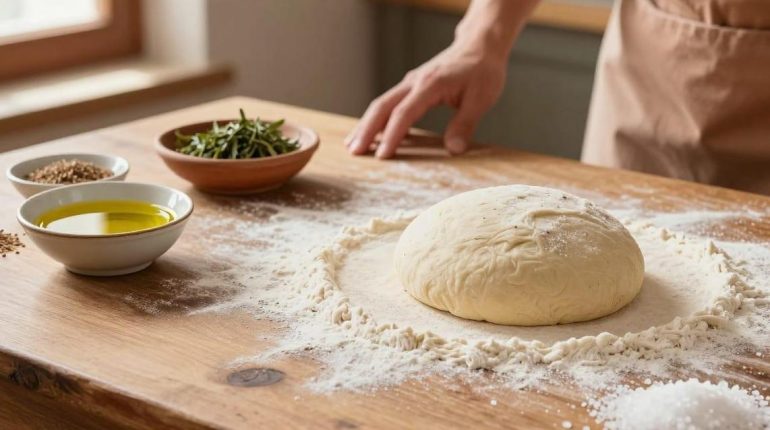
The success of an authentic focaccia relies on a precise technique from the very first minutes. In the mixer bowl, flour, oregano, cumin, salt, sugar, olive oil, baker’s yeast, and water come together to form the characteristic Mediterranean alliance of this Italian specialty. The simultaneous addition of these dry and liquid ingredients is not accidental: it guarantees a homogeneous distribution of flavors from the start.
Mechanical kneading for 10 minutes is the secret to an irreproachable texture. This precise duration allows the dough to acquire the necessary elasticity without overworking the gluten. The mixer works the material until a smooth and supple consistency is obtained, a sign that the proteins have developed their optimal structure.
Once the ball is formed, it’s time for the first rest: 45 minutes in a warm environment. This step activates fermentation and allows the yeast to begin its work. The dough rises gently, developing the subtle aromas that will make the difference at the time of tasting. This initial lag time is non-negotiable: it conditions the entire rest of the process and the final success of the focaccia.
The Art Of Spreading And Oiled Shaping
Once the first fermentation is complete, the dough reveals its potential under the baker’s hands. In a large, generously oiled dish, it is spread with the palm using an ancestral technique that makes all the difference. Alternating the two sides during spreading guarantees a uniform impregnation of olive oil, creating that incomparable taste signature that distinguishes authentic focaccia from industrial imitations.
The fingers then shape the characteristic dimples, those small craters that will hold the oil and concentrate the flavors. Each press creates a relief that will give the focaccia its recognizable airy texture. This manual step, impossible to reproduce mechanically, imprints the mark of traditional know-how into the dough.
A second rest of 30 minutes is then required. The dough continues its maturation, air bubbles develop in the formed cavities, preparing the final structure of the bread. This intermediate break also allows the oil to penetrate deeply, ensuring that inner softness that contrasts with the crispness of the crust. Oiled shaping is not just a technical step: it transforms the raw material into a true Mediterranean specialty, ready for its final treatment.
The Brine Treatment: The Bakers’ Secret Technique
While the dough completes its intermediate rest, a decisive preparation takes place behind the scenes. The brine, a simple mixture of olive oil, water, and salt, represents the professional secret that Italian bakers pass down from generation to generation. This emulsion, applied generously over the entire surface of the dough, will penetrate the previously shaped dimples and create that incomparable soft texture.
The complete application of the brine radically transforms the structure of the focaccia. The salt dissolved in the water migrates to the heart of the dough, developing a balanced salty taste that is not limited to the surface. The olive oil, in synergy with the water, forms a protective barrier that will preserve the internal moisture during baking while promoting external crispness.
A third and final rest of 30 minutes is essential after this treatment. The dough gradually absorbs the brine, the flavors diffuse, and the final fermentation is completed. This step, little known to the general public, explains why some focaccias display exceptional softness while others remain dry. Patience is rewarded: the dough, now saturated with Mediterranean aromas, awaits its final topping before facing the intense heat of the oven.
Vegetable Topping And High-Temperature Baking
The dough, soaked in brine and fully fermented, now receives its visual and gustatory signature. Carrots, cut lengthwise, reveal their orange flesh and align in parallel ribbons across the entire surface. This longitudinal cut is not just an aesthetic choice: it maximizes contact with the oven heat and guarantees uniform cooking that preserves the vegetable’s natural crunch.
Between these colored lines, black olives punctuate the composition with dark and intense touches. A few cumin seeds, strategically scattered, complete this Mediterranean trinity. This carrot-olive-cumin combination reinterprets traditional focaccia by giving it a strong vegetable identity, far from the classic rosemary versions.
The oven, preheated to 200°C, imposes its rule. Exactly fifteen minutes are enough to perform the final transformation. This high temperature instantly creates a golden crust that traps the internal moisture, while the carrots caramelize slightly and the olives release their salty aromas. The toasted cumin exhales its warm and earthy notes. Upon leaving the oven, the focaccia presents that sought-after contrast: soft base, crispy surface, tender topping. The oiled dimples have formed golden craters that bear witness to the meticulous work accomplished since the first kneading.