Tea bags are just marketing. Clove water is cooking. What the great medicinal tables of Asia and the Near East have practiced daily for centuries, you can replicate at home with two ingredients — and the result is honestly something else.

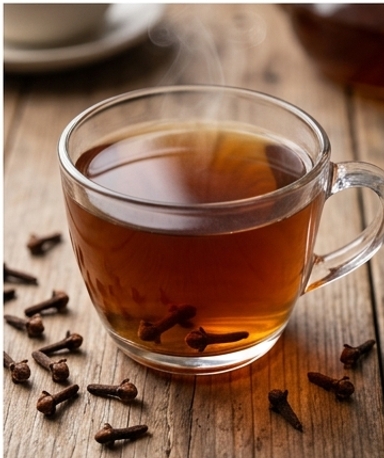
In the cup, the water has taken on a deep amber hue, like a strong but darker tea, almost coppery in places when the light hits it. The scent rises as soon as you get close — warm, spicy, with that woody and slightly peppery undertone that defines fresh cloves. On the palate, it starts sweet, then settles into a gentle warmth at the back of the throat. Not aggressive. Just present.
Why you’ll love this recipe
Ingredient Notes
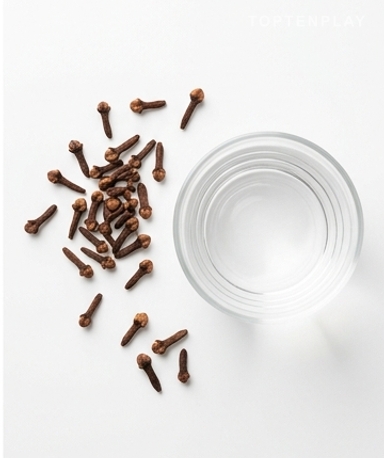
All you need: a few whole cloves and water. That’s really it.
- Whole cloves : Whole, not powdered — that’s important. Powder turns bitter too quickly and passes through the filter. Whole cloves release their oils progressively, and you stay in control. Those from Madagascar have a more floral and soft aroma; those from Zanzibar are more intense and woody. Both work perfectly. Four to six cloves per glass is plenty.
- Water : Tap water does the job fine if it’s neutral where you live. If you have hard water with a strong taste, filtered water gives a cleaner result. Clove aromas are delicate — no need to make them fight with chlorine.
- Optional spices (cinnamon, ginger, cardamom) : No obligation, but if you want to go further: half a cinnamon stick, two or three slightly crushed cardamom seeds, or a thin slice of fresh ginger. Add them at the same time as the cloves to the cold water. Ginger brings heat, cardamom a note that is almost floral and peppery at once.
Use whole cloves, even those sitting there for a year
Whole spices age much better than ground ones — they lose a bit of intensity, but the active compounds remain. Before starting, give them a sniff. If they still release that pungent, warm smell that slightly tingles the nostrils, they are perfect. If they smell like absolutely nothing, add two extra cloves to compensate. Sunday morning is the perfect time to empty that jar bottom that’s been waiting since Christmas.
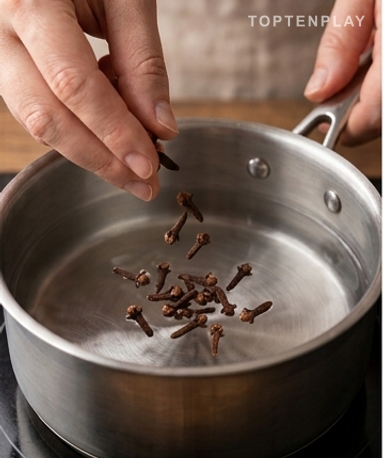
Put the cloves in cold water — not the other way around
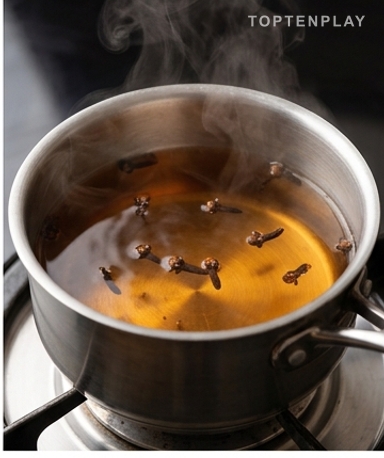
This is the detail most people miss. Don’t throw the cloves into already boiling water; it rushes the extraction and yields a harsher infusion. Start with cold water and the cloves inside, and bring them up to temperature together. When it reaches a boil, lower the heat slightly to maintain a steady simmer — you should hear that quiet, almost sleepy splashing sound. Let it sit for five to seven minutes without a lid. The water will change color gradually: first pale yellow, then light honey, then deep amber like a light brown ale.
Filter properly, let it cool for two minutes
A small fine-mesh strainer is ideal. Even tiny clove fragments can make the drink powdery at the bottom of the cup — and that’s unpleasant. Pour slowly, without pressing. Wait two minutes before drinking: at the right temperature, the aromas are clearer than when scalding hot, and the warmth envelopes your palms almost intentionally. It’s that first steaming sip that regulars of this drink have sought every morning for years.
Sweeten after, not during
If you want to sweeten, do it in the cup after filtering — not during cooking. Honey, in particular, loses its finest aromas above 60°C, so you might as well add it at the last second. But taste it plain first. Many people discover that the slight bitterness and heat of the clove is exactly what they were looking for in the morning. A tiny drizzle of acacia honey if needed — it’s neutral and won’t overpower the spice.
Tips & Tricks
- Don’t throw away the cloves after the first infusion: they can handle a second round. The infusion will be lighter in color but still very aromatic. Keep them in a small bowl next to your stove until the next morning.
- If the smell seems too intense the first time, start with four cloves for 300 ml instead of the standard 250 ml. Regulars gradually go up to six or eight depending on the intensity they seek — it’s a matter of habit and palate.
- This drink can also be prepared in large batches the day before and kept in the fridge for 48 hours in a sealed jar. The next day, reheated over low heat, it’s even better: the aromas have had time to stabilize and the overall profile is rounder.

Can I drink clove water every day?
Yes, one cup a day is perfectly reasonable for the vast majority of people. Beyond that, the eugenol in cloves can become irritating to the stomach in high doses. If you are on blood thinners or have recurring digestive issues, it’s best to talk to your doctor before making it a daily routine.
How many cloves should I use so it’s not too strong?
Four cloves for 250 ml of water is a good starting point if you are discovering this drink. Six cloves give a more intense and amber result, eight if you really want to feel the spice on the palate. Start light and adjust to your taste — you can’t really mess it up.
Can I prepare this infusion in advance?
Yes, it keeps very well for 48 hours in the refrigerator in a closed jar. Prepare 500 ml to 1 liter in the evening, filter, and store in the cold. The next morning, reheat over low heat in two minutes. The aromas are often rounder and well-integrated after a night of rest.
Can I sweeten clove water?
Absolutely, but add the sugar or honey to the cup after filtering, not during cooking. Honey heated above 60°C loses its delicate aromas. A dash of acacia honey or agave syrup works well — they are neutral and don’t mask the clove flavor.
What spices can I add for variety?
Cinnamon (half a stick), cardamom (two slightly crushed pods), and fresh ginger (a 5 mm slice) are the natural companions of cloves. Add them at the same time as the cloves to the cold water. Black peppercorns for a bolder version, dried orange zest for a sweeter touch.
Can the cloves be used a second time?
Yes, keep them in a small bowl until the next day. The second infusion will be noticeably lighter in color and aroma, but still pleasant. Beyond two uses, the cloves don’t offer much — at that point, you can compost them.
Homemade Clove Water
Traditional
Hot drink
A traditional two-ingredient infusion, prepared over low heat to release the warm and woody aromas of clove. Simple, fast, and surprisingly comforting.
Ingredients
- 5 whole cloves
- 250 ml water (preferably filtered if water is hard)
- 1 teaspoon honey (optional, for serving)
- ½ cinnamon stick (optional)
Instructions
- 1Pour cold water into a small saucepan and add the whole cloves (and cinnamon if using).
- 2Bring to a boil over medium heat, then reduce to low heat to maintain a gentle simmer.
- 3Let infuse for 5 to 7 minutes without a lid, until the water takes on an amber color.
- 4Filter into a cup using a fine strainer.
- 5Let cool for 2 minutes, then add honey if desired. Enjoy hot.
Notes
• Storage: prepare in large quantities (500 ml to 1 L) and keep in the refrigerator in a sealed jar for up to 48 hours. Reheat over low heat before serving.
• Reusing cloves: filtered cloves can withstand a second round the next day for a lighter infusion.
• Spicy variation: add 2 crushed cardamom pods and a slice of fresh ginger for a more complex and slightly peppery version.
Nutrition Facts (per serving, estimated)
| 5 kcalCalories | 0gProtein | 1gCarbs | 0gFat |