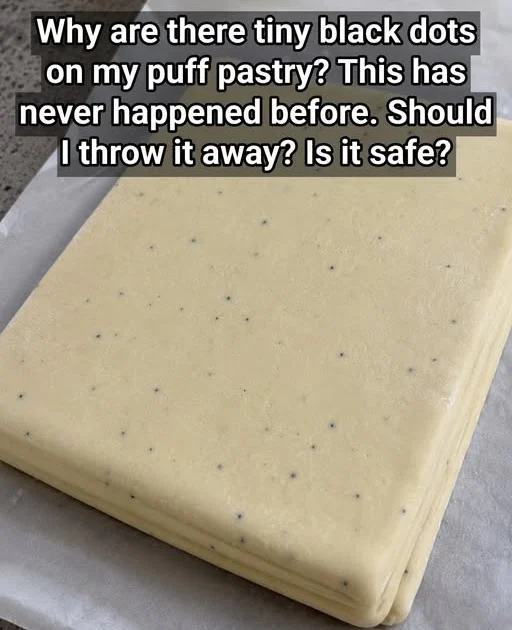
Have you ever put a dish on the table and seen people stop their conversation mid-sentence? This cheese bread does exactly that. Soft bread, melted cheese, a toasted crust — a combination that needs no explanation.
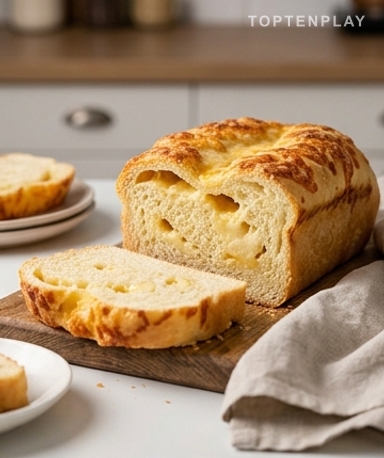
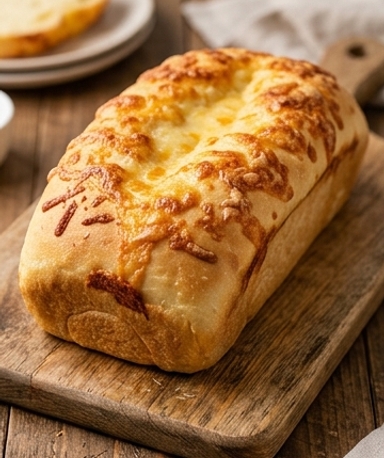
The crumb is tender, almost elastic under your fingers. The surface is covered with a layer of cheese that has melted and then browned, turning from pale yellow to light caramel brown in spots. When broken apart, it pulls. A little steam rises. The smell — butter, warm milk, slightly toasted cheese — fills the room even before the first piece is served.
Why you’ll love this recipe
Ingredient Notes
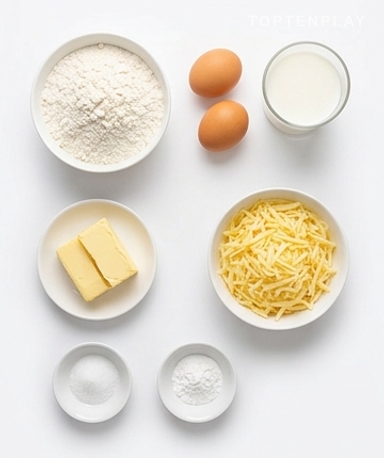
Everything you need for a successful cheese bread: simple, direct, effective.
- The Cheese : This is what does the work. A good cheddar aged 12 months brings tang and melts well. Gruyère provides the stretch you’re looking for. Avoid mozzarella on its own — too bland, too much water. A 70% cheddar / 30% gruyère mix works very well.
- The Flour : All-purpose (T45 or T55), classic. What really matters: weighing it to the gram rather than using an approximate spoon — it changes the final texture significantly.
- The Butter : Melted and cooled, not hot. If you add it scalding to the dough with the eggs, you risk cooking them before you even get to the oven. Semi-salted butter adds a very interesting salty base.
- The Eggs : Two whole eggs for structure and richness. They bind the dough and give it that slightly golden hue inside. Use them at room temperature — the dough will be more homogeneous.
Why the dough is ready in five minutes flat
No kneading, no waiting. You mix the dry ingredients on one side, the liquids on the other, then combine without overworking. The dough should stay slightly lumpy — that’s intentional. Over-mixing activates the gluten and you get a dense, rubbery bread. Use a spatula or fork, no electric mixer. The texture resembles a thick cake batter, a little sticky to the touch — that’s exactly what you want.

The part everyone gets wrong: cheese in two stages
The classic first mistake: putting everything in at once. The right method is to incorporate two-thirds of the shredded cheese directly into the dough, then set aside the last third for the surface. The cheese on top will gratinate, brown, and create a crust that crackles slightly when sliced. The cheese inside stays melty. That contrast — toasted outside, gooey inside — is where everything happens. Be generous with the surface.
The oven does the rest, but stay alert
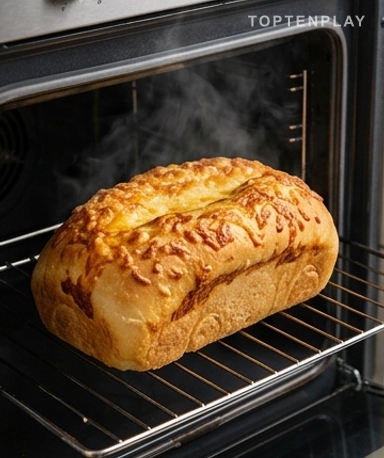
180°C fan oven, greased and lightly floured pan. The bread rises slowly during the first twenty minutes without taking color. Then, between the twentieth and thirtieth minute, the cheese starts to brown. The smell changes — it becomes more intense, slightly caramelized. That’s when you need to stay nearby. A knife blade inserted in the center should come out clean. If the top browns too quickly, place a piece of aluminum foil loosely over it.
The hardest part: waiting before slicing
The temptation is real. The bread is hot, and the kitchen smells like melted cheese. But if you cut it immediately, the crumb tears rather than slicing cleanly, and the internal steam hasn’t had time to redistribute. Ten minutes on a rack. It seems long. It’s not long. The reward: a clean slice, with the cheese stretching nicely without collapsing.
Tips & Tricks
- Grate the cheese yourself rather than buying pre-shredded — commercial shredded cheese contains anti-caking starch that prevents it from melting properly.
- For a bit of character without changing the cheese, add half a teaspoon of smoked paprika or a few chili flakes to the dough — it blends in without dominating.
- If you want to prepare ahead, bake it, let it cool completely, then reheat at 160°C for 8 minutes the next day — it regains 90% of its original softness.

What cheese should I choose for a really stretchy cheese bread?
Gruyère is the champion of stretching, but it lacks a bit of character alone. The best result comes from a mix: 70% aged cheddar for flavor, 30% gruyère for the stretch. Avoid pre-shredded bagged cheese — it contains starch that prevents a proper melt.
Why is my bread too dense or compact?
The most common cause: over-mixing. With a baking powder dough, you combine just enough — 30 seconds, no more. Working the dough too much activates the gluten and results in a rubbery crumb. Another possible cause: expired baking powder, which no longer has any effect.
Can I make cheese bread the day before?
Yes, no problem. Bake it fully, let it cool completely, then wrap it in plastic wrap. The next day, reheat at 160°C for 8 minutes — it regains almost all its softness. Avoid slicing it in advance, as that speeds up drying.
How do I store leftovers?
At room temperature in an airtight bag or plastic wrap for 2 days maximum. In the refrigerator, it hardens unnecessarily. For longer storage, freeze it sliced — each slice can be reheated directly in the toaster in 3 minutes.
Can I add other ingredients to the dough?
Absolutely. Dried herbs (thyme, rosemary), smoked paprika, sesame seeds on top, or a few caramelized onions in the dough work very well. Rule of thumb: do not exceed 80-100g of additions to avoid weighing down the structure.
Do I need a specific pan?
A standard 25cm loaf pan is enough. If you don’t have one, a 22cm round cake pan also works — the bread will be lower and the cooking time slightly shorter (about 5 minutes less). Essential: grease and flour the pan well, otherwise the cheese at the bottom will stick.
Homemade Cheese Bread
American
Side Dish
A soft bread with melty cheese, featuring a toasted and golden crust. Ready in under an hour, no kneading required.
Ingredients
- 300g all-purpose flour
- 11g baking powder (1 packet)
- 1 tsp fine salt
- ½ tsp smoked paprika (optional)
- 2 eggs at room temperature
- 200ml whole milk
- 80g melted and cooled butter (preferably semi-salted)
- 180g shredded aged cheddar (for the dough)
- 50g shredded gruyère (for the top)
Instructions
- 1Preheat the oven to 180°C fan. Grease and flour a 25cm loaf pan.
- 2In a large bowl, mix the flour, baking powder, salt, and smoked paprika.
- 3In another bowl, whisk the eggs with the milk and the cooled melted butter.
- 4Pour the liquids over the dry ingredients and mix with a spatula for 30 seconds maximum — the dough should remain slightly lumpy.
- 5Incorporate the 180g of shredded cheddar with a few strokes of the spatula without working the dough further.
- 6Pour the dough into the pan and sprinkle the 50g of shredded gruyère over the entire surface.
- 7Bake for 28 to 32 minutes. Check for doneness with a knife inserted in the center: it should come out clean.
- 8Let rest for 10 minutes on a wire rack before removing from the pan and slicing.
Notes
• Storage: 2 days at room temperature in an airtight bag, or up to 2 months in the freezer sliced.
• Variation: replace 50g of cheddar with shredded dry goat cheese for a more tangy version.
• If the top browns too quickly before the end of cooking, cover loosely with aluminum foil for the last 10 minutes.
Nutrition Facts (per serving, estimated)
| 360 kcalCalories | 13gProtein | 29gCarbs | 20gFat |