Have you ever stared at your morning coffee wondering if you could do something better for yourself — without having to get up twenty minutes earlier? This carrot-beet juice might just be the answer. No overpriced machine, no impossible-to-find ingredients. Just a blender and ten minutes.
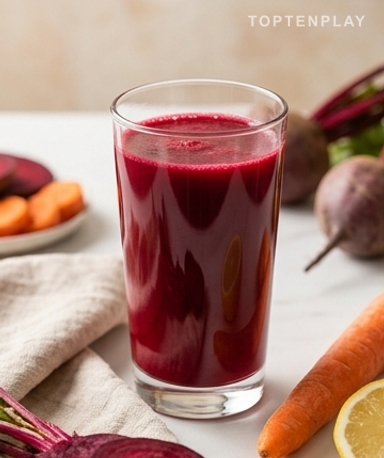
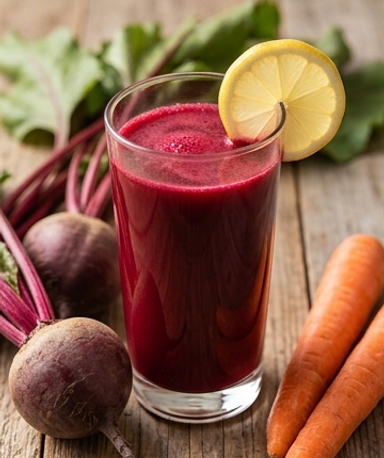
In the glass, the color is striking. A deep purple-red, almost like liquid garnet, with orange reflections where the carrot takes over. The smell is earthy, slightly sweet — the beetroot asserts its character from the first moment. One sip, and you get that unique taste: sweet, slightly tart on the finish, with the freshness of the lemon balancing everything out.
Why you’ll love this recipe
Ingredient Notes
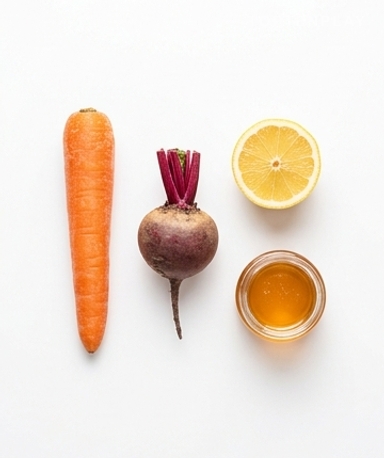
Four ingredients, no more: one beetroot, one carrot, one lemon, and some honey to sweeten.
- Beetroot : Get it raw, not vacuum-cooked. Supermarket pre-cooked beets in pouches have already lost their juice and much of their flavor. Raw, it resists under the fingers — firm like a potato — and its color stains everything it touches immediately. Pick a cutting board you won’t regret.
- Carrot : A real carrot with some character, not those snack baby carrots. If you can find seasonal ones with the greens still attached, their taste is more pronounced and less watery than those that have been sitting in a plastic bag for weeks.
- Lemon : Half a squeezed lemon is what makes the difference between a flat juice and a vibrant one. The acidity cuts through the earthiness of the beet and slows down oxidation. If you don’t have lemon, half a lime works too — with a slightly more floral profile.
- Honey : One teaspoon, no more. If you add it, use a liquid and neutral honey — acacia is preferable. A honey that’s too strong, like chestnut, will overpower everything else. And if you want to skip added sugar, forget it: the sweet carrot is more than enough.
Why raw beetroot wrongly intimidates everyone
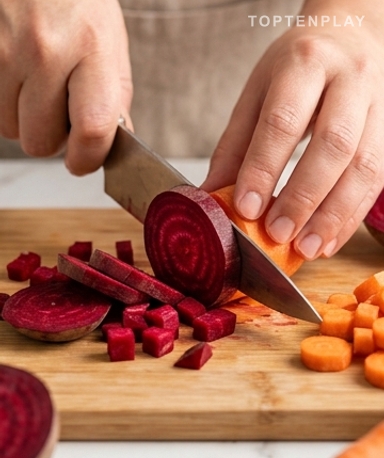
Most people only know beetroot cooked, soft, with that slightly bland taste found in school cafeteria salads. Raw, it’s a different story. Choose a small beetroot — about the size of a clementine — and peel it with a peeler as you would an apple. The intense purple-red flesh stains as soon as you touch it, so work quickly. Cut it into dice of about two centimeters: this helps the blender reduce everything without straining the motor. The carrot is prepared the same way. Two minutes of chopping, and the main work is done.
The part everyone botches: the blending
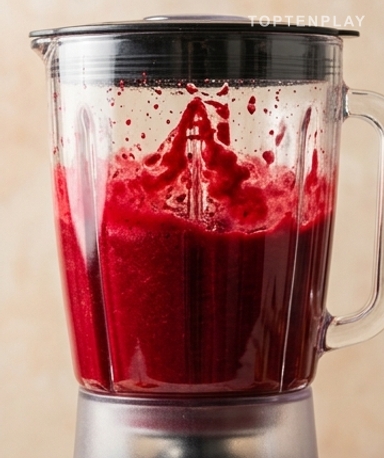
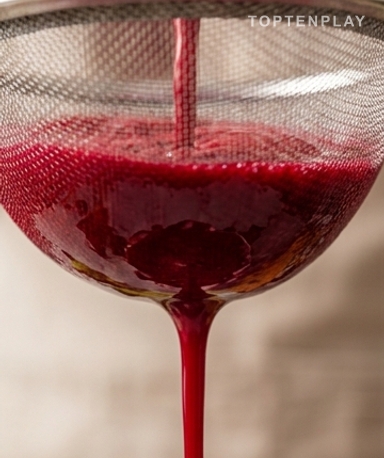
The classic mistake is throwing everything into the blender without water and being surprised when it stalls. The 200 ml of water isn’t optional — it allows the blades to work and achieves a fluid consistency rather than a thick puree. Start by blending for 30 seconds at medium speed, then switch to full power for one minute. You’ll hear the texture change: first a dull, irregular sound, then a smoother hum when everything is well reduced. At this stage, it’s ready. If you want a clear juice, pass it through a fine sieve, pressing the pulp with the back of a spoon. If you prefer to keep the fiber, drink it as is.
The variations that are truly worth the detour
With half a red apple added to the base, the juice becomes significantly sweeter and easier to drink for palates not yet used to beetroot. A slice of fresh ginger — no more than two centimeters — completely changes the profile: it tingles slightly at the back of the throat, and the scent becomes spicy and very fresh. This is the version that really wakes you up. For something more summery, a splash of orange juice instead of lemon rounds the edges and makes it fruitier. Try it, see what suits you.
Tips & Tricks
- Drink it within ten minutes of blending. The juice oxidizes quickly — its beautiful bright color turns reddish-brown quite fast, and the taste flattens at the same time. A glass prepared the night before in the fridge loses half its appeal.
- If you peel the beetroot without gloves, your hands will be blood red for hours. A squirt of lemon juice on your fingers helps remove the marks, and rubbing with coarse salt before rinsing also does the trick.
- Don’t force yourself to gulp this juice down if the earthy taste bothers you at first. Raw beetroot is an acquired taste. Start with a small amount, increase gradually, and in a week you won’t even notice that taste that seemed so strong the first time.
Can I prepare the juice the night before to save time in the morning?
Technically yes, but it’s a real shame. Beet juice oxidizes very quickly — in a few hours in the fridge, its color turns reddish-brown and its taste flattens. If you really want to simplify your life, prepare the peeled and chopped vegetables the night before in an airtight container, and only blend in the morning.
Do I need a juice extractor or is a classic blender enough?
A classic blender is more than enough. An extractor gives a clearer and slightly more concentrated juice, but the result with a blender and a little water is just as good — and much easier to clean. If you filter it with a fine sieve, you get almost the same result.
Can raw beetroot be replaced with pre-cooked beets in a pouch?
You can, but the result won’t be the same. Vacuum-cooked beets have already lost a good portion of their flavor and nutrients in the process. The juice will be blander and less vibrant in color. If that’s all you have on hand, reduce the water amount to compensate for the loss of density.
The earthy taste of beetroot really bothers me — how can I soften it?
Two options that work well: add half a red apple to the blend to provide fruity sweetness that masks the earthiness, or incorporate a slice of fresh ginger which shifts the focus to a sharper spicy note. A generous amount of lemon juice also helps — the acidity balances and refreshes the whole thing.
My urine turned pink after drinking this juice, is that normal?
Completely normal. This phenomenon is called beeturia — the natural pigments of the beetroot (betalains) pass through the digestive system and end up in the urine for some people. It’s harmless and temporary. About 10 to 14% of the population is sensitive to it; others notice nothing.
Can the quantities be adapted to make several servings at once?
Yes, just multiply the ingredients. For 2 servings, double everything. But keep in mind that the juice doesn’t keep well — if you prepare several glasses, do it just before serving, not as a stock for the week.
Homemade Carrot-Beet Juice
International
Beverage
A fresh and naturally sweet juice ready in ten minutes, with just a blender and four ingredients. The ideal base to start your day differently.
Ingredients
- 150g (1 small) raw beetroot
- 100g (1 medium) carrot
- 250ml water
- 15ml (½) squeezed lemon
- 7g (1 tsp) liquid honey (optional)
Instructions
- 1Peel the beetroot and carrot with a peeler, then cut them into dice of about 2 cm.
- 2Put the dice into the blender and pour in the water.
- 3Blend for 30 seconds at medium speed, then 1 minute at full power until the texture is smooth.
- 4Filter through a fine sieve by pressing the pulp with the back of a spoon, or drink as is to keep the fiber.
- 5Add the lemon juice and honey, mix briefly.
- 6Serve immediately.
Notes
• Drink within 10 minutes of preparation — the juice oxidizes quickly and loses its bright color and some of its flavor.
• Energy variation: add ½ red apple before blending for more sweetness. Digestion variation: a 2 cm slice of fresh ginger for a spicy note.
• Peeled and chopped vegetables can be stored the night before in an airtight container in the fridge to speed up the morning preparation.
Nutrition Facts (per serving, estimated)
| 130 kcalCalories | 3gProtein | 30gCarbs | 0gFat |