📌 Homemade caramel flan: the two texture secrets that most recipes forget
Posted 18 February 2026 by: Admin
Caramel Flan: A Timeless Homemade Pastry Classic
There are desserts that span generations without ever losing their magic. Caramel flan is one of them. A staple of French home baking, it charms with an apparent simplicity that actually hides delicate expertise and unparalleled generosity.
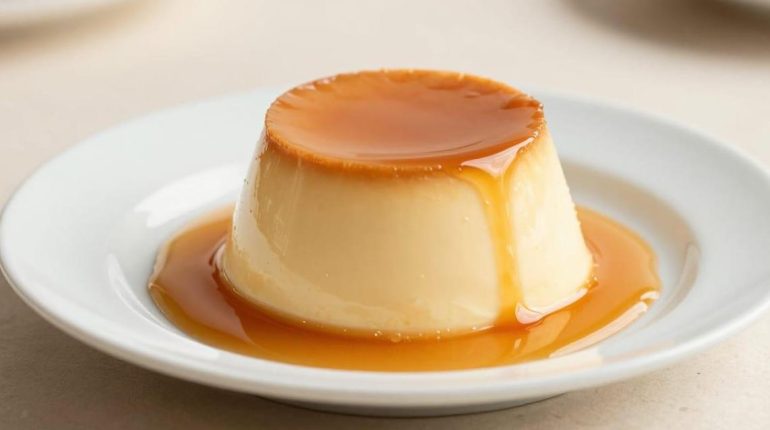
Its smooth and creamy texture literally melts in the mouth, while its golden caramel topping brings a sweetness that is both intense and subtle — that rare balance that distinguishes great classics from ordinary recipes. As soon as it is flipped onto the dish, that amber veil flowing slowly is enough to awaken childhood memories and sharpen even the most discreet appetites.
What makes caramel flan so strong is precisely its universality. Loved by young and old alike, it is just as welcome at a family meal as it is for a Wednesday afternoon snack. It requires neither sophisticated equipment nor rare ingredients: just care, patience, and a few mastered techniques.
An everyday dessert as much as an exceptional one, it perfectly illustrates this fundamental principle of French gastronomy: sophistication is born from the mastery of the simple. And it is precisely in the details — the proportions, the temperatures, the timing — that the whole secret of a truly memorable flan lies.
The Ingredients: Five Simple Elements for a Refined Result
This secret of sophistication born from the simple is revealed right from the list of ingredients. To delight six people, caramel flan requires only five elements — all accessible, all manageable.
The base relies on one liter of whole milk, guaranteeing that characteristic creamy richness, combined with five eggs that structure the mixture and give it its melting hold. Regarding sugar, the recipe makes an essential distinction: 150g goes into the flan preparation, while 100g is reserved exclusively for making the caramel. This separate dosage is not insignificant — it allows for precise control of the sweetness of each component without unbalancing the whole.
The fifth ingredient, a teaspoon of vanilla extract, plays a role far superior to its discretion: it delicately scents the mixture and brings that signature aromatic note that distinguishes a memorable flan from a simple baked custard. It is often the ingredient that is underestimated, yet it constitutes the soul of the dessert.
Better yet: all five of these ingredients come together in just 20 minutes of preparation. A remarkable time saving for a result that never leaves anyone indifferent at the table. The true complexity doesn’t lie in what you add — but in how you work with them.
The Technique: Five Key Steps for a Perfect Texture
The true complexity, hinted at in the choice of ingredients, is revealed here: in the gesture, the precision, and the respect for each step.
It all starts with the caramel. Pour the 100g of sugar into a heavy-bottomed saucepan, heat over medium heat without ever stirring — that’s the golden rule. The sugar melts gradually until it reaches a brilliant amber, a sign that you must act immediately: pour it into the mold and tilt it for uniform distribution before it sets.
The next step requires equal attention. The milk heated with the vanilla extract until simmering must be incorporated gradually into the eggs whisked with the sugar — never all at once, otherwise you risk coagulating the proteins and compromising the final texture. Filtering through a sieve removes any last impurities to guarantee an impeccably smooth mixture.
Then comes the bain-marie cooking, at 160°C in static heat, for 45 to 50 minutes. This indirect cooking method is decisive: it regulates the temperature rise and preserves the creaminess of the mixture. The sign of perfect cooking? A flan set at the edges, slightly jiggly in the center — this subtle oscillation guarantees the characteristic melt of the dessert.
Patience now takes over.
Secrets to Success: Resting, Unmolding, and Chef’s Tip
Patience, mentioned at the end of the previous step, is not an option: it is the first secret of a successful flan.
Once out of the oven, the mold first rests at room temperature before going into the refrigerator for a minimum of 4 hours. This resting time is not passive: it allows the mixture to solidify gradually, firm up its structure, and fully develop its aromas. Rushing this step means taking the risk of a catastrophic unmolding.
The unmolding itself requires method and calm. Running a warm knife along the edges of the mold is enough to gently loosen the flan without damaging it. Then comes the flipping onto the serving dish: the caramel, previously set at the bottom, then naturally coats the top and sides in a brilliant amber veil — the most visually rewarding moment of the whole recipe.
Finally, the tip that makes the difference: substitute the vanilla extract with a split bean infused in the hot milk. This simple change significantly intensifies the aromatic profile, bringing a complexity that extract cannot match. Gentle bain-marie cooking, let us remember, remains the sine qua non condition for that creamy and smooth texture that makes the dessert so unique.
A perfect caramel flan is built in the details — and savored in the moment.