📌 Homemade brioche: the double proofing technique that guarantees perfect softness (even for beginners)
Posted 27 March 2026 by: Admin
The Fundamentals Of A Successful Brioche — Between Tradition And Accessibility
Long perceived as a challenge reserved for seasoned bakers, homemade brioche proves to be accessible to all levels as long as three fundamental pillars are respected: mastered kneading, scrupulously observed resting times, and a precise balance of ingredients. This recipe demystifies an intimidating technique by revealing that no rare ingredients are necessary — 380g of flour, 2 eggs, 60g of sugar, 50g of butter, and 13cl of milk are enough to obtain that ultra-soft and stringy texture that characterizes the best pastries.
The active preparation time does not exceed 1h20, including baking. What truly distinguishes this approach is its ability to guarantee a “bakery-worthy” result without professional equipment or prior technical know-how. Dried baker’s yeast — a standard sachet — advantageously replaces fresh yeast, which is often difficult for beginners to dose. A capful of rum brings that subtle note that marks artisanal brioches without imposing a dominant alcoholic scent.
Contrary to popular belief, success does not depend on a mysterious knack but on a clear methodology: every step counts, none can be improvised. This rigor transforms a traditional recipe into a reliable protocol, reproducible with every batch. The promise is held in one sentence: everyday ingredients, a structured method, and the pleasure of savoring a pastry that rivals the best addresses.
The Crucial Steps From Kneading To Proofing — The Art Of Timing
It all starts with activating the yeast in lukewarm milk — a fundamental step that many neglect. The temperature of the liquid determines success: too hot, it kills the microorganisms; too cold, it blocks their development. The 10 minutes of rest allow you to visually check that the yeast is foaming, an irrefutable sign that it is active and ready to make the dough rise.
Kneading then requires 10 to 15 minutes of sustained effort to develop gluten, the elastic structure that guarantees the stringy crumb. The butter is never incorporated all at once: added gradually in small cubes, it integrates without breaking the already formed gluten network. This patience transforms a sticky mass into a smooth dough that pulls away from the sides of the bowl.
Double proofing is the true secret of professionals. The first fermentation lasts 1.5 to 2 hours until the dough doubles in volume — a visible, measurable, non-negotiable doubling. After shaping, the second proof of 45 minutes to 1 hour finalizes the development of the air pockets. These incompressible times forge the airy texture that differentiates an artisanal brioche from industrial brioche bread.
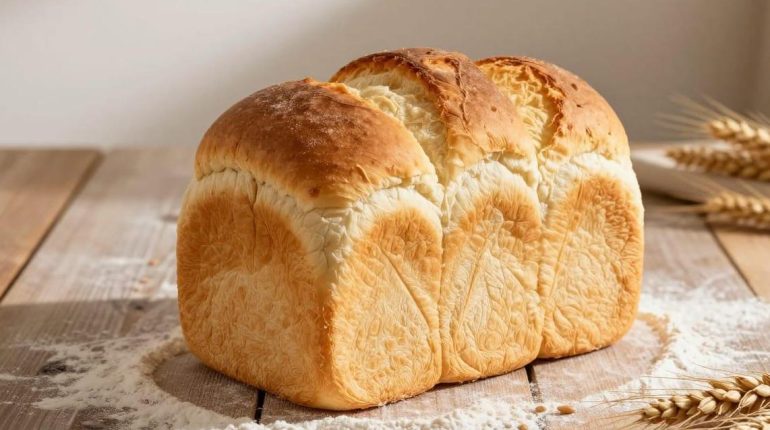
Baking at 180°C for exactly 20 minutes completes the process. This moderate temperature allows for uniform browning without drying out the crumb. Cooling on a rack prevents condensation that would soften the crust, preserving that contrast between a golden exterior and a soft interior that signals technical mastery.
Chef’s Secrets To Elevate The Classic Recipe
Prolonged kneading develops gluten beyond simple mixing: this protein structure creates the extensible strands responsible for the characteristic stringy texture. Professionals know that beyond the minimum 10 minutes, every additional minute refines the network until that elasticity is achieved that allows the dough to stretch without tearing.
The aromatic signature distinguishes a memorable brioche from an ordinary version. The capful of rum mentioned in the recipe brings a subtle depth without dominating the taste buds. The optional addition of orange blossom water — a few drops are enough — transforms the brioche into a fragrant pastry reminiscent of Provençal creations. These discrete aromas work behind the scenes, enriching the experience without being overbearing.
Gourmet variations exploit the versatility of the base dough. Chocolate chips are incorporated just before shaping to prevent them from melting during proofing. Braided shaping requires three strands of dough braided tightly, creating that visual architecture that impresses without complicating the technique. The egg wash made of beaten egg yolk, delicately applied with a brush before baking, guarantees that caramelized shine of bakery windows.
Pearl sugar sprinkled as a finish creates points of crunch contrasting with the soft crumb. This binary texture — crunchy exterior, melting interior — transforms every bite into a sensory experience. Quality butter remains the non-negotiable ingredient: butter with at least 82% fat content releases the milky aromas that mark artisanal authenticity.
Storage And Benefits Of Homemade — The Choice Of Quality
This artisanal architecture deserves optimal storage. Wrapped in a clean cloth at room temperature, the brioche maintains its stringy texture for 48 hours — well beyond industrial versions that dry out the next day. The breathable fabric preserves the moisture of the crumb while avoiding condensation that would soften the golden crust. For extended storage, freezing works perfectly: slicing before freezing allows you to defrost only the necessary portions.
The numbers speak for themselves. At 280 kilocalories per portion, this brioche contains 6 grams of protein from eggs and flour, 40 grams of carbohydrates for morning energy, and only 10 grams of lipids from quality butter. No additives, no chemical preservatives, no emulsifiers with unpronounceable names — only ingredients that can be named without hesitation.
The real economy is measured beyond the price. An artisanal brioche of this quality would easily cost 6 to 8 euros in a bakery. The 380 grams of flour, butter, eggs, and sugar cost less than 3 euros for six generous portions. The value for money becomes evident from the first bite, when the crumb tears with that silky resistance impossible to reproduce industrially.
This versatility transforms every moment. Spread with jam at Sunday breakfast, dipped in hot chocolate for a snack, or simply buttered to accompany a coffee — homemade brioche adapts without ever losing its gustatory superiority. Once this stringy texture is experienced, returning to commercial versions becomes unthinkable.