It’s the kind of thing you make on a Friday evening when there’s bread in the basket, guests arriving in twenty minutes, and no desire to complicate life. A dipping oil is five ingredients and ten minutes—but on the table, it looks like effort. Comfort at its most basic: good bread, fragrant oil, and a conversation that stretches.
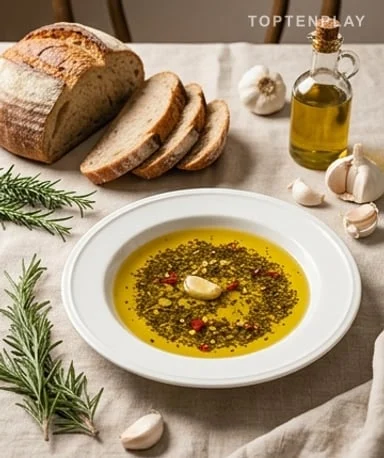
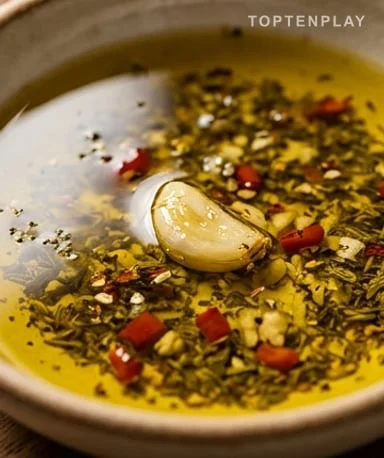
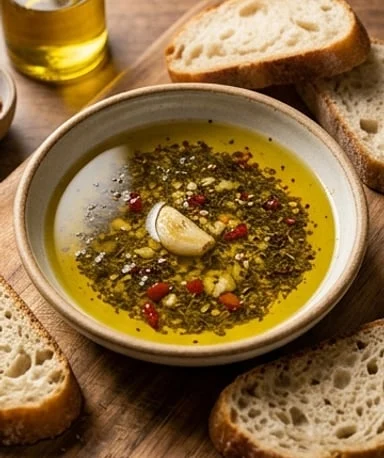
When garlic heats in the oil, the apartment smells like southern cuisine. Not aggressive garlic that stings—something gentle, slightly caramelized, with herbs warming in the background. The oil takes on a cloudy golden hue, rosemary sprigs and chili flakes floating on the surface. Set the bowl on the table and the bread disappears in twenty minutes.
Why you’ll love this recipe
Ingredient Notes
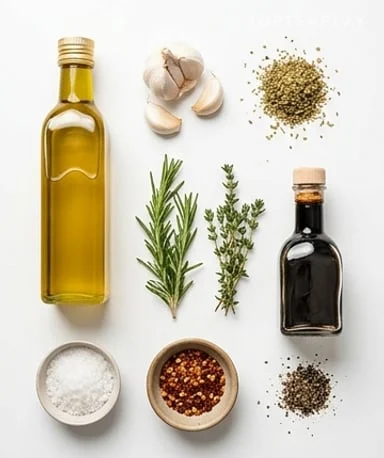
Extra virgin olive oil, fresh garlic, aromatic herbs, chili flakes, and a drizzle of balsamic: everything you need, nothing more.
- Extra virgin olive oil : The one ingredient where saving money directly affects the taste. A good oil has slight bitterness and a peppery finish—two qualities that hold up well to gentle heat.
- Fresh garlic : Crushed with the flat of the knife, not chopped. Crushed garlic releases its oils gradually into the heat, staying mild. Finely chopped, it burns in seconds and becomes unpleasantly bitter.
- Aromatic herbs : Dried rosemary and oregano as a base—they withstand heat without degrading. For fresh herbs like basil, reserve them for serving, never during cooking.
- Red chili flakes : A modest amount is enough—just a slight heat that hits the back of the throat a few seconds after swallowing. The goal is to balance the richness of the oil, not to burn.
- Balsamic vinegar : Optional, but a few drops at serving add a sweet acidity that cuts through the oil’s heaviness and deepens the overall flavor.
Choose an oil you’d enjoy tasting alone
Dipping oil is 80% oil. No point in flavoring a low-quality oil—herbs can’t save a flat, waxy base. Choose a first-press extra virgin, ideally with a fruity and slightly peppery taste when tasted straight. The difference is immediately felt once heated: the aroma is rounder, more straightforward, with a presence in the mouth that lingers on the bread.
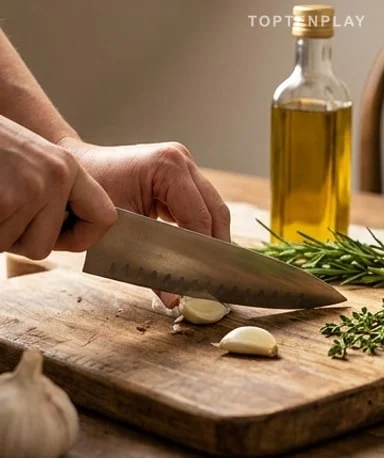
Crush the garlic—don’t chop it
Place the flat of a knife on a clove and press down firmly: that’s all it takes. Crushed garlic releases its aromas gradually into the hot oil, without the harshness of raw. In the pan, it softens slowly, turns pale blonde and translucent. At this point, most of the work is done.
Keep the heat low—smoke is the enemy
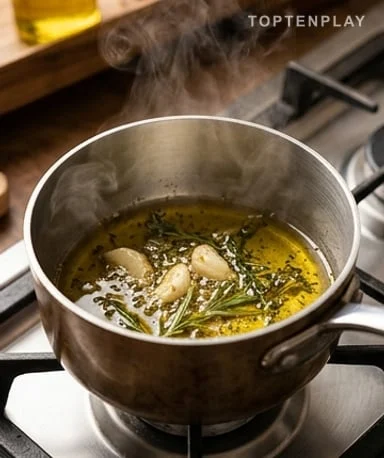
The goal is not to fry the garlic but to infuse the oil. Medium-low heat, no more than five minutes. If the garlic starts coloring too quickly or you hear intense sizzling, remove the pan immediately. Overheated oil loses its delicate aromas. The surface should just barely shimmer—lazy little bubbles around the garlic, nothing more.
Let it rest ten minutes before setting on the table
Off the heat, covered, the flavors continue to blend in the residual warmth. The herbs release their essential oils, the garlic finishes softening. The lukewarm oil—neither hot nor cold—is also the ideal temperature for dipping: it penetrates the bread without softening it, leaving a clean, pure taste on the palate.
Tips & Tricks
- To store the oil, pour it into an airtight jar and keep it in the refrigerator for a maximum of 24 hours. It will solidify in the cold—take it out thirty minutes before serving so it returns to a liquid consistency.
- A squeeze of lemon juice just before placing the bowl on the table lightens the whole thing and adds a slightly acidic freshness, especially useful with a dense bread like focaccia.
- If your bread is slightly stale, this oil brings it back to life perfectly—the dry crust absorbs the aromas differently, with a very satisfying crunchy-greasy aspect.
Can you prepare the dipping oil in advance?
Yes, and it’s even recommended. Prepared a few hours before serving, the oil has time to fully absorb the garlic and herb aromas. Store at room temperature for up to 4 hours, or in the refrigerator in an airtight jar until the next day.
What bread is best for dipping?
A firm-crust bread—baguette, ciabatta, country bread, or focaccia—holds up well to oil without falling apart. Avoid soft sandwich bread or very soft breads that soak up too quickly and become mushy.
Can you use garlic powder instead of fresh garlic?
Technically yes, but the result is less nuanced. If you use it, reduce the amount to a quarter teaspoon and add it directly to the oil off the heat—never during cooking, it becomes bitter.
How do you know when the oil is at the right temperature?
The oil is ready when small bubbles form lazily around the garlic cloves—no vigorous sizzling, no smoke. If the garlic starts browning quickly, it’s too hot: remove the pan from the heat immediately.
Can you use this oil for something other than bread?
Very easily. It works as a light vinaigrette over roasted vegetables, as a finishing touch on vegetable soup, or to brush over grilled meat. The infused aromas make it usable wherever a flavored oil is welcome.
Homemade Bread Dipping Oil
Italian
Appetizer
An olive oil infused with garlic, herbs, and chili flakes—ready in ten minutes, perfect as an appetizer with crusty bread.
Ingredients
- 120 ml extra virgin olive oil
- 3 fresh garlic cloves, peeled
- 1 teaspoon dried rosemary
- ½ teaspoon dried oregano
- ¼ teaspoon red chili flakes
- 1 tablespoon balsamic vinegar (optional)
- 1 pinch sea salt
- 1 pinch freshly ground black pepper
Instructions
- 1Crush the garlic cloves by placing the flat of a knife on them and pressing down firmly—no need to chop them.
- 2Pour the olive oil into a small saucepan. Add the crushed garlic, rosemary, and oregano.
- 3Heat over medium-low heat for 3 to 5 minutes, until small bubbles form around the garlic without it coloring.
- 4Remove from heat, add the chili flakes, cover, and let rest for 10 minutes.
- 5Pour into a shallow bowl, add the balsamic vinegar if desired, salt, and pepper. Serve immediately with crusty bread.
Notes
• The quality of the olive oil is decisive—a first-press extra virgin completely changes the result.
• To vary, add dried thyme, a teaspoon of rinsed capers, or a squeeze of lemon juice at serving.
• The oil keeps for 24 hours in the refrigerator in an airtight jar. It solidifies when cold—remove it 30 minutes ahead of time.
Nutrition Facts (per serving, estimated)
| 240 kcalCalories | 0gProtein | 1gCarbs | 27gFat |