📌 Homemade Bouillabaisse

Posted 15 April 2026 by: Admin #Recipes

Prep Time
25 minutes
Cook Time
35 minutes
Total Time
60 minutes
Servings
4 to 6 servings

Bouillabaisse is not a soup. Let’s stop with this reductive label: it’s a complete meal, a ceremony, something you don’t rush between two meetings. It’s a weekend dish, and it demands respect.
Advertisement:
Final result
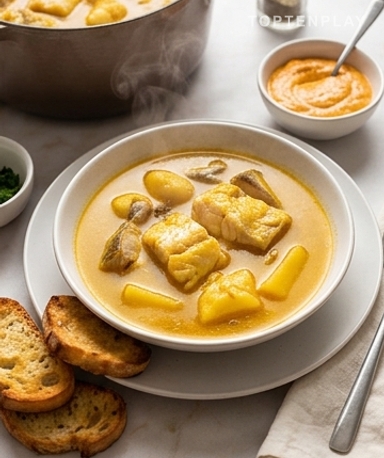
Bouillabaisse served with its toasted bread toasts and homemade rouille — a complete meal in itself.

The bowl arrives with this deep yellow-orange broth — the exact color of a sunset over the Mediterranean. The steam rises, loaded with a sea and saffron scent that hits the back of your throat in the best possible way. The pieces of white fish contrast with the lightly golden potatoes, and on the side, slices of toasted bread wait, spread with a rouille that smells strongly of garlic. Rustic and beautiful at the same time.

Why you’ll love this recipe

The broth is worth everything else : There are dishes where the broth is an excuse. Here, it’s the star. Between the saffron, the rockfish that slowly flake away, and the garlic-tomato base that has simmered gently, it takes on an unexplainable depth. You finish the bowl, then you dip more bread.
One pot for six people : No need to manage five pans at once. Everything is built in one large pot, and in the end, you easily feed six people with an impressive presentation.
Simpler than it looks : The reputation of bouillabaisse is intimidating. In reality, the technique is basic: you build a base, add liquids, and slide the fish in at the end. Patience does the work, not complexity.
It rewards free time : It’s the ideal dish for a Saturday with no plans. Between the quiet prep, the simmering cooking time, and the recommended hour of rest, you have time to do everything without rushing anything.

Ingredient Notes

Ingredients

Advertisement:

Everything needed for a homemade bouillabaisse: assorted fish, vegetables, saffron, and olive oil.

  • The fish : This is where everything happens. Red scorpionfish remains the benchmark — it gives that deep briny taste that defines bouillabaisse. Complete it with whiting or cod for white flesh, and if you find gurnard or weever at your fishmonger, take them without hesitation. Pro tip: ask to keep the bones and heads. If you make your own stock, it’s next level.
  • Saffron : Don’t skimp on quality. Supermarket powdered saffron often has very little to say. Go for saffron filaments from a specialty deli or online — one jar lasts a long time and the difference in the broth is immediate. A pinch is enough. Beyond that, it becomes bitter.
  • Potatoes : Not just any kind. Choose a waxy variety — Charlotte or Nicola — that holds its shape during cooking without turning into mash in the broth. They absorb the saffron and paprika, and by the end of cooking, they display an ochre-orange tint, like a very light caramel, which perfectly sets the stage.
  • Olive oil : Be generous, not stingy. It is the binder for the aromatic base and returns at the end of cooking to smooth out the broth. Use an oil you would like to eat raw — if it tastes good on bread, it will taste good in the pot.
  • Seafood (optional) : Shrimp and mussels are not part of traditional bouillabaisse. If you want to enrich the dish, add them at the very end — mussels just long enough to open, shrimp for two minutes maximum. After that, they become rubbery, and that would be a shame.

Base first, everything else after

In your largest pot, heat the olive oil over medium heat. The sliced onion goes in, and after a few minutes, it starts to soften with that steady light sizzle that signals things are really starting. The garlic joins in. Wait until everything becomes translucent — not brown, just translucent — before adding the chopped tomatoes. They will gradually melt, release their water, and the base will turn a matte red-orange. That’s the aromatic foundation. Give it time, don’t force it.

Base first, everything else after
Adding the fish to the fragrant broth, the stage that gives the dish all its character.

Saffron, paprika, and cover

The potato chunks go into the pot. Add the paprika and saffron filaments directly on top, then stir so the spices coat everything. At this stage, the pot already smells promising — an earthy and slightly floral mix, almost medicinal. Pour in the liter of cold water or your fish stock. Bring to a boil, turn down the heat, and simmer for about fifteen minutes. The potatoes should be half-cooked, still slightly resistant to the point of a knife.

Advertisement:

The delicate moment

The fish enters the broth last, and this is where you need a light touch. Start with the thickest pieces — scorpionfish, gurnard — and place them gently. Thin pieces like whiting arrive two minutes later. Low heat, lid slightly ajar. And above all: do not stir with a spoon. If you need to mix, gently shake the pot by the handles. Sea fish falls apart at the slightest touch, and once crumbled in the broth, you lose everything. Ten to fifteen minutes, no more.

The rouille, in parallel

While the broth simmers, prepare the rouille. Crush a garlic clove with a pinch of salt in a mortar until you get a smooth, sticky paste that clings to the sides. Add the egg yolk, mix well, then incorporate the olive oil in a very fine stream — exactly like a mayonnaise. Too fast, and it will break. The sauce should be thick, shiny, and a matte creamy yellow. A bit of chili if you like, but be reasonable: it should enhance the broth, not drown it.

Service, in two stages

Tradition dictates serving the broth first, in deep bowls, with slices of toasted bread floating on top topped with rouille. Then the fish and vegetables arrive on a separate platter. This is the right way: each element keeps its identity, and everyone builds their bowl as they wish. If you prefer to serve everything together, no one will judge you. But this broth deserves a moment of attention on its own.

Advertisement:
Service, in two stages
The pot simmering gently — the saffron already colors the broth a beautiful gold.

Tips & Tricks
  • Don’t touch the fish with a spoon during cooking — shake the pot by the handles. Cooked sea fish breaks at the slightest touch, and you’ll lose the presentation in a second.
  • Let the broth rest for an hour after cooking before serving if you can. The flavors unify, the saffron rounds out. This isn’t a minor suggestion; it really changes the taste.
  • For the rouille, take the egg out of the fridge an hour before. A cold yolk makes the sauce break much more easily, and fixing a broken rouille takes patience and quite a bit of extra oil.
Close-up
The melting fish flesh in a shiny saffron broth says it all.
FAQs

Can I prepare bouillabaisse in advance?

Yes, and it’s even recommended. The broth (without the fish) can be prepared the day before and improves after a night in the fridge. On the day of the meal, bring it back to a simmer and cook the fish at the last minute. Cooked fish doesn’t reheat well — it becomes rubbery.

Advertisement:

Can I use frozen fish?

Yes, provided you thaw it completely and pat it dry before adding it to the broth. Frozen fish releases a lot of water, which can dilute the broth. Use fresh if you can, especially for scorpionfish which is hard to find frozen.

What fish should I use if I can’t find scorpionfish?

Advertisement:

Scorpionfish brings the characteristic briny depth, but it’s not always available. Replace it with gurnard, weever, or John Dory — rockfish with character. Cod and whiting can supplement but shouldn’t be the sole base; their flavor is too mild.

How do I fix a broken rouille?

Take a new egg yolk in a clean bowl and incorporate the broken rouille into it in a very thin stream, as if you were starting a mayonnaise again. In most cases, it will emulsify. The cause of breaking is almost always either adding oil too fast or a yolk that is too cold.

Advertisement:

Are mussels or shrimp mandatory?

No, the traditional Marseille version does not contain them. It’s an addition that enriches the dish but is not essential. If you use only fish, the bouillabaisse is already generous in flavor.

Does bouillabaisse freeze?

Advertisement:

The broth alone freezes very well for up to 3 months. Cooked fish, however, does not handle freezing well — the texture becomes spongy and mealy upon thawing. Best practice: freeze only the base broth and add fresh fish the day you serve it again.

Homemade Bouillabaisse

Homemade Bouillabaisse

Medium
French
Main Course
Prep Time
25 minutes
Cook Time
35 minutes
Total Time
60 minutes
Servings
6 servings

The quintessential Marseille fish soup, with its saffron broth, rockfish, and homemade rouille. A weekend dish that takes time and makes everyone silent at the table.

Advertisement:

Ingredients

  • 1 kg assorted fish (scorpionfish, whiting, cod, gurnard)
  • 300 g whole shrimp or mussels (optional)
  • 400 g waxy potatoes (Charlotte or Nicola)
  • 300 g tomatoes (2 medium tomatoes)
  • 1 medium onion, sliced
  • 3 garlic cloves, 2 for the pot and 1 for the rouille
  • 1 litre fish stock or water
  • 3 c. à soupe olive oil (45 ml), plus a drizzle to finish
  • 1 c. à café paprika
  • 1 bonne pincée saffron filaments
  • 1 bay leaf
  • salt and pepper
  • 1 egg yolk (for the rouille)
  • 100 ml olive oil (for the rouille)
  • 1 pincée chili (optional, for the rouille)
  • 6 à 8 tranches bread, toasted in the oven or pan

Instructions

  1. 1In a large pot, heat 3 tbsp of olive oil over medium heat. Add the sliced onion and 2 minced garlic cloves, sauté for 5 minutes until translucent.
  2. 2Add the tomatoes cut into pieces. Cook for 5 minutes stirring, until they melt and form an orange base.
  3. 3Stir in the potatoes cut into thick chunks, paprika, saffron, and bay leaf. Mix to coat the vegetables well.
  4. 4Pour in the fish stock or water. Bring to a boil, then lower the heat and simmer for 15 minutes — the potatoes should be half-cooked.
  5. 5Add the thickest pieces of fish first (scorpionfish, gurnard). Cook for 5 minutes on low heat. Add the thinner fish (whiting, cod) and cook for another 8 to 10 minutes without stirring — shake the pot if necessary.
  6. 6If using seafood, add it now. Cook for 3 minutes, just long enough for the mussels to open or the shrimp to turn pink.
  7. 7Adjust salt and pepper. Add a drizzle of olive oil. Let rest for 1 hour off the heat if time permits.
  8. 8Prepare the rouille: crush 1 garlic clove with a pinch of salt in a mortar until it forms a paste. Add the egg yolk, mix, then incorporate the 100 ml of oil in a very fine stream like a mayonnaise. Add chili if desired.
  9. 9Serve the hot broth in deep bowls with the toasted bread spread with rouille. Present the fish and vegetables on a separate dish.

Notes

• Storage: the broth alone keeps for 2 days in the refrigerator and 3 months in the freezer. Cooked fish does not freeze — only add the fish when serving if preparing in advance.

• Homemade stock: ask your fishmonger for fish bones and heads. Simmer them for 30 minutes in water with bay leaf and an onion. The resulting broth will give incomparable depth to the dish.

• Quality saffron: saffron filaments from a gourmet shop or online are really worth the trip. Powdered saffron sold in supermarkets gives little color and even less fragrance.

Advertisement:

Nutrition Facts (per serving, estimated)

475 kcalCalories 43 gProtein 22 gCarbs 23 gFat

Advertisement:
Share it!

Thanks for your SHARES!

You might like this

Add a comment:

Latest posts

Chipotle Chicken Tacos with Apple-Red Cabbage Slaw and Homemade Creamy Sauce

Crispy Oven-Baked Turkey Ham and Mozzarella Sticks

One-Pan Spaghetti and Meatballs

Slow Cooker Ravioli Lasagna

Banana Split Fluff Salad

Banana Chocolate Chip Muffins

Pumpkin Spice Gooey Butter Cake

Slow Cooker Cube Steaks in Brown Gravy

Golden Pepperoni and Melty Mozzarella Stromboli

Cooked Squash Drink

Loading...