Have you ever ordered a “gourmet” burger for $18 and felt something was missing? Often, it’s this. Aïoli — not the stuff in a tube, the real one, made by hand in ten minutes — is the only thing that separates a decent burger from one you’re still talking about two days later.
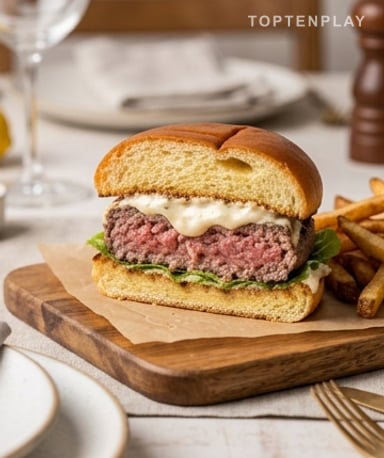
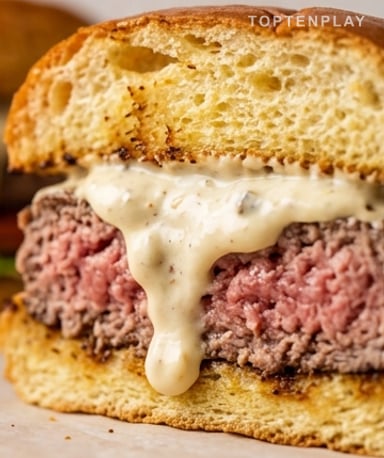
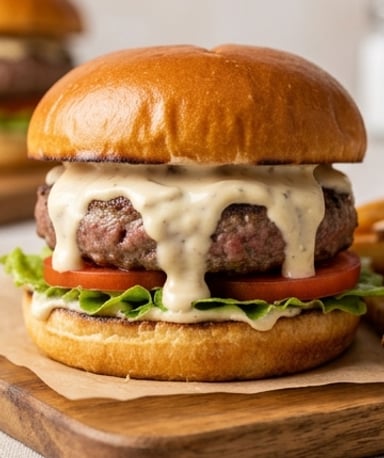
The brioche bun has that slight crisp under your fingers after its stint in the dry pan — a light caramel-colored crust, just right. The aïoli, pale yellow almost pearlescent, spills over the edges and sticks a bit. The smell of fresh garlic mingles with that of the seared meat, a direct blend, no fuss. And at the center, the steak is still pink — intentionally.
Why you’ll love this recipe
Ingredient Notes
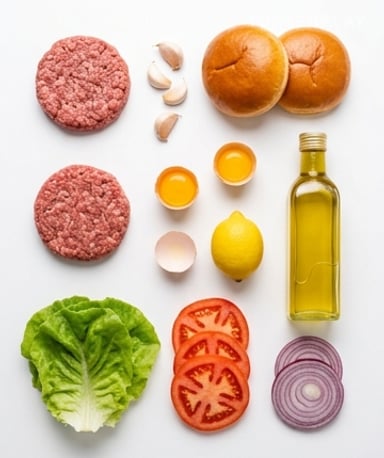
Everything you need for a legendary burger: beef, golden brioche, and the ingredients for a homemade aïoli that changes everything.
- Ground beef : Take ground beef with at least 15 to 20% fat — the mention “butcher-style” on the packages often indicates this. Too lean beef means a dry steak that sticks to the pan. If you can, ask your butcher to grind ribeye or chuck: the difference in taste is immediate.
- Brioche bun : The buns from the supermarket hamburger section do the job, but if you have a bakery nearby that makes them, go for it. The brioche should be dense enough to hold the sauce without collapsing at the first bite. Avoid overly sweet versions that overpower the aïoli.
- Garlic : Fresh only. Powdered or tube garlic lacks the liveliness and sharpness needed for a flavorful aïoli. Two cloves for four people is a starting point — adjust according to your audience.
- Oil for the aïoli : Avoid an overly strong olive oil: it masks everything else and gives a bitter aïoli. A mild olive oil (labeled “fruity mild”) or a blend half sunflower half olive gives a more balanced, rounder emulsion.
- Egg yolk : Taken out of the fridge at least 30 minutes prior. A cold egg doesn’t emulsify well — you end up with a runny sauce that won’t set. Room temperature really changes the result.
Why I never make aïoli any other way
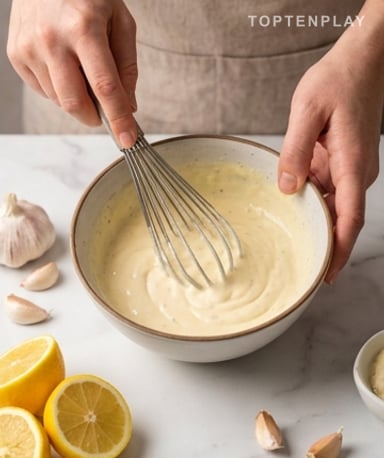
Aïoli is an emulsion. Egg yolk, garlic mashed into a smooth paste, a drizzle of oil poured very slowly at first — and you whisk continuously. The first drizzle is the most important: if you pour too fast, the sauce won’t set and you start over. Once the emulsion is started and the texture begins to resemble a thick mayonnaise, you can speed up slightly. The smell at this stage is frank, almost aggressive — raw garlic gives its all. A squeeze of lemon, salt, and you taste: the aïoli should tingle slightly at the back of the mouth. Let it rest for 15 minutes in the fridge before assembling the burgers — it settles, rounds out, becomes better.
The meat is where it all happens
Shape steaks of about 180 grams each by hand, without working them too much. The more you press, the more you compact the fibers — and the tougher your steak will be when cooked. The patty should feel slightly loose, almost fragile. Make a dent in the center with your thumb: this prevents the steak from puffing up and doming. Salt and pepper generously just before placing in the pan — not before, or the salt draws out moisture and you end up with a steak cooking in its own juice instead of searing properly.
The cooking that everyone rushes
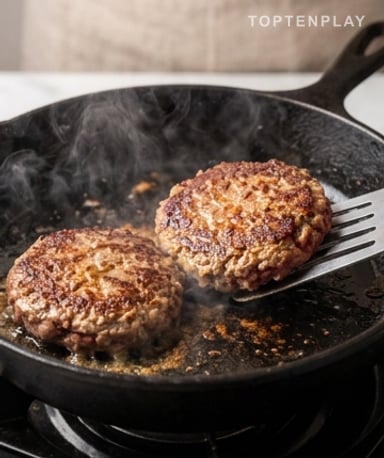
Very hot pan — wait until the cast iron is lightly smoking before putting the meat in. No oil if you have a cast iron or steel pan: the beef fat is enough. The steak should sizzle loudly on contact, a clear, sharp sound. You place it, you don’t touch it for two and a half minutes. No pressing with the spatula. No moving. Flip only once, and leave for another two minutes for a pink center. The outer crust, a deep mahogany brown, forms during this time of non-intervention — that’s where all the flavor concentrates.
Assembly: the order is not random
Toast the buns in the same pan, dry, just after removing the meat — 30 seconds, no more, and you pick up all the cooking juices left by the beef. Generously spread the aïoli on both sides of the bread. Put the lettuce first: it protects the bottom bun from the steak’s moisture. Tomato, red onion in thin rings if you like. The steak last, straight from the pan, still hot. Its heat will slightly melt the aïoli on the bottom slice — and that’s exactly what you want.
Tips & Tricks
- Never press your steak with the spatula during cooking — you squeeze out the juice and get a dry patty. The resistance you feel when pressing on the meat is exactly what you should leave in.
- If your aïoli doesn’t set, don’t panic: start over with a new egg yolk in a clean bowl and incorporate the failed sauce in a stream, very slowly. It almost always recovers.
- The thumb dent in the center of the raw steak is not trivial — without it, the center will puff up during cooking and you get a domed burger impossible to eat without everything falling out.
- Aïoli keeps for 24 hours in the fridge, covered with plastic wrap. If you make a bit extra, it goes very well on grilled vegetables or spread on bread the next day.
My aïoli didn’t set — what did I do wrong?
The most common cause is oil poured too fast at the beginning. The first two teaspoons should be added drop by drop while whisking non-stop — that’s where the emulsion forms. If the sauce is already liquid, start over with a new room-temperature egg yolk and incorporate the failed mixture in a slow stream: it almost always recovers.
Can I make the aïoli the day before?
Yes, and it’s even recommended. Aïoli made a few hours ahead is rounder and less aggressive than one made at the last minute — the garlic softens slightly. Keep it covered with plastic wrap in the fridge for up to 24 hours. Take it out 10 minutes before assembling the burgers so it returns to a spreadable texture.
Does an immersion blender work for making aïoli?
Yes, it’s even faster and more reliable than by hand. Put all ingredients in the bottom of a measuring cup (garlic, yolk, lemon, salt), pour the oil on top, plunge the blender to the bottom and blend at constant speed without moving it for 10 seconds. Then slowly lift. The emulsion forms in seconds.
How do you know if the steak is cooked medium without cutting into it?
Press lightly on the center of the steak with your finger: soft and springy = rare, slight resistance = medium, firm = well done. For a juicy burger, aim for slight resistance — about 2 min 30 per side on a very hot pan. Always let the meat rest 2 minutes off the heat before assembling.
What to serve with this burger?
Homemade fries or oven fries work, but a crispy salad with a tangy vinaigrette balances the richness of the aïoli well. If you want to stay Mediterranean, grilled zucchini rounds also integrate very nicely.
Can I replace the ground beef with something else?
Ground veal gives a more delicate result but works very well with aïoli. Ground turkey is a lighter option, but you must add a drizzle of olive oil to the patty before cooking or it will dry out. In any case, keep a sufficient fat content — at least 10% — so the patty stays juicy.
Homemade Aïoli Burger
American / Mediterranean
Main course
A simple and generous burger with homemade fresh garlic aïoli — the sauce that changes everything, whisked by hand in ten minutes.
Ingredients
- 720g ground beef (15 to 20% fat)
- 4 brioche buns
- 2 egg yolks (at room temperature)
- 4 garlic cloves
- 150ml mild olive oil or sunflower oil
- 50ml olive oil (to complete the emulsion)
- 1 tbsp fresh lemon juice
- 2 tomatoes, sliced into rounds
- 1 red onion, thinly sliced into rings
- 4 leaves curly or romaine lettuce
- salt and pepper
Instructions
- 1Remove the egg yolks from the refrigerator 30 minutes before starting.
- 2Peel and crush the garlic cloves with a pinch of salt until you get a fine paste.
- 3In a bowl, whisk the egg yolks with the crushed garlic and lemon juice for 30 seconds.
- 4Pour the oil drop by drop while whisking non-stop until the emulsion sets, then gradually increase the stream. Adjust salt.
- 5Refrigerate the aïoli covered with plastic wrap for at least 15 minutes.
- 6Shape 4 steaks of 180g by hand without working the meat too much. Make a thumb dent in the center of each patty.
- 7Salt and pepper the steaks generously just before cooking.
- 8Heat a cast iron or steel pan over high heat until lightly smoking. Place the steaks without oil and cook for 2 minutes 30 seconds on each side without touching them.
- 9Remove the steaks and let rest for 2 minutes off the heat.
- 10Toast the buns dry in the same pan, 30 seconds per side.
- 11Generously spread aïoli on both sides of the bun, place lettuce, tomato, red onion, then the steak.
Notes
• Aïoli keeps for 24 hours in the fridge covered with plastic wrap. It is better made ahead — the garlic mellows.
• If the aïoli doesn’t set, start over with a new room-temperature egg yolk and incorporate the failed mixture in a very slow stream.
• The thumb dent in the center of the raw steak prevents the patty from puffing during cooking and ensures even cooking.
Nutrition Facts (per serving, estimated)
| 740 kcalCalories | 34gProtein | 38gCarbs | 48gFat |