📌 Home baking: how 6 ingredients are enough to create 4 different types of cookies
Posted 18 January 2026 by: Admin
The Versatile Base: A Magic Dough With Infinite Possibilities
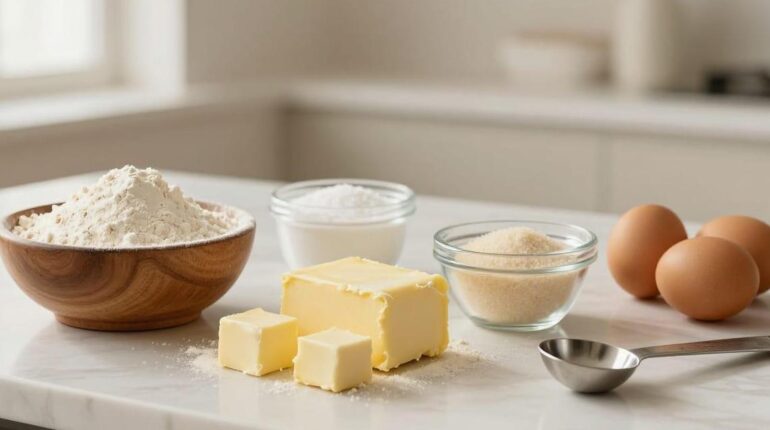
Six ingredients are enough to revolutionize your baking sessions. This master recipe is based on a precise mathematical formula: 500g of flour, 300g of cold butter, 100g of sugar, one tablespoon of baking powder, three teaspoons of vanilla sugar, and one egg. The 5:3:1 ratio between flour, butter, and sugar constitutes the backbone of a structured dough, capable of supporting four distinct variations without changing its base.
The economic trick lies in this versatility. Instead of buying and preparing four different recipes, a single preparation generates a complete assortment of homemade cookies. The cold butter cut into pieces plays a decisive role: incorporated this way, it creates pockets of fat which, when melting during baking, produce that characteristic shortbread texture of successful cookies.
This infinitely transformable method responds to a logic of radical time-saving. Prepare the dough once, divide it as you wish, and customize each portion. The 300g of butter guarantees perfect hold during shaping, while the baking powder ensures the ideal rise. The triple vanilla flavor intensifies the base taste, creating an aromatic foundation that then adapts to all variations.
This master recipe democratizes baking by simplifying the approach: mastering a single technique opens access to four different creations, all from a minimalist composition present in every kitchen.
The Secrets Of A Successful Preparation: Techniques And Tips
The temperature of the butter conditions everything. Cold and cut into pieces, it incorporates into the flour without melting prematurely, preserving the fat pockets essential to the shortbread texture. This professional technique, accessible to all, radically differentiates an industrial cookie from an artisanal creation. Room temperature or soft butter would produce an elastic and compact dough, canceling the desired crumbly effect.
The three teaspoons of vanilla sugar are not by chance. This triple dosage creates an aromatic intensity that survives baking and lingers on the palate. Vanilla structures the base flavor profile, allowing for the addition of chocolate, dried fruits, or spices without unbalancing the whole. This fragrant foundation makes the difference between a bland cookie and a memorable pastry.
The tablespoon of baking powder acts as a texture catalyst. Neither too dense nor too airy, the cookie achieves that delicate crunch that yields under the tooth without crumbling. The assembly follows a precise sequence: first mix the dry ingredients, incorporate the cold butter until a grainy texture is obtained, then bind with the beaten egg. This progression guarantees a homogeneous dough, easy to divide to create four distinct variations.
Mastering these technical gestures transforms ordinary ingredients into professional pastry, revealing how know-how takes precedence over the complexity of recipes.
Four Variations For Every Craving
This technical mastery opens up an unsuspected creative territory. A single dough generates four distinct types of cookies: classic shortbread, two-tone spirals, elegant checkers, or thumbprint cookies. Each variant uses the same base of 500g of flour and 300g of butter, but the final shaping completely redefines the taste and visual experience. This culinary versatility revolutionizes kitchen organization.
Adaptability becomes strategic. For a children’s snack, chocolate spirals catch the eye. At a formal event, sophisticated checkers impress. Classic shortbread meets last-minute cravings, while personalized thumbprint cookies are perfect for gourmet gifts. A single prior preparation is enough: divide the dough into equal portions and apply the appropriate modeling technique.
The saving on ingredients amplifies the practical interest. Rather than buying and measuring different components for four separate recipes, this method concentrates the effort on a single preparation session. The yield maximizes the investment: with six basic ingredients present in all kitchens, the amateur baker creates a complete assortment worthy of an artisanal pastry shop.
This versatility radically transforms the approach to home baking, proving that simplicity of execution never excludes diversity of results.
Efficiency At The Service Of Indulgence
This approach directly addresses the constraints of modern daily life. The six necessary ingredients are found in all kitchens: flour, sugar, butter, egg, baking powder, and vanilla sugar. No exotic components, no emergency grocery runs. The investment time is limited to a single preparation to generate four distinct results, eliminating repetitive measuring and mixing sessions.
The yield defies all conventional logic. With 500g of flour and 300g of butter, production covers a complete assortment: enough to fill a gift box, supply a birthday buffet, or build a weekly stock of snacks. This concentration of effort maximizes the return on time and financial investment, particularly valuable during last-minute preparations.
Mastering a single master recipe eliminates the multiple learning curve. Instead of juggling four different techniques, the cook perfects a single base and then varies the final shaping according to the occasion. This formidable efficiency transforms home baking into a practical solution rather than an ambitious project.
The final equation speaks for itself: six common ingredients generate four types of cookies, proving that methodical simplicity far surpasses the multiplication of efforts. This culinary revelation redefines the relationship between time invested and satisfaction obtained.