The symbolism is built into the anatomy of the gesture itself. According to traditional teachings, the thumb represents universal consciousness and the index finger represents individual consciousness. As the source puts it: "When the index finger bends towards the thumb, an individual consciousness is surrendered to the universal consciousness."
This framework also draws on Ayurvedic principles, in which each finger corresponds to one of five elements. The thumb is linked to fire, the index finger to air. Connecting the two is understood to create an energy circuit that balances those elements within the body — a concept central to how practitioners describe the gesture’s effects.
Mudras in yoga and Ayurveda
Mudras are intentional hand gestures used across yoga, meditation, and Ayurvedic traditions. In Ayurveda, the traditional healing system of ancient India, the five fingers are each linked to one of five elements — earth, air, fire, water, and ether — that are believed to make up all matter. Gyan Mudra is among the most widely taught, appearing in both Hindu and Buddhist contemplative practices.
How to practice it: posture, timing, and the 30-minute milestone
The mechanics are straightforward. Sit comfortably with your spine straight — cross-legged on the floor or in a chair both work. Rest your hands on your knees or thighs with palms facing upward. Gently bring the tip of your thumb to the tip of your index finger, forming a small circle. The remaining three fingers stay extended but relaxed.
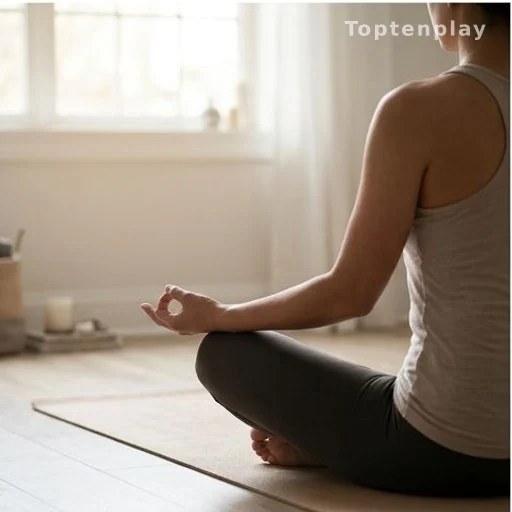
Close your eyes or keep a soft gaze, breathe naturally, and hold the position. Traditional guidance recommends starting with 10 to 12 minutes daily and gradually extending sessions as the practice becomes more familiar.
For those seeking more significant results, traditional sources suggest 30 minutes daily for two months. Those who find a single long session difficult can split it into three 10-minute sessions per day — an approach the source presents as equally valid.
Early morning hours between 4 and 6 AM — known in some traditions as Brahma muhurta — are considered most beneficial, though practitioners emphasize that consistency matters more than timing. Any regular slot in the day is described as effective.
What practitioners report — and what science has not confirmed
Practitioners describe a range of benefits from regular sessions: improved focus, a greater sense of calm, more restful sleep, and what many call a clearer mental state. Traditional texts associate the gesture with "burning negative thoughts from the mind" and cultivating emotional stability during difficult periods.
Suggested Posts

A mystery object in hand turns out to be a vintage tape dispenser
A small, polished golden-brown object sat in someone's hand with no obvious purpose — no label, no instructions, no obvious mechanism. Online searches and…