📌 Grimy gas grates: how a dishwasher tablet lifts 30 minutes of cooking without scrubbing
Posted 15 February 2026 by: Admin
The Discovery Of An Unexpected Solution Against Stubborn Deposits
A thick layer of carbon inexorably accumulates on gas grates. Classic detergents fail against this crust of soot and carbonized grease that resists scraping and conventional household products. Yet, a solution has existed for years in our cupboards, diverted from its initial use.
The dishwasher tablet, that small compact cube usually intended for cleaning dishes in a machine, possesses unsuspected properties. Used according to a precise method, it radically transforms the maintenance of grimy grates. Carbon deposits do not resist: they literally break off in pieces under the chemical action of the product.
This technique works on all types of metals. Whether your grate is cast iron, enameled steel, or stainless steel, the principle remains the same. Cast iron, being particularly porous and subject to stubborn accumulations, reacts remarkably well to the treatment. No specialized equipment is required, just standard kitchen utensils and two tablets.
Effectiveness relies on a chemical reaction between the active components of the detergent and the carbonized residues. Unlike abrasive methods that damage the metal or aggressive chemicals, this approach preserves the integrity of the grate while radically eliminating deposits.
The Step-By-Step Method For A Guaranteed Result
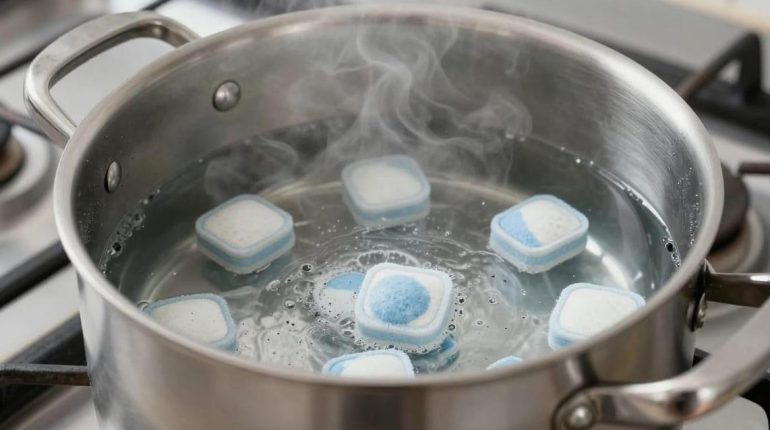
Preparation requires a pot wide enough to accommodate the grate. Fill it with water and place it on high heat. Before any immersion, two dishwasher tablets must be added to the cold or lukewarm water.
Prior boiling is the determining step. Wait until the water is boiling vigorously before introducing the metal grate. This sequence activates the degreasing agents contained in the tablets, creating a powerful chemical solution that will penetrate the carbon layers.
Once the grate is immersed, maintain a constant boil. The water level must entirely cover the grimy areas. If necessary, add boiling water during treatment to compensate for evaporation.
The high temperature opens the pores of the metal and liquefies solidified fats. The phosphates and enzymes in the tablets simultaneously attack the molecular bonds of the carbonized residues. This double mechanical and chemical action explains the superior effectiveness of this method compared to cold soaking.
No complex handling is required. The solution works on its own while the water boils. This simplicity contrasts with the hours of manual scraping usually necessary. The process transforms a laborious chore into a passive operation requiring only occasional monitoring.
The Degreasing Process By Prolonged Boiling
Once the grate is immersed, let it boil for about thirty minutes. This duration allows the active components of the tablets to deeply penetrate the carbonized deposits and break their adhesion to the metal.
During this phase, the surfactants contained in the tablets gradually dissolve the baked-on grease. The alkaline agents simultaneously attack the carbon residues, which fragment under the combined effect of heat and chemical action. You will observe black particles detaching and floating in the water, a sign that the process is working.
Cast iron, like other metals used for grates, reacts favorably to this treatment. The porous structure of cast iron particularly retains grease, but prolonged boiling extracts even the residues embedded in micro-cavities. Stainless steel or chrome grates benefit from the same effectiveness.
No scrubbing is necessary during the treatment. The boiling water keeps the cleaning agents in constant suspension around the grate, ensuring uniform action over the entire surface. The grimiest areas, generally located in the center where the flame concentrates heat, receive the same treatment as the edges.
At the end of the thirty minutes, the stubborn deposits that resisted all scraping spontaneously detach in pieces. This radical transformation relies entirely on the degreasing properties of a product initially designed for a totally different use.
A Universal Detergent With Unsuspected Potential
This method, proven for several years, confirms that dishwasher tablets far exceed their initial function. Designed to dissolve food residues on dishes, they reveal formidable degreasing properties on heavily soiled metal surfaces.
The universal nature of this detergent is due to its complex formulation. The enzymes, bleaching agents, and alkaline compounds it contains effectively attack carbonized grease, regardless of its age. This versatility allows for its use on other kitchen equipment presenting similar deposits: hobs, burners, oven racks.
Accessibility is the major asset of this solution. Unlike specialized grate detergents, which are often expensive and hard to find, dishwasher tablets are found in every household equipped with a dishwasher. Their low price and permanent availability make them an economical alternative to dedicated industrial products.
The consistency of results over several years of use attests to the reliability of the process. Whether the grate is cast iron, stainless steel, or chrome-plated, the treatment systematically produces the same spectacular effect. Deposits detach in whole pieces, revealing the original metal without mechanical effort.
This discovery transforms a tedious maintenance task into a simple and predictable operation, restoring cooking equipment to its original state with remarkable regularity.