Greek yogurt marinade—people think it’s a chef’s secret. Some high-end trick you pull out to impress. The truth? It’s just yogurt from the fridge, five minutes of work, and chicken that turns out tender every single time.
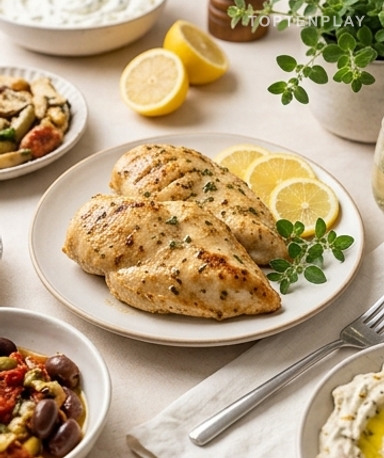
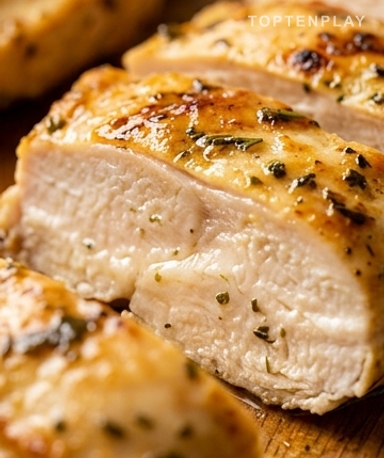
Once the chicken is on the board, it has that amber hue from the herbs that have lightly charred on the surface—like a light caramel studded with green flecks of oregano. When you cut into it, the steam rises gently. The meat is white and glistening all the way to the center, not a dry spot in sight. The smell is warm lemon mixed with garlic that has lost its bite during cooking—mellow, Mediterranean, and comforting.
Why you’ll love this recipe
Ingredient Notes
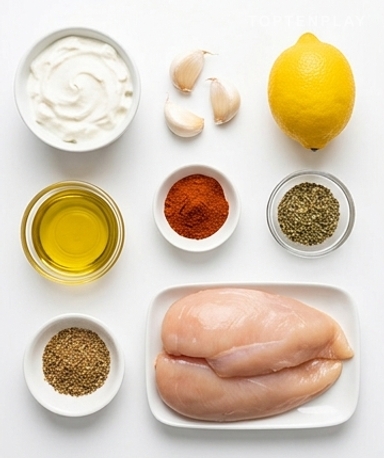
Greek yogurt, lemon, garlic, and spices: simple ingredients for a marinade that makes all the difference.
- Greek Yogurt : The base of everything. Go for full-fat—no low-fat, no 0%. The fat helps the marinade stick to the chicken and forms a beautiful crust during cooking. Fage or Chobani if you can find them, but any full-fat Greek yogurt works. Important: plain, never flavored.
- Garlic : Four cloves might seem like a lot. But in a cold marinade, raw garlic is milder than when cooked directly—it infuses gradually, and the lemon tempers its pungency. Use a fine grater or a garlic press: large chunks might burn before the chicken is done.
- Lemon : The juice provides the acidity that aids tenderness. The zest, if you add it, gives a more floral and intense aroma—without extra acidity. One small lemon is enough for this recipe’s quantity.
- Paprika and Cumin : Paprika gives the crust its characteristic amber color. Cumin brings a warm, slightly earthy note that anchors the recipe in the Mediterranean style. If you really don’t have cumin, you can skip it—but it truly changes the final profile.
The five-minute marinade
In a large bowl, combine the yogurt, olive oil, lemon juice, grated garlic, and all the spices. Whisk it up. The color quickly turns to an orange-beige thanks to the paprika, and it already smells like oregano and lemon—a scent vaguely reminiscent of a summer terrace. Taste the marinade before adding the chicken. It should be well-seasoned, almost too salty on its own, because it’s going to coat a large surface area and lose some intensity during cooking.
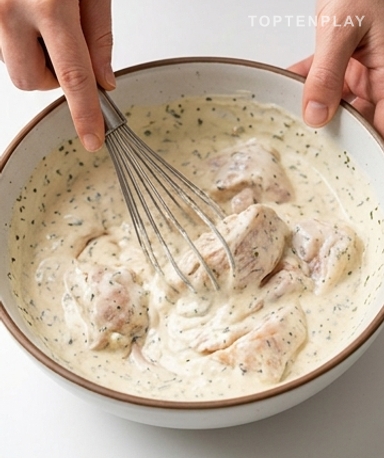
Preparing the chicken right
If you’re using chicken breasts, take a few seconds to flatten them slightly. Place some plastic wrap over them and give a few whacks with a rolling pin—not to crush them, just to even out the thickness. Without this, the thin parts dry out while the center catches up. Thighs don’t have this problem; they are very forgiving. Just trim off any visible excess fat.
And now, patience
Place the chicken in the bowl and turn it to ensure it’s well-coated on all sides. Two hours in the fridge is the minimum—any less and the marinade won’t have time to penetrate. Twenty-four hours is the maximum—beyond that, the acids soften the texture too much. The sweet spot? Four to eight hours. On the weekend, that means you prep it in the morning while drinking your coffee, and then forget about it until dinner. Cover the bowl well—garlic likes to share its scent with everything else in the fridge.
Cooking, no matter your gear
Take the chicken out of the fridge twenty minutes before cooking. This isn’t just a detail: cold chicken in a hot pan contracts and toughens. On the grill or in a pan, place it on a very hot surface—the thermal shock creates that sharp sizzle, a sign the crust will stick well. Don’t move the chicken for the first minute. Let the marinade set. The surface should be a deep caramel—not burnt, but with bold color—before flipping.
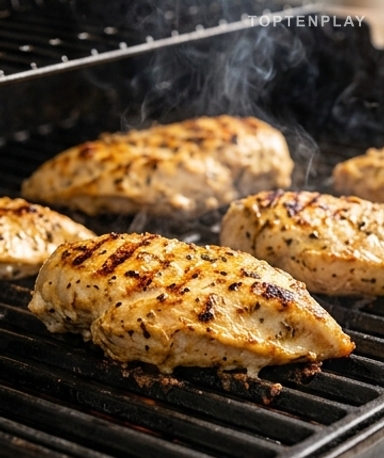
Tips & Tricks
- Never rinse the chicken after marinating. All the marinade that stays attached forms the crust during cooking—that’s where all the flavor lives.
- If using an air fryer, lower the temperature by 10°C compared to your usual settings. Yogurt browns very quickly in intense circulating heat, and you want a crust, not black char.
- For an even more fragrant result, add the whole lemon zest in addition to the juice. Zest contains essential oils that withstand heat much better than juice alone.
How long does the chicken really need to marinate?
Two hours is the absolute minimum for the marinade to start penetrating the meat. The sweet spot is between 4 and 8 hours—perfect for morning prep before dinner. Beyond 24 hours, the yogurt acids start to over-soften the texture, and the chicken loses its structure.
Can I freeze the chicken in the marinade?
Yes, and it’s actually one of the best ways to use this recipe. Place raw chicken with all the marinade in a freezer bag, seal it, and freeze for up to 3 months. To use, thaw it in the fridge overnight—the thawing process counts as extra marinating time.
Breast or thighs—which should I choose?
Thighs are very forgiving: they stay juicy even if cooked a minute too long, and they have a bolder flavor. Breasts are leaner and a bit more technical—you need to flatten them to even out the thickness and avoid overcooking. For a first try, go with thighs.
Greek yogurt or regular plain yogurt—does it make a difference?
Greek yogurt is thicker and higher in protein, which allows it to stick to the chicken and form a real crust. Regular plain yogurt is more liquid—the marinade won’t stay on the surface as well and will slide off. If you only have regular yogurt, strain it in a cloth for 30 minutes before using.
How do I know the chicken is cooked without a thermometer?
A thermometer is most reliable: 74°C internal temperature. Without one, cut the thickest piece at its widest point—the meat should be white and opaque to the center, with no pink, and the juices should run clear. Pink juice means it’s not ready yet.
Can I make the marinade in advance and keep it in the fridge?
Yes, without the chicken, the marinade keeps for 48 hours in the fridge in a closed container. This is handy for prepping several batches throughout the week. Give it a quick whisk before adding the chicken, as spices tend to settle at the bottom.
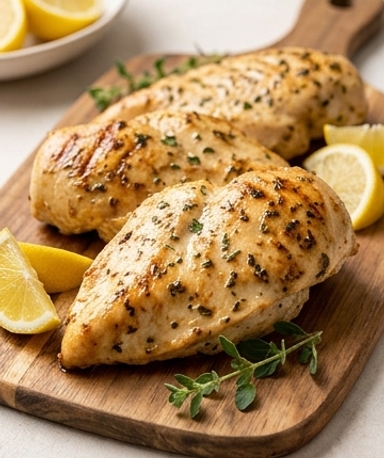
Greek Yogurt Chicken Marinade for Ultra-Tender Results
Mediterranean
Main Course
A 5-minute Mediterranean marinade that deeply tenderizes chicken. Greek yogurt, garlic, lemon, and spices—simple, effective, and adaptable to all cooking methods.
Ingredients
- 680g chicken fillets (breasts or boneless skinless thighs)
- 120g (½ cup) full-fat plain Greek yogurt
- 4 cloves garlic, minced or grated
- 2 tbsp (30ml) extra virgin olive oil
- 1 small lemon (juice + optional zest)
- 2 tsp dried oregano
- 1 tsp dried thyme
- 1 tsp fine salt
- 1 tsp sweet paprika
- ½ tsp ground cumin
Instructions
- 1If using breasts, flatten them slightly with a rolling pin (using plastic wrap) to even out the thickness. Trim any excess fat.
- 2In a large bowl, whisk together the Greek yogurt, olive oil, garlic, lemon juice (and zest if using), oregano, thyme, salt, paprika, and cumin.
- 3Add the chicken and toss to coat thoroughly on all sides.
- 4Cover the bowl and refrigerate for at least 2 hours, ideally 4 to 8 hours (maximum 24 hours).
- 5Remove the chicken from the refrigerator 20 minutes before cooking to bring it to room temperature.
- 6Cook using your preferred method: pan-sear or grill for 6-7 min per side over medium-high heat, bake at 200°C for 22-25 minutes, or air fry at 180°C for 16-18 minutes. Chicken is done when juices run clear and internal temperature reaches 74°C.
Notes
• Freezing: Place raw chicken and marinade in an airtight freezer bag. Keeps up to 3 months. Thaw in the fridge overnight—thawing extends the marinating time.
• Storing cooked: Cooked chicken keeps for 3 to 4 days in the fridge in a closed container. Reheat gently with a splash of water to prevent drying out.
• Make-ahead: The marinade alone (without chicken) can be made 48 hours in advance and stored in the fridge. Whisk before use as spices settle.
Nutrition Facts (per serving, estimated)
| 310 kcalCalories | 46gProtein | 4gCarbs | 12gFat |