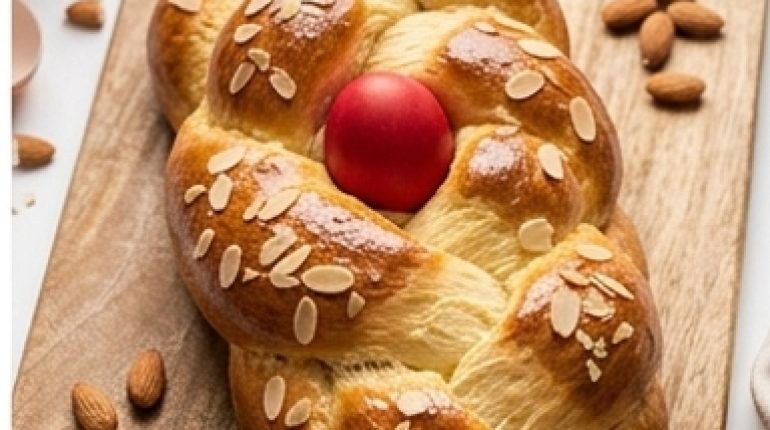
📌 Greek Easter Brioche (Tsoureki)
Posted 29 March 2026 by: Admin
A scent arrives before everything else — warm orange, discreet spice, something slightly resinous that you don’t immediately identify. It’s the tsoureki baking, and if you’ve never made it, welcome to your new Easter tradition. A weekend, some patience, and this Greek brioche will redefine your definition of “brioche.”
Advertisement:
Ingredients :
- Mahlepi — This is the dried seed of the pit of a wild cherry. Little known in some regions, but found in Greek or Middle Eastern grocery stores — also look for the name “mahlab.” Its taste is fruity, slightly bitter, with an almond undertone. It’s often found whole: a quick turn in a mortar or an old coffee grinder is enough. Without it, tsoureki isn’t tsoureki.
- Chios Mastic — A resin harvested on the island of Chios, Greece. The taste is camphorated, slightly resinous, very particular. You only use a little — half a teaspoon — but it changes everything. Look in the same section as mahlepi to find it. If truly unavailable, you can do without it, but the result will be less authentic.
- Fresh yeast — 50 g for 1 kg of flour. Fresh yeast gives a more regular rise and a milder taste than dry yeast. It is found in the chilled section of most supermarkets. If you only have dry yeast, divide by 3 — about 16 g — and follow the same rehydration protocol.
- Orange (juice + zest) — Preferably an organic orange, since we use the zest. The juice brings moisture and soft acidity, the finely grated zest gives the small fragrant bursts found in every bite. This is the only ingredient we don’t substitute — it is at the heart of the aromatic profile.

Read the full article..


Advertisement: