Butter gently sings in the pan, bread turns golden on the edges, and the smell of warm vanilla fills the kitchen. Grandma’s French toast is exactly that: a quick recipe, made with almost nothing, but requiring just enough attention to be truly good.
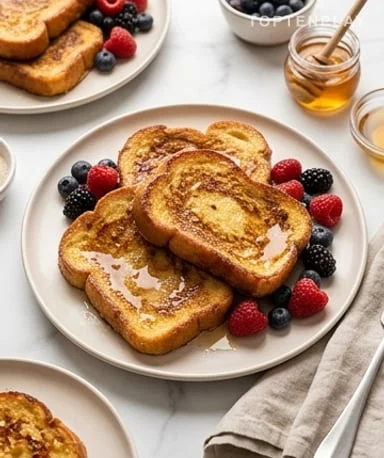
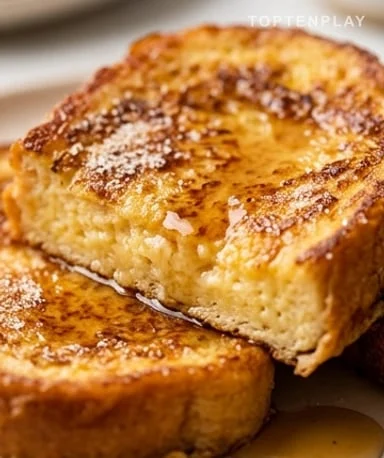
The surface should be slightly crispy, with darker golden spots where the sugar has caramelized. Inside, the bread remains soft, almost creamy, without dripping or collapsing. When cut, the crumb offers a gentle resistance, then absorbs honey, maple syrup, or sugar like a little warm sponge. It’s simple, but the smell of vanilla milk and brown butter changes everything.
Why you’ll love this recipe
Ingredient Notes
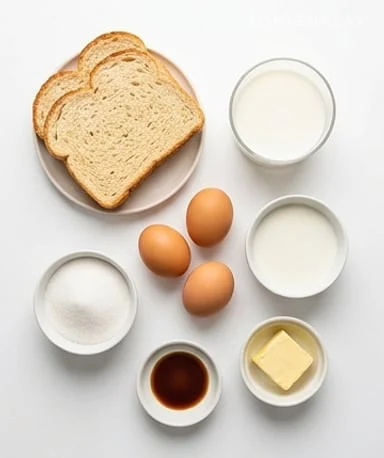
Stale bread, eggs, milk, sugar, vanilla, and butter: nothing complicated, but every ingredient counts.
- Stale bread : This is the base of the recipe, and especially the reason why French toast holds up during cooking. Choose a baguette, country bread, or brioche from the day before: too fresh, the bread becomes soft and breaks as soon as you turn it.
- Eggs : They give structure to the mixture and allow the bread to brown with a slightly set texture. Use medium eggs and whisk them enough to not see any streaks, otherwise cooking may leave egg marks on the slices.
- Milk : Milk brings softness and helps the bread soak to the center. Whole milk gives a richer result, but semi-skimmed works well; for a non-dairy option, an unsweetened plant-based milk can do the job.
- Sugar : It sweetens the mixture, but also helps the surface caramelize in the hot butter. Don’t overdo it if you add honey, maple syrup, or chocolate at serving, otherwise the French toast becomes heavy quickly.
- Vanilla : It flavors the milk and gives that family dessert smell from the first seconds in the pan. A packet of vanilla sugar is practical, but a teaspoon of vanilla extract gives a cleaner, less sweet flavor.
- Butter : It gives the grilled taste and beautiful golden color, with that little nutty aroma when it foams. Melt it over medium heat and add a little between batches, because a dry pan gives sad, uneven toast.
Prepare the mixture
Crack the eggs into a bowl, add the sugar and vanilla, then whisk until you get a homogeneous and slightly frothy mixture. This little moment counts: the sugar distributes better, the egg relaxes, and the bread will have a more even texture after cooking. Then gradually pour in the milk, whisking, to avoid thick spots that stick to the bread. The mixture should smell of sweet vanilla, with a pale yellow color, fluid enough to coat a slice without turning it into paste.
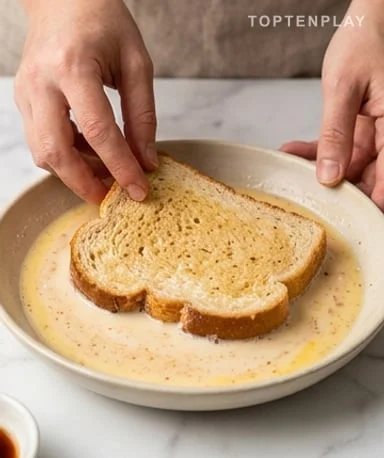
Soak without drenching
Place the bread slices in a shallow dish and let them drink the mixture for a few seconds on each side. The good sign is a heavier slice, shiny on the surface, but still able to be lifted without folding in half. If your bread is very dry or thick, give it a little more time, because the center also needs to soften. If it’s brioche, be quicker: it absorbs fast and can become fragile, with an almost melting crumb before even cooking.
Cook gently
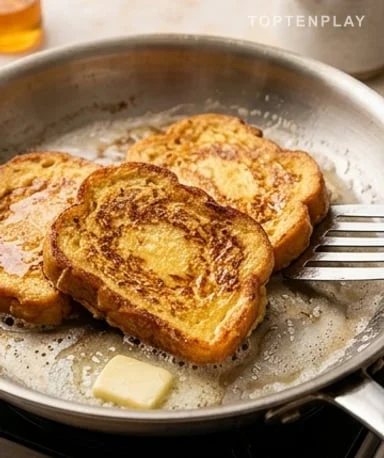
Melt a knob of butter in a hot pan, but not burning, then place the soaked slices. You should hear a gentle sizzle, not an aggressive splattering sound. Cook for two to three minutes per side, until you see golden edges and a surface speckled with light brown. Medium heat is important, because it lets the center heat without burning the outside; too high heat gives a nice color too quickly, but a soft and cold middle.
Flip at the right time
Don’t flip the slices too early, even if the smell of hot butter makes you want to rush. Wait until the underside is firm enough to release easily with the spatula, otherwise the crust sticks to the pan. The bread should slide almost by itself, with a golden and flexible side that keeps its shape. If the pan smokes or the butter turns dark brown, lower the heat and quickly wipe off the excess before continuing.
Serve hot
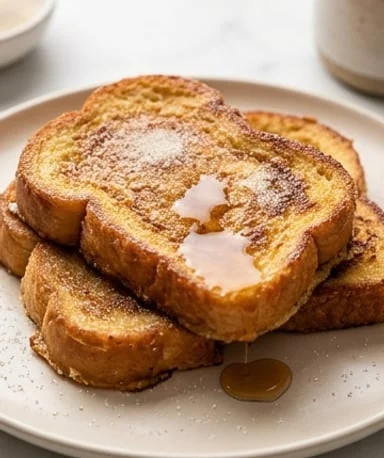
French toast is best just after cooking, when the edges are still a bit crispy and the center holds its gentle warmth. Place the slices on a plate, add a little sugar, fresh fruit, honey, or maple syrup as desired. Avoid overloading: if you drown everything under the topping, you lose the taste of butter, vanilla, and golden bread. For a fresher plate, a few strawberries or banana slices bring juice and contrast with the softness.
Tips & Tricks
- Use stale bread rather than fresh bread, because it absorbs the mixture without tearing and gives a cleaner texture after cooking.
- Keep a medium heat from start to finish, because sugar colors quickly and can burn before the inside is hot.
- Don’t let the slices sit too long after soaking, otherwise they continue to absorb liquid and become difficult to handle.
- Add butter in small amounts between batches, because butter that’s been in the pan too long browns and gives an unpleasant bitterness.
What bread to use for good French toast?
The best choice remains stale bread: baguette, country bread, or day-old brioche. It absorbs the milk-egg mixture without breaking, unlike bread that is too fresh, which becomes soft quickly.
Why is my French toast soggy?
It probably soaked too long or the bread was too fresh. You need to soak it a few seconds on each side, just enough for it to be soft without falling apart.
Can I prepare French toast in advance?
It is best just after cooking, when the edges are still golden and slightly crispy. You can prepare the mixture in advance, but soak and cook the slices at the last moment.
How to prevent French toast from burning?
Cook it over medium heat, never too high. Sugar colors quickly in the butter, so gentle heat allows the outside to brown without leaving the inside cold.
Can I make a version without regular milk?
Yes, you can replace the milk with an unsweetened plant-based beverage, like oat or almond milk. The taste changes a bit, but the texture remains pleasant if the bread is well stale.
Grandma’s French Toast
French
Dessert
A quick and family-friendly recipe to transform stale bread into a golden dessert, soft in the center and slightly crispy on the edges.
Ingredients
- 8 slices stale bread
- 3 eggs
- 250 ml milk
- 50 g sugar
- 1 packet vanilla sugar
- 30 g butter
Instructions
- 1Crack the eggs into a bowl, add the sugar and vanilla sugar, then whisk until smooth.
- 2Gradually pour in the milk while continuing to whisk to obtain a fluid mixture.
- 3Place the bread slices in a shallow dish and soak them for a few seconds on each side.
- 4Melt part of the butter in a pan over medium heat.
- 5Cook the slices for 2 to 3 minutes per side, until nicely golden.
- 6Add a little butter between batches if necessary and serve hot.
Notes
• Stale bread holds up better during cooking and avoids a too-soft texture.
• Stale brioche gives a richer and softer version.
• Don’t let the bread soak too long: it should be soaked, not drenched.
• To flavor further, add a pinch of cinnamon to the mixture.
Nutrition Facts (per serving, estimated)
| 280 kcalCalories | 8gProtein | 30gCarbs | 10gFat |