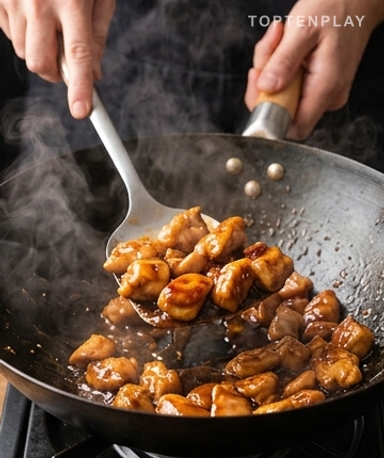
That sound — that sharp sizzle when the marinated chicken hits the hot wok — is the signal that the meal is going to be good. This teriyaki stir-fry is the recipe you pull out when you want to make something healthy without feeling like you’re punishing yourself. Colorful, fragrant, and satisfying.
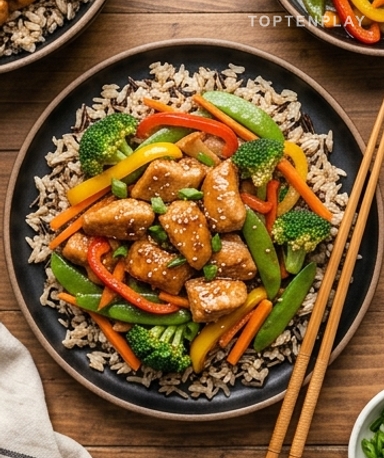
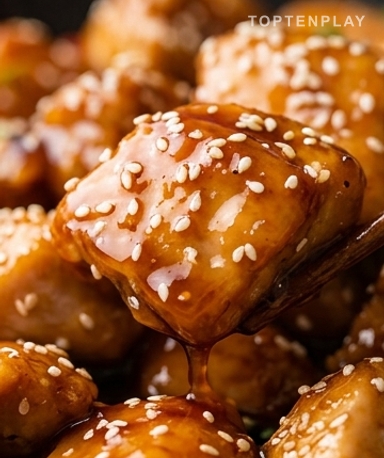
On the plate, the teriyaki sauce glazes each slice of chicken like an amber varnish. The vegetables keep their vibrant colors — the bold red of the bell pepper, the intense green of the broccoli — and that shiny reflection on the sauce indicates it has reduced perfectly. A handful of sesame seeds, a few slices of green onion, and a bed of wild rice with slightly twisted grains that smell of toasted hazelnuts. It’s the kind of dish that looks like it took ages, even though it takes very little time.
Why you’ll love this recipe
Ingredient Notes
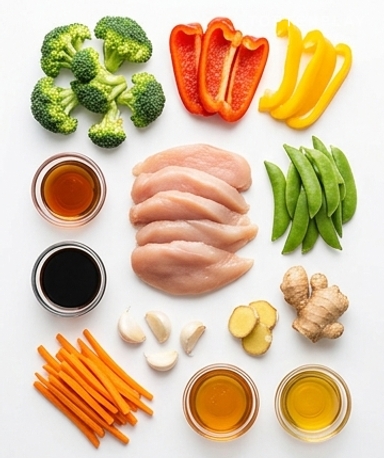
All the ingredients for this stir-fry: tender chicken, crunchy vegetables, and a sweet and salty homemade teriyaki sauce.
- Soy sauce : Get a quality one — preferably Japanese, like Kikkoman. It’s less salty and more aromatic than cheap Chinese sauces. It’s what gives the umami depth to the whole preparation.
- Sesame oil : Don’t confuse it with a neutral oil. This one smells strong, nutty, almost toasted. A tablespoon is enough — it’s powerful. If you don’t have any, sunflower oil works, but you lose a third of the dish’s character.
- Fresh ginger : Not ginger powder. For fresh ginger, grate a thumb-sized piece with a fine grater — floral, slightly spicy, vibrant. Wrap the rest in cling film and freeze it; it can be grated even when frozen.
- Wild rice : In reality, it’s an aquatic grass, not rice. The long, almost black grains have a distinct woody flavor and a longer cooking time (40 to 50 min). Start it first. You can also use a mix of basmati and wild rice to speed things up.
- Snow peas : They provide the signature crunch of the dish. Choose firm ones, bright green without spots. If you can’t find them, frozen edamame or fine green beans work perfectly well.
Start the rice before doing anything else
Wild rice takes 40 to 50 minutes. It dictates the timing for everything else. Start it first in a pot of well-salted boiling water, and only then deal with the marinade and vegetables. While it cooks, you have plenty of time. This isn’t a recipe to rush between two meetings — it’s a weekend recipe where the timing happens naturally, without stress.
Let the marinade do its job, even for ten minutes
In a bowl, mix the soy sauce, teriyaki sauce, honey, grated ginger, and minced garlic. The aroma that rises — slightly sweet, with that salty depth and the spicy kick of ginger — already signals what the dish will become. Add the chicken slices and mix well to coat. Minimum ten minutes of marinating. If you have half an hour, even better: the chicken fibers soften slightly and the flavor penetrates deeper.
The chicken wants high heat — and to be left alone
Heat the wok over medium-high heat with the sesame oil. When you add the chicken, you should hear a sharp, almost aggressive hiss. If it’s silent, the wok isn’t hot enough — remove the chicken and wait another minute. Let it cook without touching for two to three minutes to get that golden, light caramel color on the edges. Then flip and finish cooking. Set the chicken aside on a plate — don’t put it back in the wok yet.
Two minutes too long and the vegetables are ruined
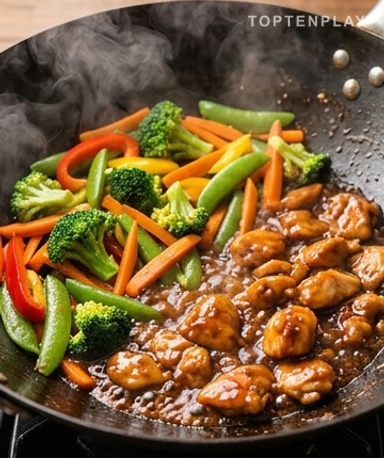
In the same wok without emptying it, add the vegetables directly — they will sear in the juices left by the chicken, which gives them character. Broccoli first since it’s denser, then peppers, snow peas, and julienned carrots. Four to five minutes over high heat, stirring regularly. The peppers must keep their bright color and slight resistance to the bite. No soggy vegetables in this dish — that’s the rule.
Watch the sauce transform before your eyes
Put the chicken back into the wok with the vegetables, pour in the rest of the marinade, and mix. There, something changes in the space of two to three minutes: the sauce begins to reduce, taking on a coating consistency and starting to shine. You see the change with the naked eye — it goes from liquid to syrupy, clinging to every piece. It’s at this exact moment that you turn off the heat. Serve immediately over the wild rice, topped with sesame seeds and sliced green onions.
Tips & Tricks
- Cut the chicken into thin, even slices, maximum 5 mm thick. The thinner the slice, the faster and more uniform the cooking — and the better the sauce penetrates to the core.
- Don’t overcrowd the wok. If you double the quantities, cook the chicken in two batches. A wok that’s too full will boil instead of searing, and you’ll lose all the caramelization.
- Taste the sauce before pouring it at the end of cooking. If it’s too salty, add a touch of honey. Too sweet, a splash of soy sauce. Every brand of teriyaki is different.
Is wild rice really mandatory or can I replace it?
Wild rice brings a woody flavor and texture that complements the teriyaki sauce well, but you can definitely use basmati rice or a mix of brown and white rice. The only real difference is the cooking time: wild rice takes 40 to 50 minutes, basmati barely 12 minutes.
I don’t have a wok. Does it work in a normal pan?
Yes, no problem. The important thing is to have a large cooking surface and high heat. A large stainless steel pan or a sauté pan works perfectly. Avoid low-end non-stick pans that can’t handle high temperatures.
Can I prepare the marinade in advance?
Yes, and it’s even recommended. The marinade keeps for 3 days in the refrigerator in a closed jar. You can also marinate the chicken the day before — it will be even tastier and more tender the next day.
How to store leftovers and for how long?
In an airtight container in the refrigerator, the stir-fry keeps for 2 days. To reheat: a pan over medium heat with a tablespoon of water to loosen the sauce; two to three minutes is enough. Avoid the microwave, which recooks the vegetables and makes them completely soft.
The sauce looks too liquid at the end of cooking — what did I miss?
Two possible reasons: either the heat wasn’t high enough when adding the sauce, or you didn’t let it reduce long enough. Let it cook for another two to three minutes over high heat without a lid, stirring constantly. If it stays too liquid, add a small teaspoon of cornstarch diluted in a little cold water.
Can I make a vegetarian version?
Very easily. Replace the chicken with firm tofu cut into cubes and patted dry before cooking — it must be dry to catch the sauce properly. You can also use sautéed chickpeas or sliced tempeh. The rest of the recipe stays the same.
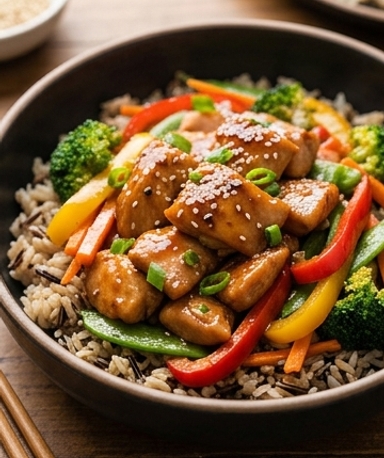
Glazed Teriyaki Chicken Stir-Fry, Crunchy Vegetables and Wild Rice
Asian
Main course
A quick and colorful Asian stir-fry: tender chicken coated in a shiny teriyaki sauce, sautéed vegetables that are still crunchy, served on a bed of wild rice with nutty notes.
Ingredients
- 400g chicken breasts, thinly sliced (about 2 pieces)
- 30ml (2 c.s.) Japanese soy sauce
- 30ml (2 c.s.) teriyaki sauce
- 20g (1 c.s.) honey
- 5g (1 c.c.) freshly grated ginger
- 2 garlic cloves, finely minced
- 15ml (1 c.s.) toasted sesame oil
- 150g broccoli florets
- 75g (½ pièce) red bell pepper, sliced into strips
- 75g (½ pièce) yellow bell pepper, sliced into strips
- 75g (½ tasse) snow peas
- 100g (1 pièce) carrot, julienned
- 160g raw wild rice (yields about 400g cooked)
- 1 c.s. sesame seeds (garnish)
- 2 green onions, sliced (garnish)
Instructions
- 1Cook the wild rice in a large pot of boiling salted water according to package instructions (40 to 50 minutes). Keep warm.
- 2In a bowl, mix the soy sauce, teriyaki sauce, honey, grated ginger, and minced garlic. Add the chicken slices, coat well, and marinate for at least 10 minutes.
- 3Heat the sesame oil in a wok or large skillet over high heat. Add the marinated chicken in a single layer and cook for 5 to 7 minutes without stirring too much, until golden brown and cooked through. Set aside on a plate.
- 4In the same wok, add the broccoli, peppers, snow peas, and carrot. Sauté for 4 to 5 minutes over high heat, stirring regularly — the vegetables should remain slightly crunchy.
- 5Return the chicken to the wok, pour in the remaining marinade, and mix. Let it reduce for 2 to 3 minutes until the sauce becomes shiny and glazes the ingredients.
- 6Serve immediately over the wild rice, topped with sesame seeds and sliced green onions.
Notes
• To save time, use a basmati + wild rice mix (20-minute cook time) or plain basmati rice (12 minutes).
• Storage: 2 days in the refrigerator in an airtight container. Reheat in a pan with a little water, not in the microwave.
• To double the quantities, cook the chicken in two batches so as not to overcrowd the wok — otherwise, it will boil instead of searing and you’ll lose the caramelization.
Nutrition Facts (per serving, estimated)
| 520 kcalCalories | 38gProtein | 55gCarbs | 17gFat |