It starts with a scent. A piece of ginger on the cutting board, and already the air in the kitchen changes — pungent, slightly lemony. This herbal tea, you might make it once just to see. Then every morning.
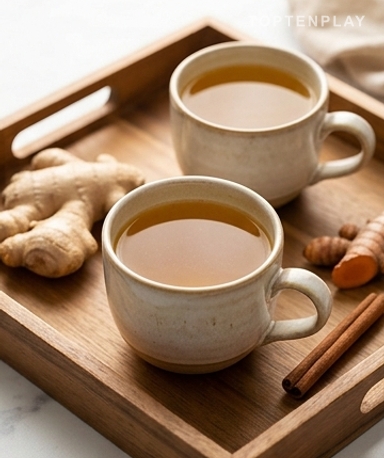
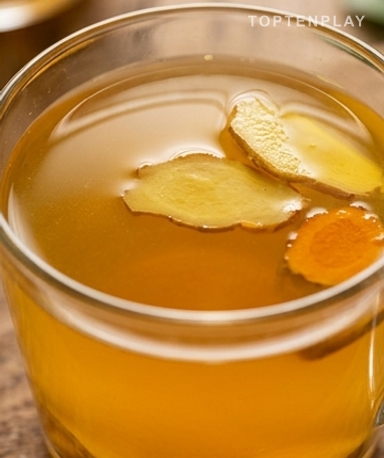
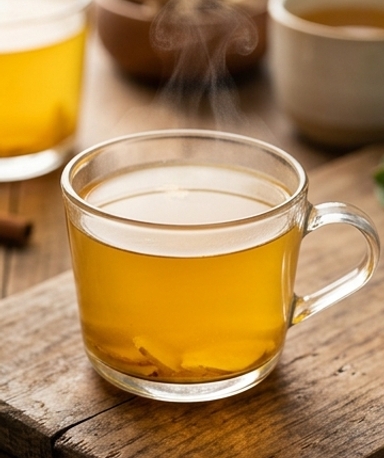
In the cup, it’s a deep amber color, somewhere between a strong black tea and chicken broth. It’s still steaming. The smell is both sweet from the cinnamon and frankly sharp from the ginger — a pairing you didn’t expect. As you blow on it, the steam spirals away and you already feel something warm and concrete, not floral at all.
Why you’ll love this recipe
Ingredient Notes
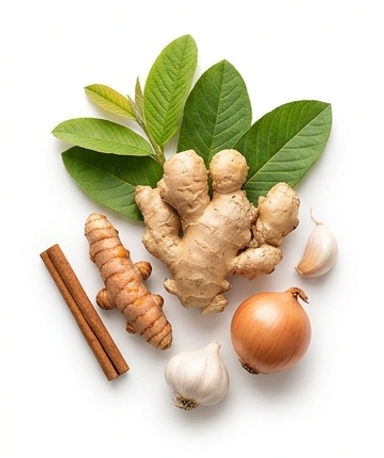
Ginger, turmeric, garlic, onion, cinnamon, and guava leaves: six everyday ingredients that transform into a wellness ritual.
- Fresh ginger : This is the key ingredient. Get it fresh — powdered ginger won’t give the same result; it’s too subtle and tastes a bit dusty. Look for a firm piece, without mold, with tight skin. A root that breaks with a sharp snap when you bend it is a good sign. About 3 cm is enough for two cups.
- Turmeric : Fresh if you can find it — it looks like a mini ginger but with bright orange flesh that immediately stains everything it touches, including your board and fingers. Powder works too, half a teaspoon. This is what gives the tea that deep amber color.
- Garlic : One clove is enough. No need to peel it perfectly — just crush it with the flat of the knife so it releases its aromas during cooking. Heated in water, garlic loses its aggressive edge and becomes almost sweet, melting into the background of the cup. It might seem weird in an herbal tea. It isn’t.
- Cinnamon stick : A whole stick, not powder. Stick cinnamon infuses gradually and gives a finer, less brutal warmth. If you only have powder, a small pinch at the very end of cooking will do — but expect something a bit more harsh.
- Guava leaves : The least common ingredient. You can find them in Asian or African grocery stores, often dried in bags. They bring a slightly astringent note that balances the spiciness of the ginger. If you can’t find them, a bay leaf or a few fresh basil leaves will fill this role without the result being fundamentally different.
Knives first
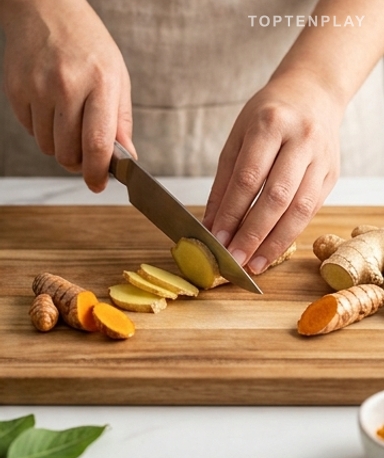
Start by preparing everything before turning on the heat. Roughly peel the ginger — a tablespoon is enough to scrape the skin off; no need to be precise. Slice it into rounds of about 3 mm. When the blade goes through, you hear a small fibrous snap, and the scent immediately hits your nostrils. Do the same with the turmeric if you have it fresh, and place it on a piece of parchment paper — it really stains everything. For the garlic, lay it flat on the board and press with the flat of the knife until it crushes slightly. That’s it.
Everything in the pot at once
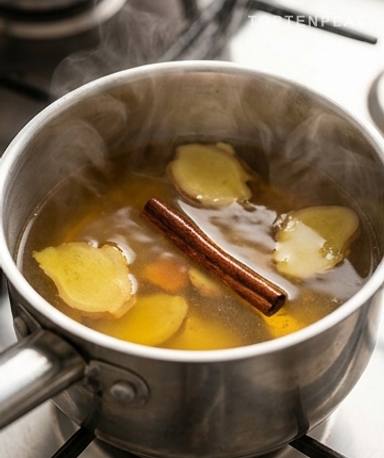
Pour about 50 cl of cold water into a small saucepan. Add the ginger, turmeric, crushed garlic, onion cut roughly in half, cinnamon stick, and guava leaves. Set to medium heat. You want it to rise slowly, not explode into a boil in thirty seconds. As it heats up, the water will gradually change color — from transparent to a pale yellow first, then to that characteristic orange-amber. That’s the turmeric and ginger starting to work.
The infusion moment
Once the water simmers — you see small bubbles rising in clusters from the bottom, but it’s not at a rolling boil yet — lower the heat and let it simmer gently for 15 to 20 minutes. Half-cover to keep the aromas in. The scent released at this stage is quite striking: cinnamon dominates first, warm and sweet like light caramel, then the ginger takes over with its sharp edge. After 20 minutes, the liquid is well concentrated. Don’t let it boil vigorously — a hard boil makes the ginger bitter and disperses the most delicate aromas.
Strain, serve, drink hot
Remove from heat and strain through a small sieve directly into your cup. If you want to sweeten it, a spoonful of honey blends in perfectly — it melts immediately into the still-hot liquid. The first sip always surprises: more complex than expected, with that ginger heat lingering in the throat for a few seconds after swallowing. Drink it really hot. That’s when the cinnamon stick gives its best.
Tips & Tricks
- Prepare a whole liter directly rather than two cups. The rest keeps for 48 hours in the refrigerator in a closed jar — simply reheat the amount you need the next day.
- If the tea is too intense at first, dilute it with a little extra hot water. Over time, you’ll adjust the proportions to your taste without needing to refer to the recipe.
- The onion is truly optional. Some find it indispensable for the sweetness it brings to the background, others never use it. Try both versions before deciding.
Can the herbal tea be prepared in advance?
Yes, and it’s even recommended. Prepare up to a liter at once and keep the rest in an airtight jar in the refrigerator for 48 hours. Just reheat the desired amount in a saucepan or microwave before drinking.
Can I use powdered ginger and turmeric instead of fresh?
Yes, but the result will be less vibrant and less fragrant. When using powder, count half a teaspoon of each — add them at the end of cooking to prevent them from burning at the bottom of the pot and becoming bitter.
Where can I find guava leaves?
Asian and African grocery stores usually sell them in dried bags at a low price. If you can’t find them, a bay leaf or a few fresh basil leaves serve as an acceptable substitute without radically changing the profile of the tea.
How to mellow the tea if it’s too intense?
Two simple solutions: dilute with a bit of extra hot water directly in the cup, or add a teaspoon of honey. Honey rounds out the ginger’s spiciness very well. You can also reduce the amount of ginger next time.
Can I drink this tea every day?
For the vast majority of people, yes, no problem. Ginger and turmeric have been consumed daily in many cultures for centuries. If you are taking blood thinners or other specific medications, it’s best to talk to your doctor — ginger in large quantities can interact with certain treatments.
Ginger, Turmeric, Garlic, and Guava Leaf Herbal Tea
International
Beverage
An aromatic herbal tea with whole spices, to be drunk hot in the morning upon waking or as a digestive after a meal.
Ingredients
- 500 ml cold water
- 25 g (about 3 cm) fresh ginger, peeled and sliced into rounds
- 15 g (about 2 cm) fresh turmeric, peeled and sliced (or ½ tsp powder)
- 1 clove garlic, crushed with the flat of the knife
- ½ small onion, cut roughly in half
- 1 stick cinnamon
- 4 to 6 dried guava leaves
- 1 tsp (optional) honey, for sweetening
Instructions
- 1Peel the fresh ginger and turmeric, slice into 3 mm rounds. Crush the garlic clove with the flat of the knife. Cut the onion in half.
- 2Pour 500 ml of cold water into a small saucepan. Add all ingredients: ginger, turmeric, garlic, onion, cinnamon stick, and guava leaves.
- 3Place over medium heat until it reached a slight simmer. Lower the heat and simmer half-covered for 15 to 20 minutes, without letting it boil vigorously.
- 4Strain through a fine sieve directly into cups. Add a spoonful of honey if desired. Serve immediately, very hot.
Notes
• Storage: keeps for 48 hours in the refrigerator in an airtight jar. Reheat in a saucepan or microwave before serving.
• Concentrated version: reduce water to 350 ml for a base that you can then dilute cup by cup according to desired intensity.
• Without guava leaves: replace with a bay leaf or 5 fresh basil leaves for a different but equally balanced result.
Nutrition Facts (per serving, estimated)
| 18 kcalCalories | 0.5 gProtein | 4 gCarbs | 0.2 gFat |