📌 Fried stuffed turnovers: the technique for achieving perfect crispness with a customizable filling
Posted 12 January 2026 by: Admin
Crispy Savory Fritters: A Universal Specialty
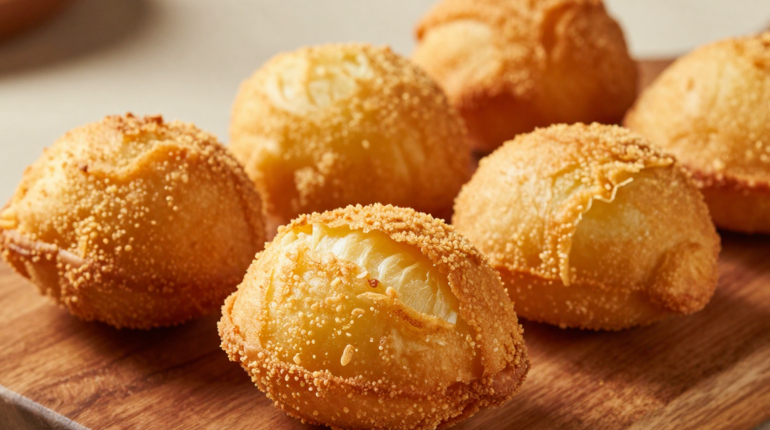
These golden fried pies seduce with their iconic contrasting texture: a crunchy crust envelops a soft and savory interior. This tactile duality constitutes the signature of these preparations prized in many global culinary traditions.
Their versatility makes them ideal allies for all occasions. As a quick snack, they are enjoyed hot by hand. As an appetizer, they open meals with indulgence. During receptions, they sit on buffets as convivial dishes that everyone appreciates.
The strength of these fritters lies in their ability to accommodate varied fillings. Spiced ground meat, herb-scented chicken, or sautéed vegetables: each stuffing transforms these crispy envelopes into distinct creations. This adaptability allows for exploring culinary influences while maintaining the same technical base.
The “turnover” format promotes easy handling and even cooking. The closed shape traps flavors and cooking juices, guaranteeing a taste explosion with every bite. This practical design explains their lasting success as a popular specialty accessible to all cooks.
The Successful Base: Mastering The Perfect Dough
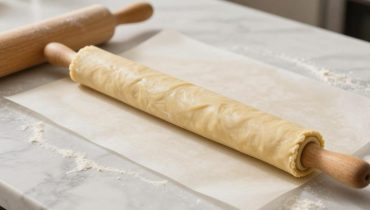
The success of these golden pies rests on a simple composition accessible to all cooks. Three cups of all-purpose flour constitute the structural base, complemented by a teaspoon of salt which strengthens the gluten network and reveals the flavors. A tablespoon of sugar brings a discreet touch of balance without tipping into sweetness.
The incorporation of two tablespoons of vegetable oil or melted butter represents the decisive element for obtaining a supple and malleable dough. This fat coats the flour particles, creating an elastic texture that can be worked without excessive resistance and guarantees crispness after cooking.
Progressive hydration with a cup of warm water constitutes the fundamental technique. Gradual addition allows for adjusting the consistency in real-time, avoiding a dough that is too dry and would crack or too wet and would stick. The warm temperature slightly activates the gluten without over-developing it, ensuring optimal extensibility during shaping.
These balanced proportions produce a dough that is neither too thick nor too thin, capable of generously containing the filling while achieving that characteristic golden crispness during frying. This neutral base then adapts to all intended stuffings.
The Savory Filling: The Example Of Meat Stuffing
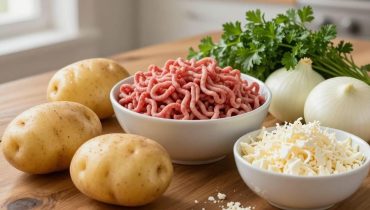
Once the dough is mastered, the classic meat stuffing reveals all its effective simplicity. Three hundred grams of ground beef constitute the protein base, an ideal quantity to balance the filling-to-envelope ratio without overloading the pies. A small finely chopped onion provides the essential aromatic foundation, its melting texture contrasting with the meat.
Two tablespoons of vegetable oil allow for the prior cooking of this preparation, ensuring the evaporation of excessive moisture that would soften the dough. The salt-black pepper trio forms the minimal seasoning, but the recipe allows for personalized variations: paprika for a smoky note, cumin for a marked oriental dimension.
Fresh chopped parsley, although optional, introduces a herbal freshness that lightens the richness of the meat. This modular approach transforms a standard preparation into a regional variation depending on the chosen spices. Some traditions favor complex mixtures, others maintain this deliberate sobriety.
This traditional stuffing illustrates the fundamental principle of these pies: a filling concentrated in flavors, previously cooked to eliminate excess liquid, ready to be sealed in its dough case before the decisive stage of thermal transformation.
The Crispy Finish: Professional Frying
After this meticulous preparation, deep frying metamorphoses these assemblies into golden specialties. The vegetable oil must be abundant, enough to completely submerge each pie and guarantee uniform cooking over the entire surface. This total immersion constitutes the secret of a homogeneous coloring, avoiding the pale areas characteristic of superficial frying.
The oil temperature plays a determining role: too low, the dough absorbs the fat and becomes heavy; too high, the outside burns before the inside reaches the desired texture. A culinary thermometer eliminates hazardous approximations, although experienced cooks test intuitively with a fragment of dough.
This process of thermal transformation creates the sought-after signature texture: the envelope develops its characteristic crispness while the interior retains its softness, all protecting a filling kept hot and juicy. The golden bubbles signal the Maillard reaction which forges this irresistible crust.
The indication “Continued on the next page” in the original recipe suggests additional details on cooking times, post-frying drainage, or presentation variants, all adjustments that perfect this universally appreciated ancestral technique.