📌 Flemish carbonnade: why gingerbread and dark beer transform this Northern stew into a mythic dish
Posted 31 January 2026 by: Admin
The Authentic Flemish Carbonnade Recipe
Flemish carbonnade distinguishes itself from European stews through a unique gustatory alchemy: 75cl of dark beer merges with 80g of gingerbread to create an incomparable bittersweet sauce. This combination, a signature of Flemish gastronomy, transcends simple meat cooking to achieve an aromatic complexity that neither beef bourguignon nor Irish stew can claim.
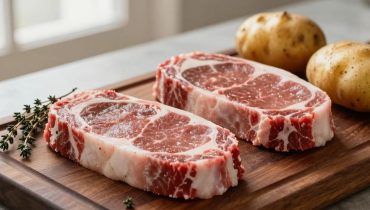
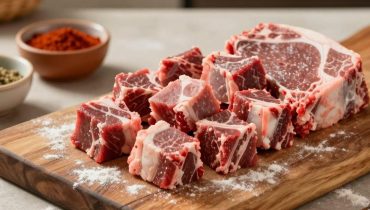
The recipe for four people relies on 900g of braising meat – chuck or brisket – cut into large cubes intended to melt during prolonged cooking. Three finely sliced onions (300g) constitute the aromatic base, sautéed in 40g of butter until caramelized. The gingerbread acts as a natural thickener, while a tablespoon of mustard provides the acidity necessary for flavor balance.
Seasoning remains measured: 6g of salt, 3g of ground black pepper, three sprigs of fresh thyme. This sobriety allows the dark beer to fully express its malty and slightly bitter notes, which the gingerbread tempers with its sweet-spicy accents. Each ingredient fulfills a precise function in the dish’s gustatory architecture, revealing the sophistication of a peasant cuisine refined by generations of Flemish cooks.
The success of the carbonnade lies in the scrupulous respect for these proportions, designed to create a harmony where no flavor dominates the others.
Ingredient Preparation And The Aromatic Base
The choice of meat conditions the entire final result. Chuck and brisket, cuts rich in collagen and connective tissue, require cutting into 4 to 5-centimeter cubes. This generous size ensures the meat retains its structure during the two-and-a-half-hour simmering period, necessary to transform tough fibers into melting bites without disintegration.
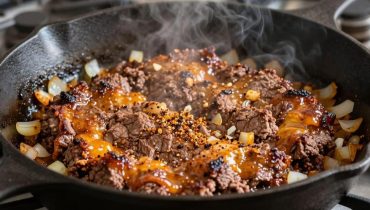
Slicing the three onions requires a precise technique: fine strips of 2 to 3 millimeters that will caramelize uniformly in the heated butter. These 300 grams of alliums constitute the dish’s aromatic architecture, releasing their natural sugars to create a sweet base that balances the beer’s bitterness. Slow melting in 40 grams of butter develops Maillard compounds that enrich the sauce’s gustatory complexity.
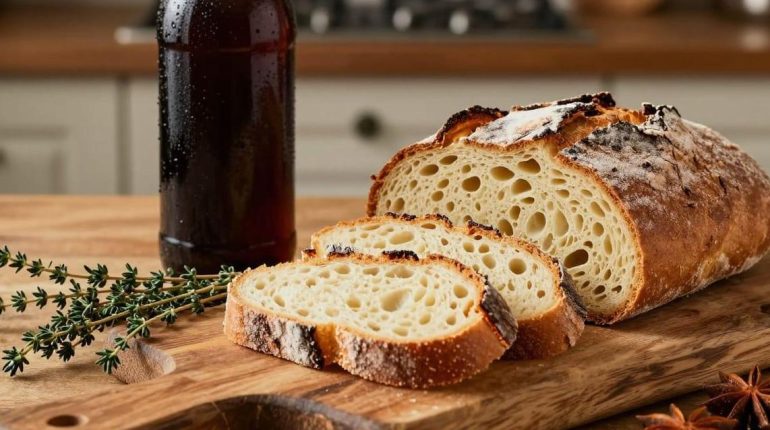
Three sprigs of fresh thyme – not dried – bring herbaceous notes that will dialogue with the malt during prolonged cooking. Unlike dehydrated thyme which releases its essential oils abruptly, fresh stems gradually distill their aromas into the cooking liquid, creating a subtle depth that Flemish cooks have favored for decades.
This methodical setup determines the final texture of the carbonnade: meat preserved in a velvety sauce where each ingredient has fulfilled its role during the thermal transformation.
Preparation And Execution Time
This rigorous methodology requires a precise time investment: 25 minutes of active preparation followed by 2 hours 30 minutes of slow cooking. These durations are not adjustable approximations, but technical imperatives dictated by the biochemistry of culinary transformation. The collagen present in the chuck and brisket requires prolonged exposure to a constant temperature of 95°C to convert into gelatin, a process that gives the carbonnade its characteristic silky texture.
The contemporary era values speed – electric pressure cookers, programmable slow cookers, pressure-based time reductions. These methods indeed compress cooking hours but irremediably alter the dish’s final structure. Traditional low-heat cooking allows gradual evaporation that concentrates the beer’s malty flavors while preserving the integrity of muscle fibers. Every minute of these 150 minutes of simmering participates in the alchemy that transforms ordinary ingredients into a recognized regional specialty.
Flemish cooks know it: authentic carbonnade tolerates no temporal shortcuts. This culinary patience, inherited from times when cooking time paced domestic life, guarantees the sauce reaches that velvety consistency where beer, gingerbread, and meat juices merge into a homogeneous emulsion. A dish that truly honors this tradition therefore requires nearly three hours from start to finish.
The Balance Of Flavors And Textures
This temporal alchemy finds its culmination in a gustatory balance of unsuspected complexity. The 2 slices of gingerbread (precisely 80g) fulfill a double function: thickening the sauce with their natural carbohydrates while infusing sweet-spicy notes that counterbalance the marked bitterness of the dark beer. This traditional process, inherited from Flemish medieval kitchens where stale bread served as a universal binder, transforms a simple stew into an aromatic symphony.
The tablespoon of mustard introduces the acidity needed to cut through the richness of the butter and meat, while its sulfur compounds awaken the taste buds. Seasoning follows a mathematical rigor: 6g of salt to exalt without masking, 3g of freshly ground black pepper for its frank pungency. This milligram-precise dosage distinguishes authentic carbonnade from approximate versions where salt clumsily compensates for gustatory imbalances.
The genius of this recipe lies in the meeting between malty beer and spiced gingerbread. Where other European cuisines use red wine or broth, the Flemish tradition relies on this unique association that creates a sauce both full-bodied and subtly sweetened. Each ingredient dialogues with the others: woody thyme amplifies the beer’s caramel notes, mustard awakens the bread’s dormant spices, butter binds the whole into a creamy texture that generously coats each cube of melting meat.