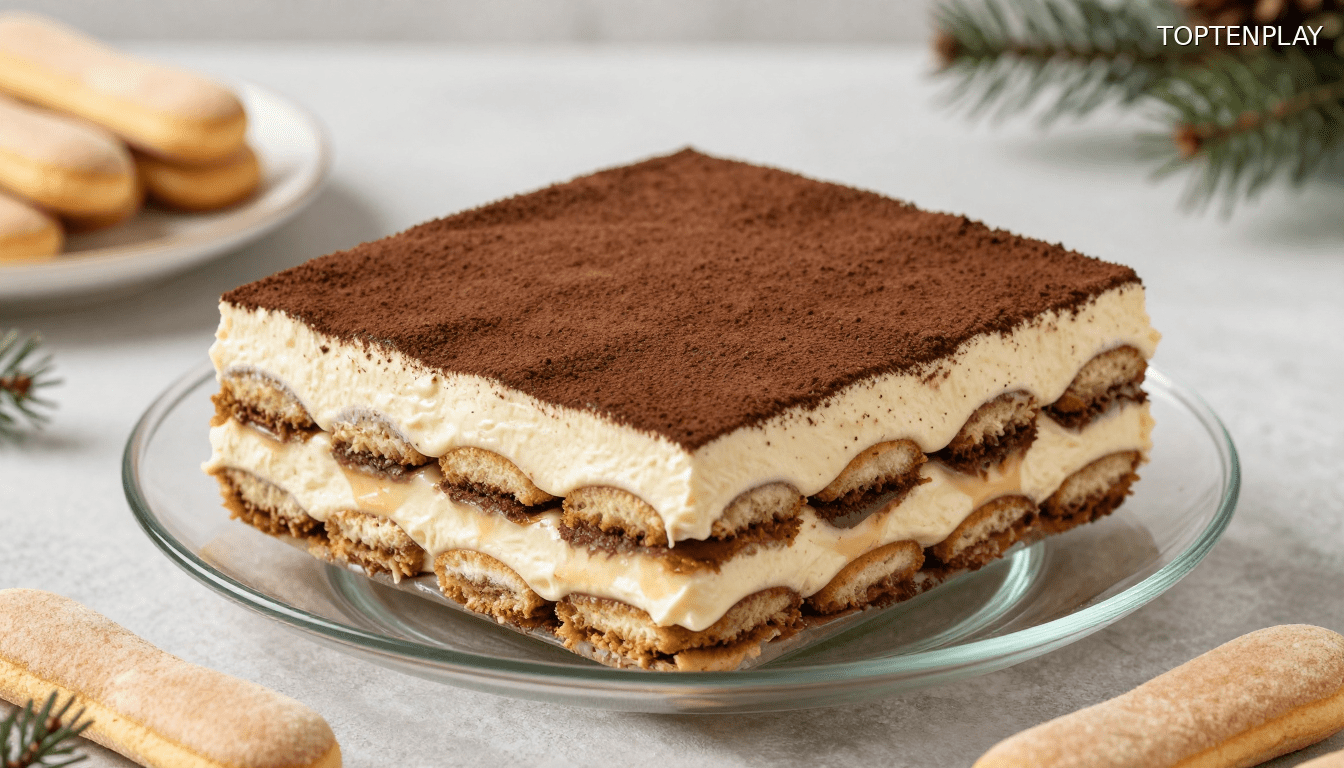
Tiramisu, The Ideal Backup Solution For Christmas
Order cancelled, last-minute accident or missing ingredient: the absence of dessert for Christmas Eve is a culinary disaster. Faced with this emergency, tiramisu emerges as the providential alternative. This Italian classic avoids the traps of complex recipes that require multiple components like the Yule log with its sponge cake, cream, and multiple fillings.
The major asset? A no-bake preparation that can be made on the same day. The base relies on store-bought ladyfingers, eliminating any perilous technical steps. The cream consists only of mascarpone, egg yolks whitened with sugar, and whipped egg whites. The rest is just assembly: dipping the biscuits in coffee, arranging them in layers, topping with cream, and dusting with cocoa.
This recipe meets the constraints of December 24th. Ingredients remain accessible in supermarkets even at the last hour. No rising time or complex baking. The only requirement: plan for several hours of resting in the fridge so that the whole thing takes on its characteristic creamy texture. A perfectly manageable timing for a dessert ready the same evening, maintaining that essential festive character for the Christmas meal without risking failure under pressure.
The Classic Composition: Three Key Ingredients
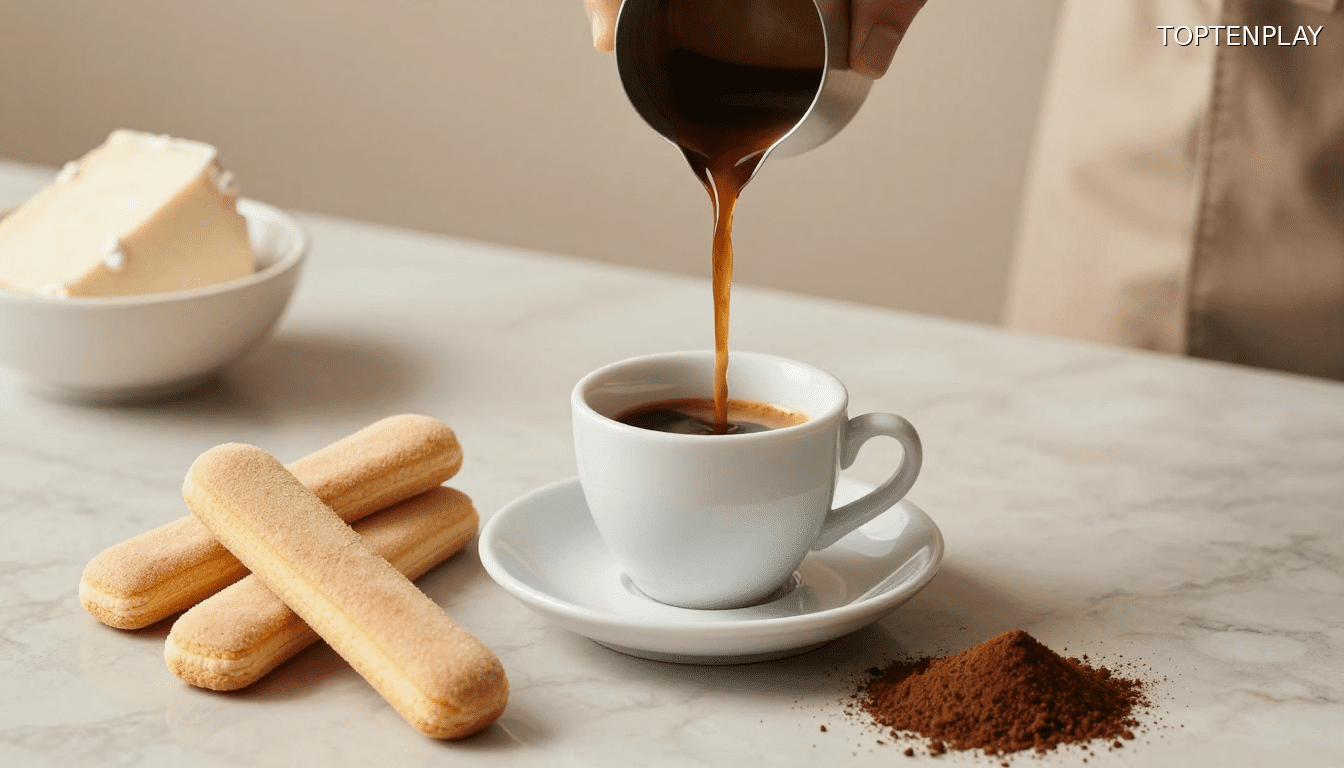
The traditional tiramisu recipe is based on a structure of three distinct layers. The base consists of ladyfingers, those rectangular biscuits sold in standard packets in all supermarkets. Their spongy texture absorbs the coffee without falling apart, guaranteeing perfect hold after resting in the fridge.
The cream is the heart of the recipe. It combines creamy mascarpone with egg yolks whisked with sugar until completely whitened. This process creates an airy texture reinforced by whipped egg whites, folded in gently to preserve volume. The result: a light mousse that coats each biscuit without making the whole thing heavy.
The assembly follows a logic of layering. The biscuits briefly dipped in coffee – preferably cooled espresso – form the first layer in the dish. The mascarpone cream covers them generously. This alternation is repeated until the ingredients are used up, creating those characteristic layers visible when sliced. The cocoa powder dusted just before serving provides the necessary bitterness to balance the sweetness of the mascarpone.
This simple structure explains why tiramisu adapts so easily to festive variations, as each component can accommodate complementary flavors according to the inspiration of the moment.
Festive Variations To Personalize The Dessert
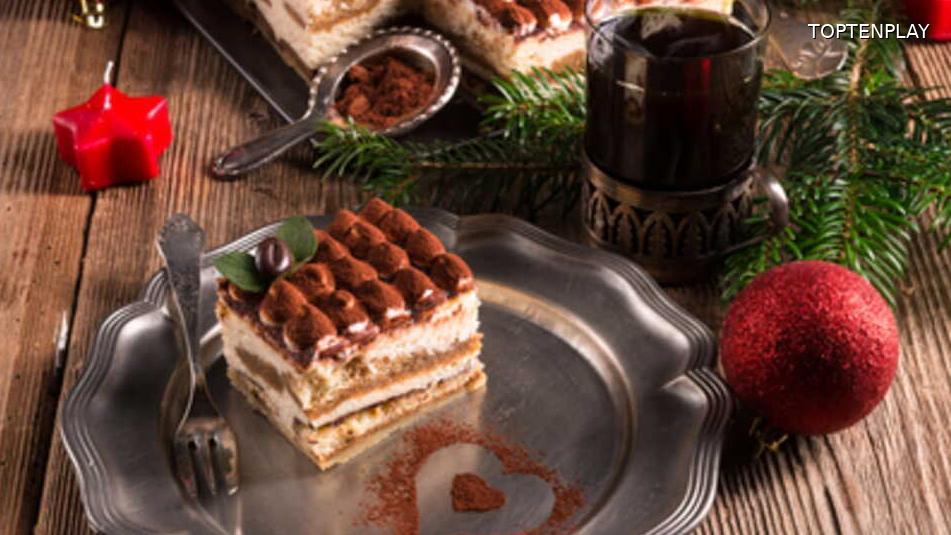
This modular structure allows for variations that transform the Italian classic into an authentic Christmas dessert. Chestnut cream advantageously replaces part of the mascarpone, bringing that autumnal flavor associated with the end-of-year holidays. It can be integrated directly into the mixture or form an intermediate layer between the biscuit strata.
Seasonal fruits offer a refreshing alternative. Lemon, omnipresent on stalls in December, can be incorporated as grated zest in the cream or as curd spread between the layers. Its acidity balances the richness of the mascarpone while maintaining the desired lightness.
The final toppings transform the visual appearance. Candied chestnut pieces sprinkled over the cocoa bring crunch and immediate elegance. Crushed dark chocolate, crumbled praline, or Christmas chocolates arranged on the surface create the impression of a dessert prepared with care, far from last-minute improvisation.
These variations require no special technique. They use ingredients available in shops open on December 24th – jarred chestnut cream, citrus fruits, seasonal chocolates – and are added to the base recipe without changing its fundamental simplicity.
Presentation Tips And Time Saving
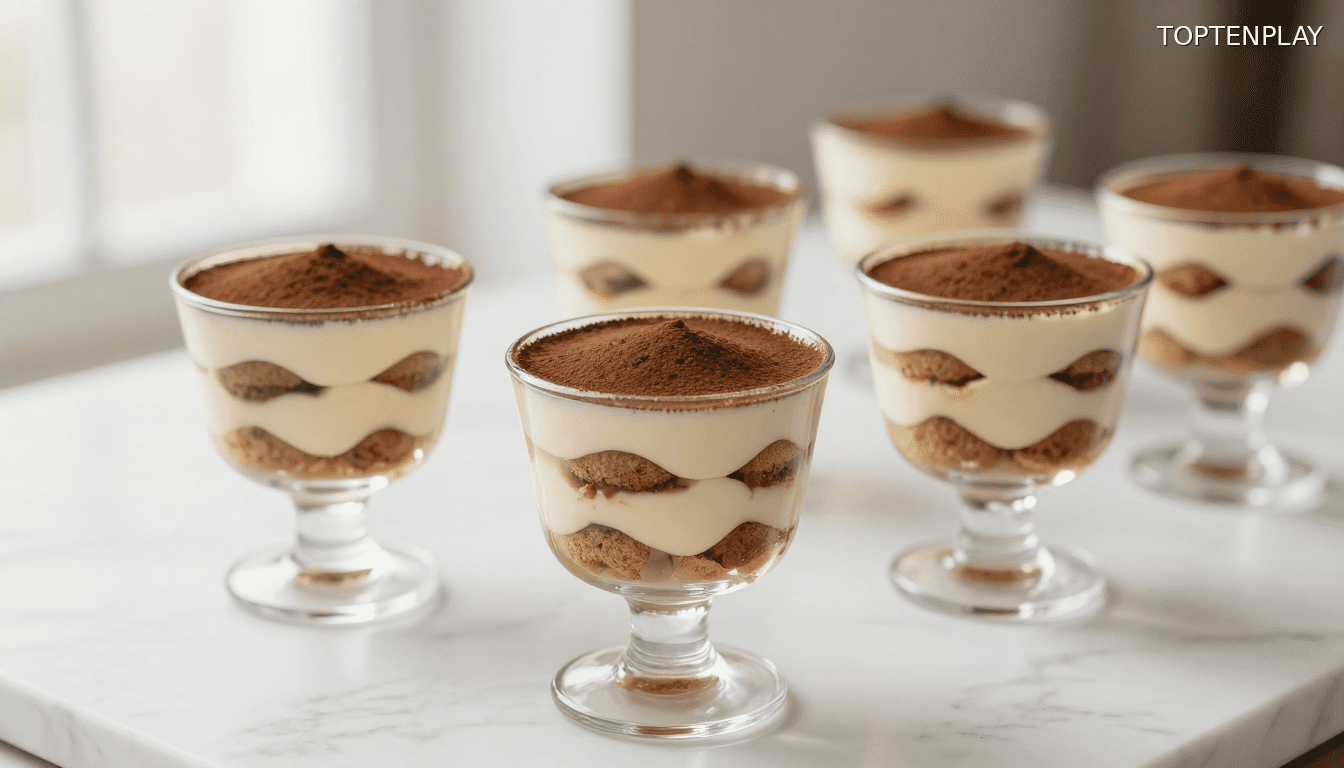
Presentation directly influences the setting time. Individual verrines considerably reduce the required resting time: their small volume allows for homogeneous refrigeration in 2 to 3 hours compared to 4 to 6 hours for a family dish. This option simultaneously provides a refined look that masks the improvisation.
The log format maintains the holiday symbolism while exploiting the assembly flexibility of tiramisu. A rectangular cake tin is enough to create this illusion, filled with successive layers and then turned out onto a serving dish. A spatula smoothes the sides before the cocoa finish, reproducing the expected aesthetic without the technical constraints of a rolled sponge cake.
For extreme emergency situations, placing it in the freezer accelerates stabilization. Twenty minutes at sub-zero temperatures partially sets the cream, then transferring it to the refrigerator completes the process in two additional hours. This method preserves the airy texture of the whipped whites.
The egg-free version is the ultimate solution when time is absolutely lacking. Mascarpone is mixed in equal parts with a cream cheese like Philadelphia beaten with icing sugar. This firmer cream sets immediately, allowing service after only one hour in the fridge. It sacrifices the original lightness but guarantees a presentable dessert when every minute counts.