📌 Egg Carton Codes Decoded: How the 3-Digit Julian Date Reveals Freshness Better Than Expiration Labels
Posted 16 December 2025 by: Admin
The Dinner Party Disaster That Changed Everything
A few years ago, I hosted an intimate dinner for friends—nothing elaborate, just good conversation and a homemade quiche made from a recipe I’d perfected countless times. The evening unfolded beautifully until roughly an hour after we finished eating. Uncomfortable silences replaced laughter, pale faces replaced smiles, and stomach troubles no one wanted to discuss became impossible to ignore.
As the host, guilt consumed me. I retraced every ingredient, every step, every detail. The eggs hadn’t smelled off. They weren’t slimy. The expiration date declared them perfectly safe. Yet clearly, they were not.
That’s when I discovered what would become the most important egg lesson of my life—hidden in plain sight on the side of the carton, a detail I’d overlooked dozens of times before.
The eggs were old. Not expired by the official date, but genuinely past their prime. My guests didn’t need a hospital, but they didn’t need another dinner invitation either. The experience forced a reckoning: I had been trusting the wrong information all along.
What followed was an obsessive hunt through egg cartons, comparing dates like a sommelier inspecting wine vintages. I learned that expiration dates reveal almost nothing about true freshness, and that the actual pack date—hiding in plain sight—tells a completely different story.
This realization transformed how I shop for eggs. More importantly, it revealed that egg cartons contain a coded language most people ignore entirely. Once you understand what those mysterious numbers actually mean, grocery shopping stops being passive and starts being informed. The stakes, it turns out, are higher than anyone realizes.
Cracking The Code: What Those Numbers Actually Mean
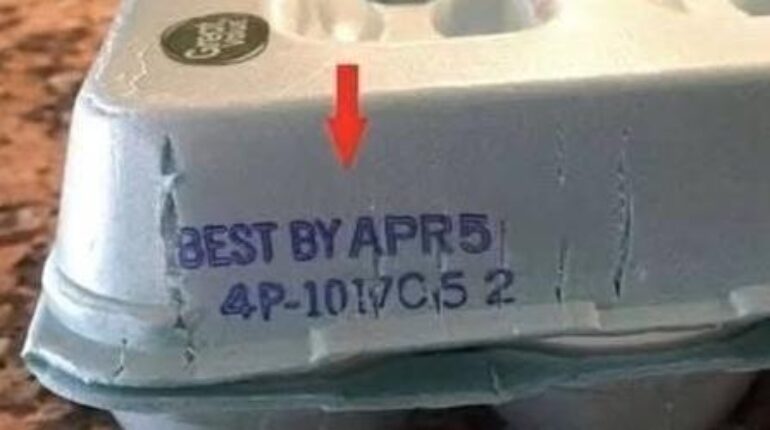
If you’ve examined an egg carton closely, you’ve noticed a peculiar three-digit number printed near the date. It looks like a factory code. A password. Something meant for someone else.
That number is the Julian date, and it’s far more important than its anonymous appearance suggests.
It reveals the exact day of the year the eggs were packed—not sold, not delivered, but actually packed. The system is straightforward: 001 equals January 1st, 032 equals February 1st, 365 equals December 31st. Once you decode this, the expiration date loses its authority. Two cartons bearing identical “best-by” dates could contain eggs that are weeks apart in actual freshness.
This distinction matters profoundly. Most sell-by dates are set well after packing, creating an illusion of safety that masks genuine deterioration. The Julian date strips away that illusion.
Next to this number, you’ll typically find another cryptic marking: a P followed by digits, like P1021. This is your processing plant code—seemingly useless until a recall announcement changes everything. When salmonella concerns trigger egg recalls, news reports list specific plant codes, not brand names. That P-number becomes your safety net, transforming a moment of panic into calm verification.
I discovered this when half-awake, scrolling morning headlines, I spotted the word “recall” paired with “eggs.” My heart raced as I grabbed the carton. Julian date? Fine. Plant code? Didn’t match the recall list. Relief flooded in instantly.
Understanding these hidden codes transforms grocery shopping from mindless routine into informed decision-making. The carton wasn’t boring after all—it was speaking a language I’d simply never bothered to learn.
The Science Of Freshness And Quality Grading
The float test taught me a harsh lesson: a sinking egg isn’t always a fresh egg. That beloved trick—drop it in water, watch for results—only tells half the story. An egg can sink and still be weeks past its prime, its quality degraded long before visible spoilage appears.
Here’s what actually happens inside an aging egg. Air gradually seeps through the porous shell, creating an invisible countdown. The whites thin from thick and cloudy to watery and weak. Yolks flatten. Flavor fades. The float test catches only advanced deterioration; the Julian date catches everything.
This is where the USDA grading system proves invaluable. Grade AA eggs feature thick whites and perfectly round yolks, ideal for frying or poaching where appearance matters. Grade A eggs work excellently for general cooking but with slightly thinner whites. Grade B rarely reaches consumer shelves, destined instead for manufacturers and food processors.
The difference between a 36-day-old egg and a 12-day-old egg isn’t subtle. I discovered this painfully one Sunday morning, cooking identical recipes with cartons from the same brand. The older eggs produced watery, flat scrambles. The fresher ones emerged fluffy, rich, almost creamy. Same kitchen. Same technique. Only the pack date differed.
Storage location amplifies this impact. That convenient egg tray on your fridge door? Temperature fluctuations there degrade eggs faster than anywhere else. Move them to the back, toward maximum cold stability, and you effectively double their useful life. Combine proper storage with a fresh Julian date, and freshness transforms from assumption into certainty.
The Marketing Maze And The Transformation
Walk down any grocery store aisle and egg cartons assault you with promises. Cage-free. Free-range. Organic. Pastured. Each label suggests a different story—happy chickens, ethical farming, superior quality. The reality, however, hides behind carefully chosen words.
Cage-free doesn’t mean freedom; it typically means large indoor barns with thousands of birds packed together. Free-range allows access to outdoor space, though “access” can mean minutes daily through a single door. Organic refers primarily to feed composition, not living conditions. Pastured is the only label where chickens genuinely roam and forage, and the proof appears immediately when you crack the shell.
Pastured eggs display yolks in shades of deep orange—almost sunset-colored. The whites stand thicker. The flavor tastes fuller, richer, noticeably different from conventional eggs. Is some of this psychological? Perhaps. But the biological reality is undeniable: diet and environment directly influence nutritional composition and taste.
Yet here’s what transformed my shopping habits entirely: none of these labels matter without freshness. One lazy Sunday, I conducted an unintended experiment. Two cartons, same brand, prepared identically. The 36-day-old eggs produced watery, flat scrambles. The 12-day-old eggs emerged fluffy, rich, almost creamy. The label told me nothing. The Julian date told me everything.
That’s when the shift happened. Brand loyalty dissolved. Marketing noise faded. Information became my only reliable guide. Once you decode those carton numbers, once you understand what truly separates quality from clever packaging, egg shopping transforms from mindless routine into informed decision-making. The numbers were never boring. I simply hadn’t learned their language.