The Crunchy Salad: Understanding the Base Ingredients
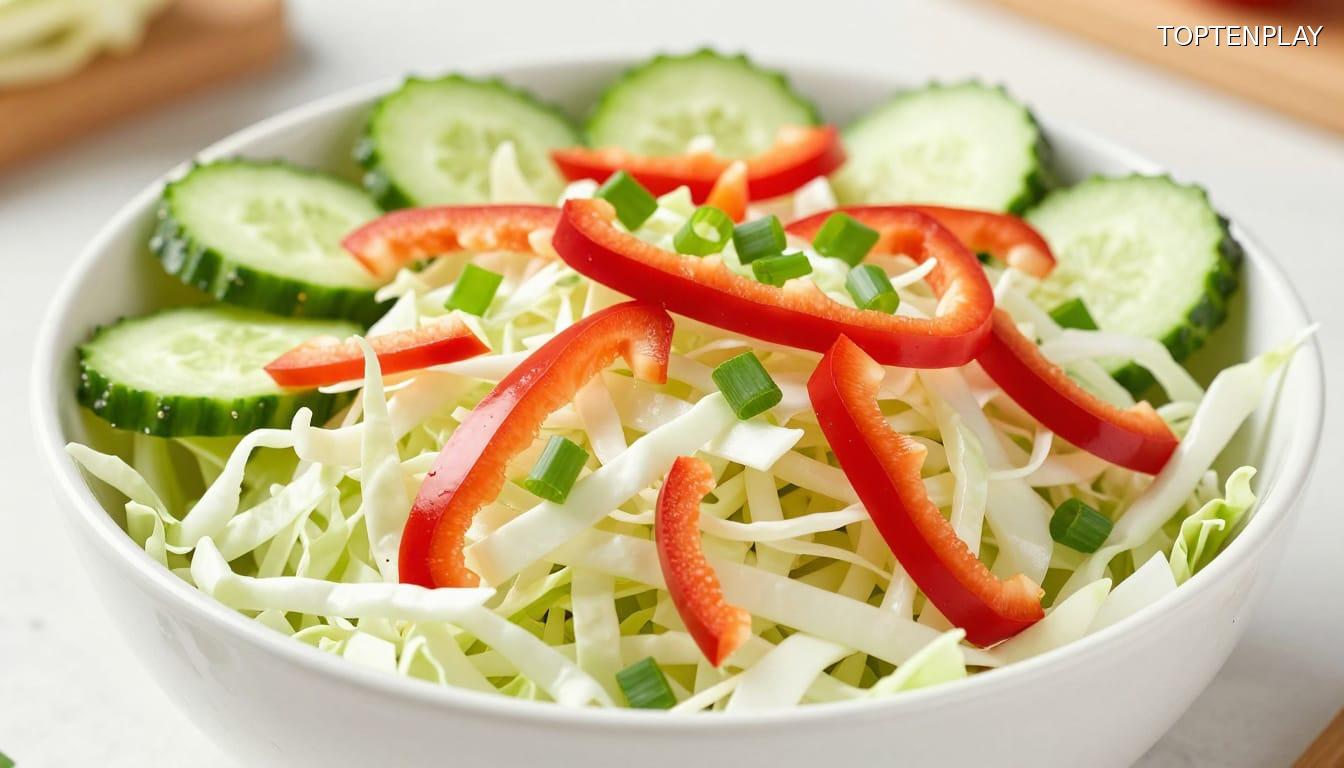
It all starts with an assembly as simple as it is effective: four fresh, accessible, and complementary vegetables that define the identity of this salad even before it reaches your mouth.
Shredded cabbage — green or Napa — forms the backbone of the recipe. Count on about a quarter of a medium head, or two generous cups, to obtain a voluminous and crunchy base. Its dense texture contrasts with the delicacy of the thinly sliced cucumber, preferably an English cucumber whose thin skin and low water content guarantee clean slices without excess moisture.
The julienned red bell pepper brings much more than just a colorful note. Its slightly sweet mildness balances the subtle bitterness of the cabbage, while its firmness adds an extra layer of crunch to the whole. The sliced green onions complete this quartet with a sharp and fresh touch, without ever dominating the other flavors.
What strikes you immediately is the color palette of the bowl: the ivory white of the cabbage, the translucent green of the cucumber, the bright red of the pepper, the intense green of the onions. A salad that is enjoyed first with the eyes, before seducing the palate.
These four vegetables form a solid taste architecture — the foundation upon which the rest of the recipe will be built with precision.
Fresh Herbs: The Optional but Decisive Aromatic Touch
On this visual and textural foundation, a single addition is enough to tip the salad from the category of a side dish to that of a memorable meal: fresh herbs.
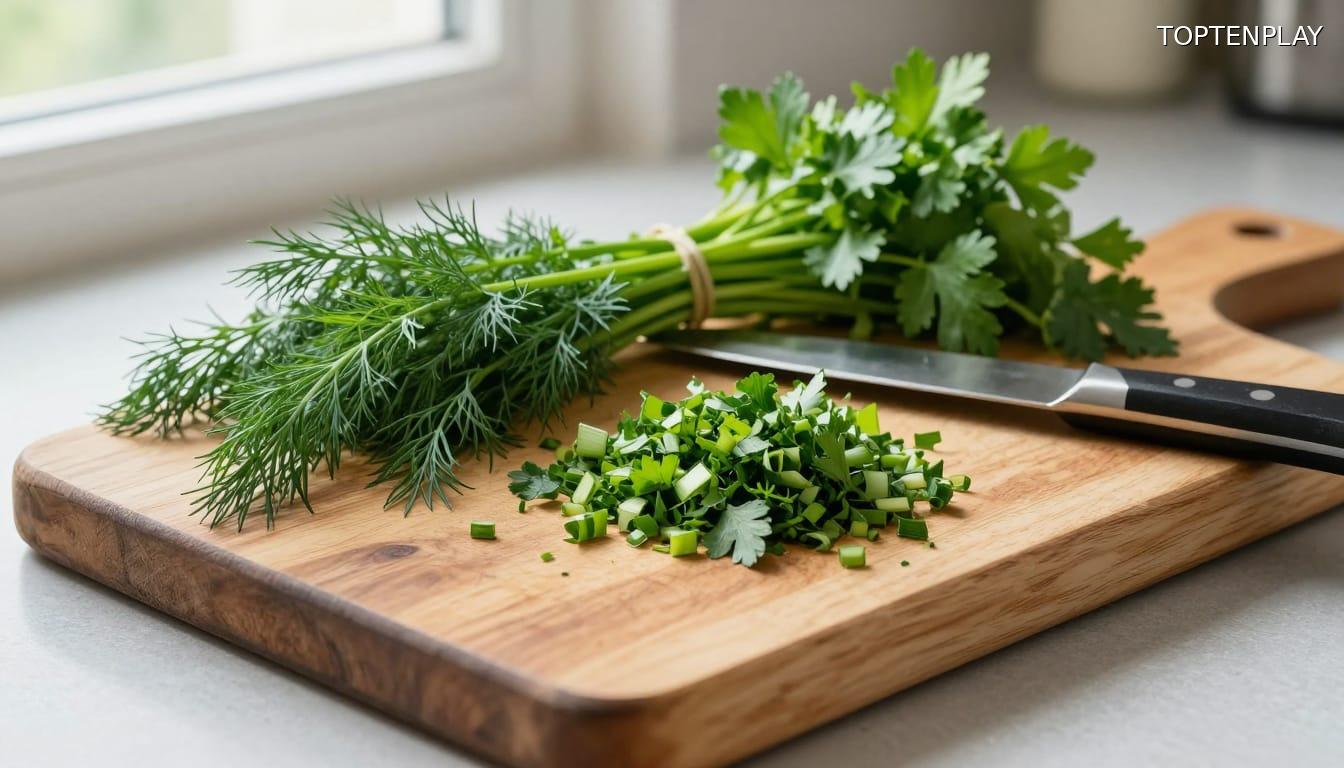
The recipe suggests two tablespoons of chopped dill or parsley — or a mix of both. This detail, presented as optional, deserves attention. Dill brings a slightly sweet, almost floral aniseed freshness that naturally dialogues with the sweetness of the red pepper. Parsley, more vegetal and direct, reinforces the liveliness of the green onions while unifying the aromatic whole.
Used together, they do not neutralize each other — they complement each other. Dill softens the sharpness of the parsley; parsley structures the delicacy of the dill.
This is where the intelligence of this recipe lies: an optional ingredient that, in practice, radically transforms the taste profile of the dish. A salad without herbs will remain fine. With them, it acquires an aromatic signature that distinguishes it from standardized preparations.
Chopping the herbs at the last moment preserves their essential oils — and therefore their intensity. This simple gesture, often neglected, makes a perceptible difference from the first bite.
The salad is now built in its solid components. It remains to define what will bind them — and that is precisely where the vinaigrette comes in.
The Creamy Vinaigrette: Balance, Lightness, and Personalization
This binder does more than just bring the ingredients together — it reveals their complexity.
The base relies on two tablespoons of mayonnaise, which can be substituted in equal parts with Greek yogurt for a significantly lighter version. This initial choice guides the entire nutritional profile of the dish without compromising its creaminess. A tablespoon of olive oil adds fluidity; apple cider vinegar — or lemon juice — introduces the acidity that wakes everything up.
Then the vinaigrette gains depth: a teaspoon of Dijon mustard brings a bite, garlic powder a soft and persistent warmth, and salt and pepper calibrate the final seasoning.
The optional addition of half a teaspoon of honey or maple syrup deserves special attention. Far from being anecdotal, this sweet note creates a counterpoint to the acidity of the vinegar — an acid-sweet tension that complexifies the tasting experience without ever weighing it down.
What distinguishes this vinaigrette is its logic of adaptation: every parameter — acidity, fat, sugar — is adjustable according to preferences and dietary constraints. It doesn’t impose a taste; it invites you to calibrate your own.
The sauce being ready, there remains one last step, often underestimated, which conditions the final result as much as the ingredients themselves.
Assembly and Tips: Succeeding with the Salad Every Time
The vinaigrette being calibrated, it is the technical gesture that reveals its full value — or ruins it.
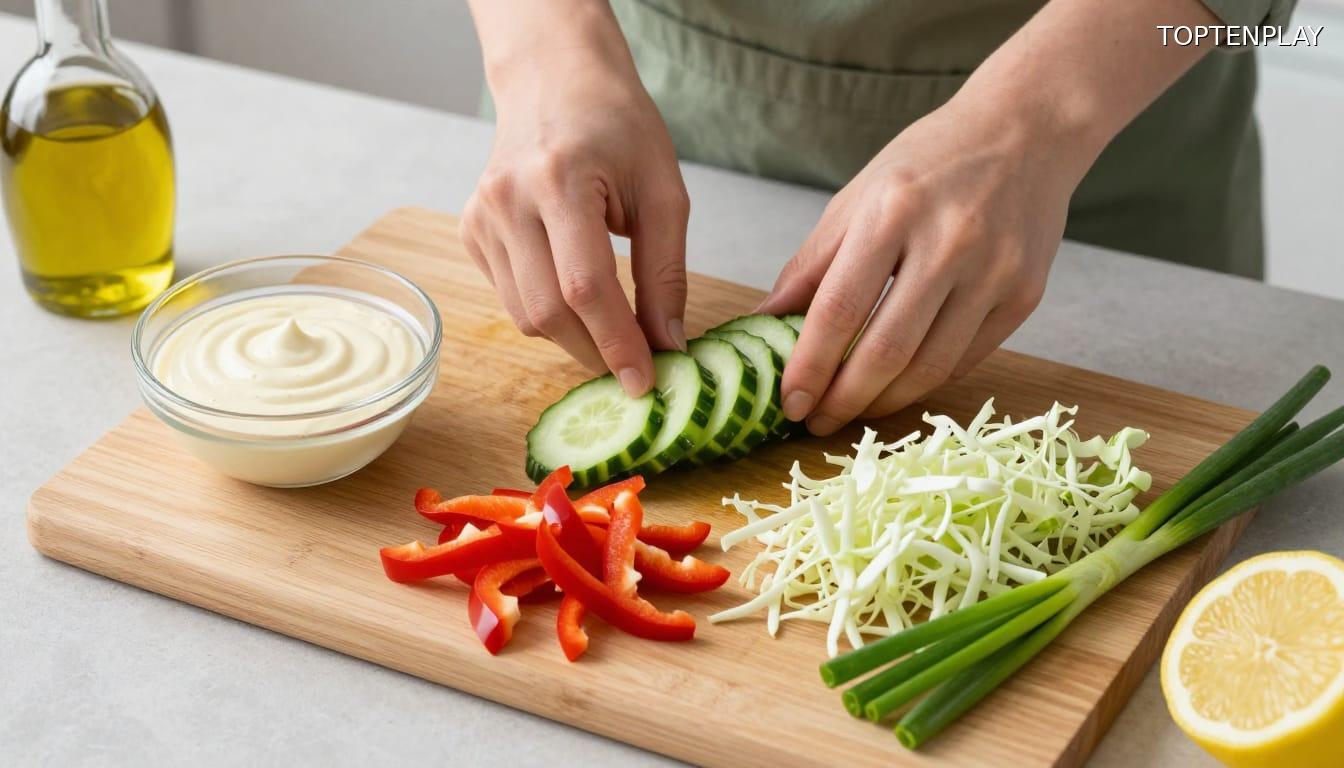
First imperative: slice thinly. The cucumber, red pepper, green onions — each vegetable must have a uniform thickness to guarantee a homogeneous texture in every bite. Irregular cutting creates imbalances in the mouth that even the best vinaigrette cannot correct.
The shredded cabbage follows the same logic: thin strips absorb the seasoning better and integrate naturally with the rest of the vegetables, without dominating the whole.
Next comes the adjustment of the vinaigrette. The amount of apple cider vinegar or lemon juice is not fixed in advance — it is tasted and corrected. Too acidic? Dilute slightly with olive oil. Too mild? A few extra drops are enough. Salt and pepper are added at the end of assembly, once all ingredients are combined, for precise and balanced seasoning.
A final practical tip: mix gently but thoroughly, ensuring that each vegetable is coated in vinaigrette without the vegetables breaking.
These gestures, simple in appearance, are what transform a recipe into a mastered result — a salad as carefully presented as it is tasted.