📌 Cuban Oregano: this Latin American plant used for generations for digestion, kidneys, and vitality
Posted 19 March 2026 by: Admin
Cuban Oregano: Portrait Of A Millennial Medicinal Plant With Multiple Virtues
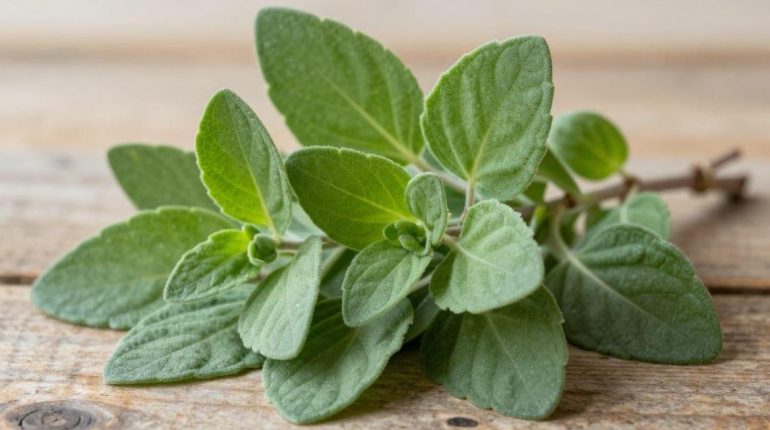
For generations, households in Latin America have cultivated a discreet but precious plant: Cuban oregano, known scientifically as Plectranthus amboinicus. This member of the Lamiaceae family is distinguished by its thick, fleshy leaves with a velvety touch, and especially by its intense herbaceous fragrance that scents tropical gardens.
Depending on the region, this aromatic plant goes by many names: French oregano in the Maghreb, Mexican mint in Central America, Indian borage in Southeast Asia. This diversity of names testifies to an extensive geographical implantation and a shared traditional use across continents.
Unlike the Mediterranean oregano used in cooking, Cuban oregano occupies a privileged place in domestic pharmacopoeias. Its succulent leaves are traditionally transformed into infusions, syrups, or poultices intended to support daily well-being. This generational transmission of ethnobotanical knowledge reveals an empirical knowledge developed long before the advent of modern phytochemistry.
The particularity of this plant lies in its versatility: where some medicinal herbs are confined to a specific use, Cuban oregano accompanies digestive disorders as well as urinary or respiratory imbalances. This adaptability explains why it remains a pillar of natural remedies, often occupying a choice place on balconies and in family gardens.
Active Compounds That Explain Its Traditional Therapeutic Use
This ancestral reputation finds an echo today in phytochemistry laboratories. Analysis of Cuban oregano leaves reveals a remarkable concentration of carvacrol and thymol, two phenolic compounds recognized for their antimicrobial and anti-inflammatory properties. These aromatic molecules, responsible for the plant’s characteristic odor, partly explain its empirical effectiveness observed for centuries.
Researchers have also identified a significant presence of flavonoids and natural antioxidants in the plant tissues. These bioactive compounds intervene in several physiological mechanisms: neutralization of free radicals, modulation of the inflammatory response, stimulation of digestive secretions. Their synergistic action confers multiple properties on the plant that exceed the simple sum of its isolated constituents.
The gentle diuretic activity documented in ethnopharmacological studies is explained by the combination of these secondary metabolites. This action promotes renal elimination without causing a major electrolyte imbalance, unlike some pharmaceutical diuretics. The mild antimicrobial effects observed in vitro on various bacterial strains also justify its traditional use during mild urinary tract infections.
This correspondence between chemical composition and empirical uses perfectly illustrates how traditional knowledge anticipated subsequent scientific discoveries. The therapeutic potential of Cuban oregano is therefore not a matter of folklore, but of a measurable biochemical reality that legitimizes its persistence in contemporary natural pharmacopoeias.
Five Documented Traditional Applications: From Renal Balance To Digestive Comfort
This scientific legitimization of ancestral uses translates concretely into five therapeutic applications documented in the traditions of Latin America and the Caribbean.
The first concerns the support of natural water balance. The gentle diuretic action of the plant promotes urinary flow and accompanies physiological elimination processes. This property explains its traditional use to maintain renal function, without however replacing medical management of proven urological pathologies.
In some cultures, Cuban oregano helps eliminate fine mineral residues called “arenillas” in the urinary tract. These micro-particles, potential precursors of lithiasis, are said to be mobilized by the increase in urinary volume. Abundant hydration remains, nevertheless, the determining factor in this natural elimination process.
The antioxidants contained in the leaves exert generalized cellular protection, including eye tissues. This preventive action is part of a global health preservation strategy, without claiming to treat specific ophthalmological conditions.
On the respiratory level, infusions of Cuban oregano traditionally relieve occasional coughs and facilitate expectoration. The volatile aromatic compounds, inhaled during the decoction, contribute to clearing the airways during seasonal discomforts.
Finally, digestive stimulation constitutes the most widespread use. The plant alleviates bloating, flatulence, and post-prandial heaviness thanks to its carminative principles which promote the expulsion of intestinal gases and regulate digestive motility.
Instructions For Use And Essential Precautions For Responsible Use
These multiple traditional applications, however, require a rigorous framework of use to guarantee effectiveness and safety.
The classic preparation consists of a simple infusion: bring a cup of water to a boil, add a fresh leaf of Cuban oregano, let simmer for 2 to 3 minutes, then infuse off the heat for an additional 5 minutes. After filtration, the herbal tea is consumed warm, possibly enhanced with honey or lemon. The recommended frequency is one daily intake, preferably in the morning to optimize the diuretic effect without disturbing night sleep.
This apparent simplicity must not obscure formal contraindications. Use during pregnancy remains prohibited without prior medical validation, as certain compounds can influence uterine contractility. Excessive or prolonged consumption beyond a few weeks exposes one to electrolyte imbalances related to the cumulative diuretic effect. People under medical treatment must imperatively consult before any use, due to potential interactions with synthetic diuretics, antihypertensives, or anticoagulants.
The fundamental principle remains invariable: Cuban oregano constitutes a well-being supplement, never a substitute for professional diagnosis or conventional therapy. Its moderate short-term use is generally well tolerated in healthy adults, but any prolonged use requires appropriate medical follow-up. This vigilance allows for the preservation of traditional benefits while avoiding the pitfalls of self-medication.