Failed shrimp pasta is almost always the fault of a sauce that’s too heavy or overcooked shrimp. Here, we aim for the opposite: tender spaghetti, a well-bound cream, garlic that flavors without overpowering, and juicy shrimp. It’s a real everyday recipe, quick, but refined enough not to feel like a thrown-together dinner.
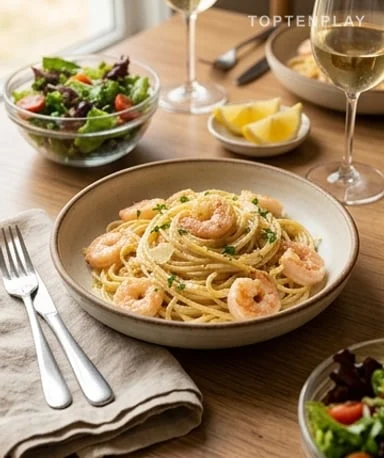
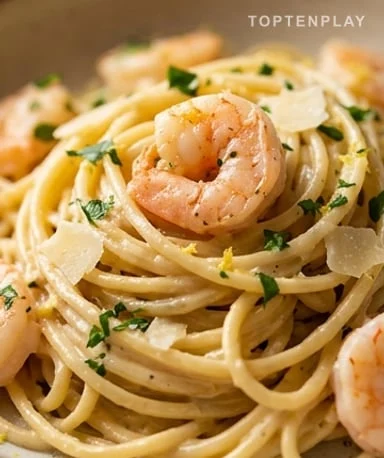
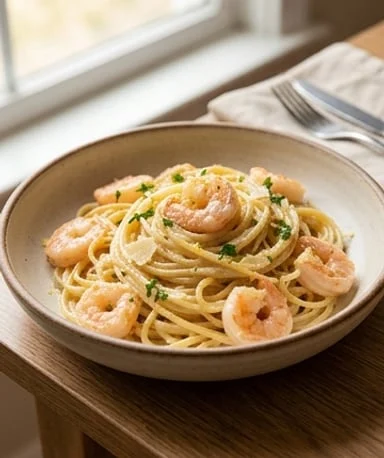
On the plate, the sauce should cling to the spaghetti like a shiny veil, not pool at the bottom in a white puddle. The shrimp bring that bright pink that wakes up the whole dish, especially with the green of parsley and a little lemon zest. In the pan, the garlic heats in olive oil, instantly smelling like good cooking. The sound of the pasta being tossed in the sauce, slightly moist and creamy, announces exactly the texture we’re looking for.
Why you’ll love this recipe
Ingredient Notes
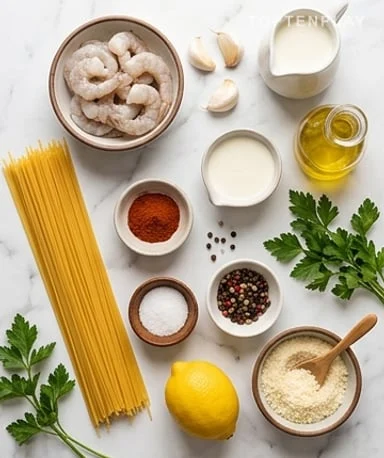
The base is simple: good shrimp, fresh garlic, cream, olive oil, and al dente spaghetti. The rest is seasoning.
- Spaghetti : They carry the sauce and give structure to the dish. Choose good-quality pasta, ideally durum wheat, and cook it al dente so it retains a slight resistance when bitten.
- Shrimp : They bring the sea flavor, sweetness, and a firm yet tender texture. Fresh or frozen peeled shrimp work well, as long as they are thoroughly thawed and dried to avoid releasing too much water.
- Garlic : It provides the base aroma, the one you smell as soon as the pan heats up. Chop it finely and sauté gently: if it browns too much, it becomes bitter and overpowers the cream.
- Heavy cream : It creates the creamy sauce and rounds out the shrimp flavor. Thick cream gives a more coating texture, while whole liquid cream gives a thinner sauce; in either case, avoid boiling it vigorously.
- Olive oil : It’s used to sear the garlic and shrimp while adding a subtle fruity note. Use a mild olive oil rather than a very strong one, so as not to mask the delicacy of the shrimp.
- Parsley and lemon : Parsley adds herbal freshness, lemon brightens the cream with a lively touch. If you don’t have lemon, simply add a bit more pepper and fresh parsley to keep a light finish.
Cook the pasta just right
Start with a large pot of well-salted water, because the spaghetti should already have flavor before touching the sauce. Cook it al dente: when you bite into it, the center should still offer a slight resistance, not mash softly. Reserve a ladle of pasta water before draining; it’s the real binder of the recipe. This starchy, cloudy water will loosen the cream and help it coat the pasta without weighing it down.
Sear without being harsh
In a large pan, heat the olive oil over medium heat, then add the chopped garlic. It should perfume the oil and turn lightly golden, with a warm, sweet smell, never burnt. Add the well-dried shrimp and cook them a few minutes, just until they turn from translucent gray to opaque pink. If the pan sizzles gently and the shrimp stay plump, you’re on the right track.
Make a real sauce
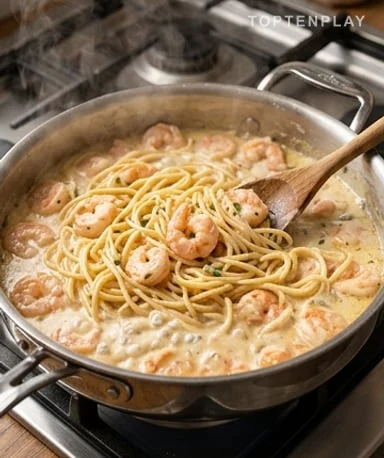
Lower the heat before adding the cream, otherwise it may separate and lose its smoothness. Stir slowly to pick up the cooking juices from the bottom of the pan: that’s where the garlic, oil, and shrimp flavor concentrate. The sauce should barely simmer, with lazy bubbles at the edges. If it thickens too quickly, add some pasta cooking water, spoon by spoon, until you get a coating consistency.
Mix at the right time
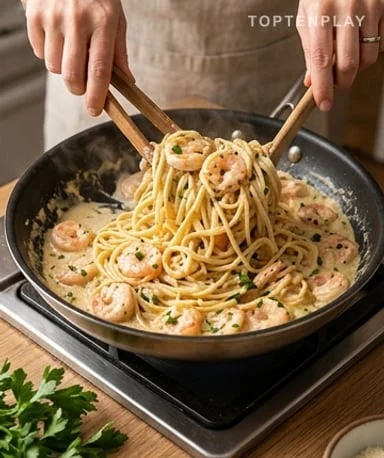
Add the drained spaghetti directly into the pan, not into a cold bowl. Toss with tongs so each strand catches the sauce, lifting rather than smashing. Aim for a shiny, supple, almost silky texture, with shrimp distributed everywhere and not just placed on top. Taste before adding more salt, as the pasta water and shrimp already provide a salty base.
Serve immediately
This dish doesn’t like to wait: the longer it sits in the pan, the more the sauce thickens and loses its movement. Serve hot, with fresh chopped parsley and a little lemon zest if you like a brighter finish. The contrast between the mild cream, the garlic aroma, and the lemon freshness makes for a much cleaner dish. A crisp green salad on the side is enough to balance the plate.
Tips & Tricks
- Dry the shrimp with paper towels before cooking, because excess water makes them boil instead of sear and dilutes the flavor.
- Always keep some pasta cooking water, because its starch makes the sauce shinier and helps it cling to the spaghetti.
- Add the cream over low heat, because too high heat can make it grainy and break its velvety texture.
- Serve as soon as the pasta is mixed, because the creamy sauce continues to thicken off the heat and becomes less pleasant if it sits.
Can I use frozen shrimp?
Yes, it’s even convenient for a quick dinner. Thaw them completely, then dry them well with paper towels to prevent them from releasing too much water in the pan.
How to keep the shrimp from becoming rubbery?
Don’t overcook them: as soon as they turn pink and opaque, they’re done. They will continue to heat slightly when you add the cream and pasta.
What if the sauce is too thick?
Add a little pasta cooking water, one tablespoon at a time. The starch in this water loosens the cream while keeping the sauce well bound.
Can I substitute heavy cream?
Yes, you can use whole liquid cream for a thinner sauce. An unsweetened plant-based cream also works, but choose a rich enough version to keep a creamy texture.
What vegetables can I add to this shrimp spaghetti?
Fresh spinach, cherry tomatoes, or thinly sliced zucchini work very well. Add them quickly to the pan to keep color, crunch, and a sauce that doesn’t become watery.
Creamy Shrimp Spaghetti
Italian
Main dish
A quick recipe for shrimp spaghetti with a creamy garlic sauce, simple to make and perfect for an everyday dinner.
Ingredients
- 400g spaghetti
- 400g peeled shrimp
- 3 garlic cloves, chopped
- 20cl heavy cream
- 2 tablespoons olive oil
- 1 pinch Espelette pepper or paprika
- 2 tablespoons fresh chopped parsley
- 1 teaspoon lemon zest
- 1 teaspoon salt
- 1/2 teaspoon black pepper, ground
Instructions
- 1Cook the spaghetti in a large pot of salted water until al dente. Reserve a ladle of pasta water, then drain the pasta.
- 2Heat the olive oil in a large pan over medium heat. Add the chopped garlic and sauté for 1 minute without letting it brown.
- 3Add the shrimp, salt, and pepper, and cook for 3 to 5 minutes, until pink and opaque.
- 4Lower the heat, pour in the heavy cream, and stir gently. Let it heat for 2 to 3 minutes, without boiling vigorously.
- 5Add the spaghetti to the pan and toss with tongs to coat well with the sauce.
- 6Add a little pasta water if the sauce is too thick. Adjust seasoning.
- 7Serve immediately with fresh parsley, lemon zest, and a pinch of paprika or Espelette pepper.
Notes
• Dry the shrimp well before cooking to avoid a watery sauce.
• Do not overcook the shrimp: they should remain tender and juicy.
• The pasta cooking water helps bind the sauce and gives a shinier texture.
• For a more substantial version, add a handful of fresh spinach or halved cherry tomatoes.
Nutrition Facts (per serving, estimated)
| 560 kcalCalories | 33gProtein | 78gCarbs | 16gFat |