It’s a Friday night and you want to cook something that looks impressive without spending your entire evening at the stove. These seafood-stuffed crêpes are exactly that: a restaurant-quality plate prepared in less than an hour in your own kitchen. No complicated techniques, no special equipment.
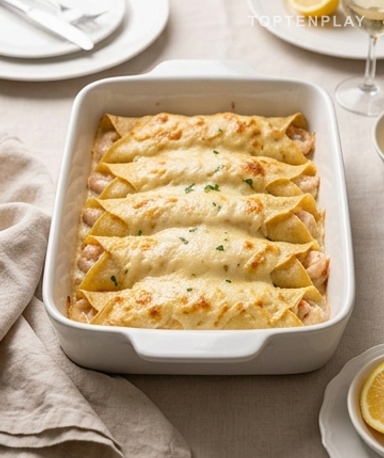
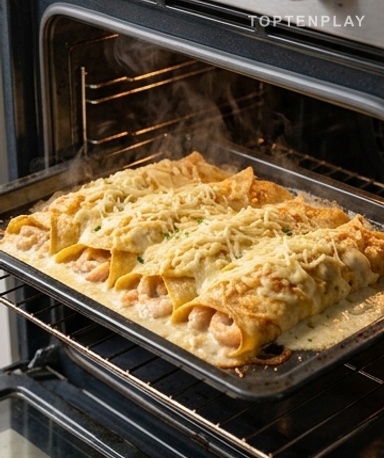
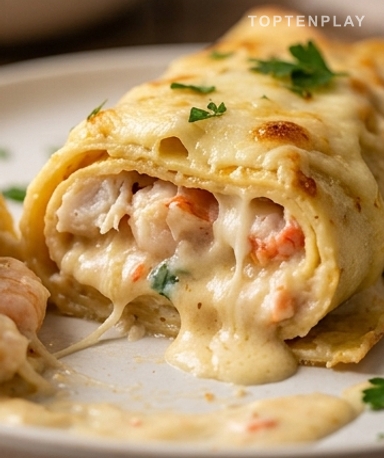
As the dish comes out of the oven, the crêpes are slightly puffed under a blanket of cheese golden like light caramel, with a few edges that have crisped up in the dry heat of the oven. Underneath, the creamy filling holds well—dense and fragrant. You can smell the shallot and garlic that have infused into the cream, with that sweet marine note from the crab. It’s still steaming slightly when you set the dish on the table.
Why you’ll love this recipe
Ingredient Notes
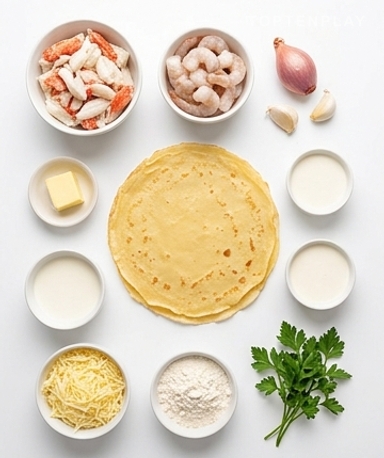
All ingredients together: crab meat, shrimp, crème fraîche, and cheese for a velvety filling.
- Crab meat : Canned crab does the job perfectly here—fresh crab is nice, but no need to complicate your life for this recipe. Important: drain it properly before using. Too much water and your sauce will become thin and characterless.
- Peeled shrimp : Frozen or fresh, both work. If using frozen, thaw them in a clean towel and dry them thoroughly before hitting the pan. A wet shrimp boils instead of searing—you lose that little pink crust that changes everything.
- Crème fraîche épaisse : Thick, not liquid—it’s what provides that velvety consistency that holds up during cooking. Liquid cream will yield a sauce too thin that you’ll spend ten minutes trying to fix. Full-fat preferred, we’re not here to be light.
- Shallot : One is enough, but very finely chopped. It brings the aromatic base without overpowering the seafood. Yellow onion can replace it in a pinch, but the taste will be much stronger and less delicate.
- Grated cheese : Emmental or mozzarella, both melt well. Emmental will gratinate more sharply and bring a slight nutty note. Mozzarella stays milder and stretches more. Want both effects? Mix them in equal parts.
The filling first
Start with the shallot in melted butter over medium heat. It should become translucent and very lightly colored—it takes three minutes, no more. The garlic follows right behind for thirty seconds, just long enough for the kitchen to smell amazing. Then the shrimp. Watch them: they turn from a dull pinkish-grey to bright pink in less than four minutes, curling slightly under the heat. That’s the signal. Stir in the crab, mixing gently—it’s already cooked, you just want it to soak up the aromas, not break into crumbs.
The sauce, no-fuss
Sprinkle the flour directly onto the hot seafood and stir for a minute—this step prevents lumps better than any other trick. Gradually pour in the milk while whisking, then the crème fraîche. At first, the sauce is still liquid. Let it thicken over low heat, uncovered, stirring occasionally. It’s ready when it coats the back of a spoon without running off instantly. Salt, pepper, and a few drops of lemon if you have it on hand—it wakes everything up and cuts through the richness of the cream.
Assembly takes ten minutes
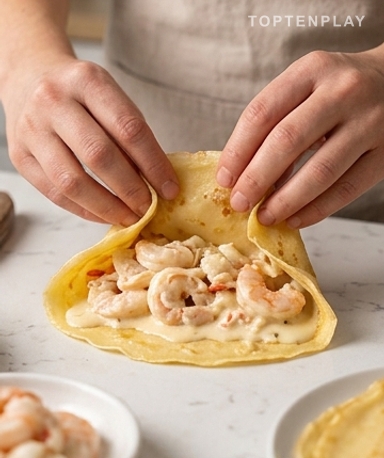
Preheat the oven to 180°C. Lay a crêpe flat and place a generous spoonful of filling on the bottom of the disc, not too close to the edges. Roll it into a cigar or fold it like a wallet—both work, it’s a matter of plate aesthetics. Don’t overstuff: an overfilled crêpe tears during folding, and you end up with filling everywhere except where it should be. Place each crêpe in a buttered dish, snug but not crowded. Pour the remaining sauce over the top, then cover generously with grated cheese.
Twenty minutes and it’s on the plate
The oven does the rest. After fifteen to twenty minutes, the cheese takes on a golden hue like light caramel, with a few darker spots that have crisped up slightly on the edges. The sauce starts to bubble gently—you can almost hear it from the hallway. Remove the dish and let it rest for two minutes before serving. If you don’t wait, the filling will run all over the plate. Only two minutes, but they count.
Tips & Tricks
- Dry your seafood well before putting it in the pan—moisture is the enemy of a sauce that holds. A quick pat with a paper towel is enough, but don’t skip this step.
- The filling can be prepared 4 to 5 hours in advance without any problem. In the fridge in a covered bowl, it will even thicken slightly, making it easier to fill the crêpes—less risk of it running everywhere.
- If the cheese browns too quickly before the center of the dish is hot, cover with aluminum foil for the first ten minutes, then remove it to let the gratin finish uncovered.
Can I prepare the stuffed crêpes in advance?
Yes, it’s actually recommended. You can prepare the filling up to 5 hours in advance and stuff the crêpes in the late afternoon. Keep the assembled dish in the refrigerator, covered, and put it in the oven at mealtime, adding 5 minutes to the cooking time if the dish is cold.
Can I use frozen seafood?
Absolutely, it’s the most practical solution. Thaw it the day before in the refrigerator and dry it well with paper towels before putting it in the pan. The drying step is important: wet seafood will release water into the sauce and dilute it.
How do I prevent the sauce from being too thin?
Two key points: dry the seafood well before cooking, and let the sauce thicken over low heat without a lid after adding the cream. It’s ready when it coats the back of a spoon. If it’s still too thin, add half a tablespoon of extra flour diluted in a little cold milk.
What can I substitute for crab if I can’t find any?
Flaked salmon (fresh or canned) is the best substitute—it provides a similar texture and pairs beautifully with the creamy sauce. A frozen seafood mix (calamari, mussels, shrimp) also works very well and is more budget-friendly.
Do stuffed crêpes freeze well?
Yes, for up to a month. Freeze them before adding the cheese, packed tightly in a covered dish. To thaw, leave them overnight in the refrigerator, sprinkle with grated cheese, and bake at 180°C for 25 minutes. The texture of the cream may change slightly after freezing, but the taste remains good.
How do I reheat leftovers without drying out the crêpes?
In the oven at 160°C, covered with aluminum foil for 15 minutes. Remove the foil for the last 5 minutes to restore the gratin. Avoid the microwave, which softens the crêpes and gives the sauce a pasty texture.

Creamy Seafood Stuffed Crêpes
French
Main Course
Soft crêpes filled with shrimp and crab in a creamy sauce, gratinéed in the oven. An elegant dish ready in 45 minutes.
Ingredients
- 6 thin crêpes (homemade or ready-to-use)
- 200g crab meat (well-drained canned or fresh)
- 200g peeled shrimp
- 1 finely chopped shallot
- 1 clove garlic, minced
- 20g butter
- 1 tbsp flour (about 10g)
- 100ml whole milk
- 200ml thick crème fraîche
- 50g grated cheese (emmental or mozzarella)
- 1 tbsp lemon juice (optional)
- A few sprigs fresh parsley (optional)
- To taste salt and pepper
Instructions
- 1In a skillet, melt the butter over medium heat. Sauté the shallot for 3 minutes until translucent, then add the garlic and cook for 30 seconds.
- 2Add the shrimp and cook for 3 to 4 minutes until they are pink and slightly curled. Fold in the crab meat and mix gently.
- 3Sprinkle the flour over the seafood, stir well for 1 minute. Gradually pour in the milk while whisking, then add the crème fraîche.
- 4Let thicken over low heat without a lid, stirring, until the sauce coats the back of a spoon. Season with salt, pepper, and lemon juice.
- 5Preheat the oven to 180°C. Place a spoonful of filling on each crêpe, roll or fold like a wallet, and arrange in a buttered ovenproof dish.
- 6Sprinkle with grated cheese and bake for 15 to 20 minutes, until the cheese is golden and the sauce is bubbling at the edges.
- 7Let rest for 2 minutes before serving. Garnish with fresh parsley if desired.
Notes
• Make-ahead: the filling can be prepared up to 5 hours in advance. Stuff the crêpes in the afternoon, cover the dish and refrigerate until serving. Add 5 minutes of cooking if the dish comes straight from the refrigerator.
• Storage: 2 to 3 days in the refrigerator in a covered dish. Reheat in the oven at 160°C covered with foil for 15 minutes. Freezing possible for up to 1 month, before adding the cheese.
• Variations: replace the crab with flaked salmon or a frozen seafood mix for a more economical version. Add a little cream cheese (like Philadelphia) to the sauce for an even creamier texture.
Nutrition Facts (per serving, estimated)
| 390 kcalCalories | 22gProtein | 22gCarbs | 24gFat |