That sound — the butter sizzling as it hits the hot pan before the garlic joins in — that’s the signal. A Saturday lunch, no rush, vegetables waiting patiently on the counter. Creamy Pasta Primavera is exactly that kind of dish.
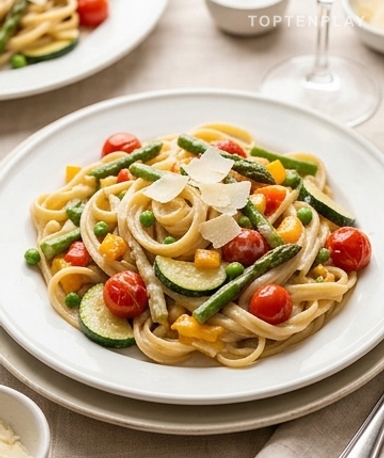
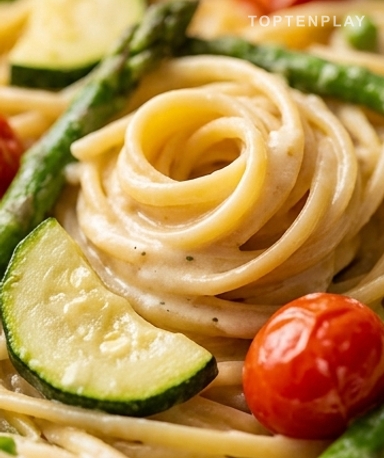
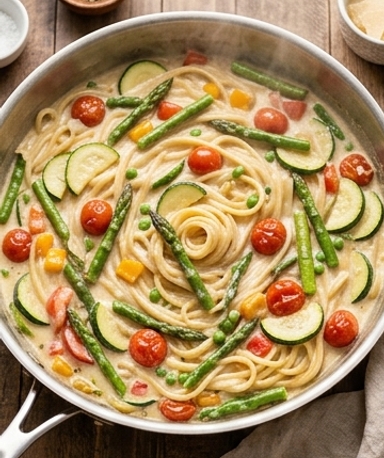
Look at this sauce: a slightly golden off-white that coats every pasta shape without drowning them. The peas are bright green, the cherry tomatoes have just barely released their juice, and the asparagus still has some bite. The parmesan has melted into the cream to form something silky, almost velvety. And that aroma rising when you lift the spoon — butter, just-softened garlic, warm vegetables — it’s exactly what you were hoping for.
Why you’ll love this recipe
Ingredient Notes
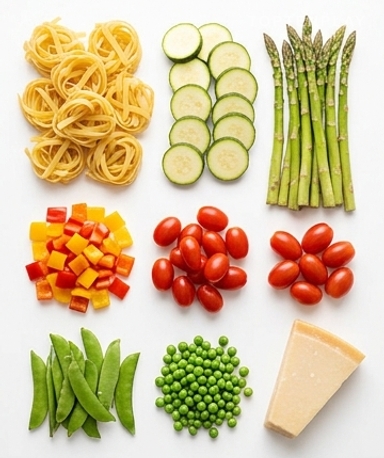
All the spring vegetables brought together: zucchini, asparagus, peppers, peas, and cherry tomatoes.
- The cream : Full-fat cream, 30-35% fat content — known as heavy cream or whipping cream. Light cream results in a thinner sauce that slides off the pasta instead of coating it. There’s no real substitute here if you want that silky texture.
- The parmesan : Grate it yourself, fresh. Pre-shredded bagged parmesan contains anti-caking agents that prevent the sauce from binding — you’ll end up with little white lumps instead of a velvety sauce.
- The asparagus : Choose medium stalks. Too thin, they cook in seconds and disappear into the sauce. Too thick, they stay fibrous. To remove the woody end, snap the stalk by hand — it breaks naturally at exactly the right spot.
- The pasta : A shape with nooks and crannies to catch the sauce: penne, rotini, farfalle. Spaghetti doesn’t work well here — the sauce slides off. Mafalda, with its wavy edges, is perfect if you can find it.
- The cornstarch : This is the thickener. We make a slurry: a tablespoon and a half in a little cold broth, whisk until there are no lumps, then pour into the hot pan. This gives the sauce body without making it heavy.
Pasta first, no arguments
The water must be generously salted. Taste it — it should remind you of light seawater. This is when the pasta gets its base flavor, not later. Cook it al dente, meaning take it out one minute before the package instructions: it will finish cooking in the sauce. If you overcook it now, you’ll get mushy pasta. Drain and set aside. And save a cup of cooking water — you never know.
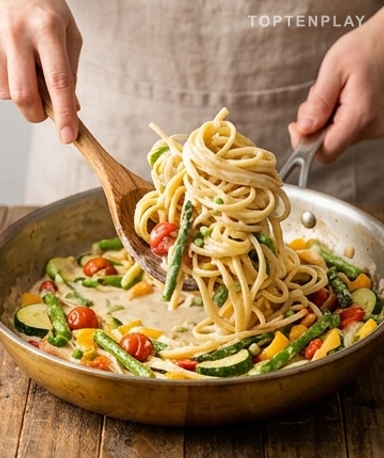
Vegetables deserve better than a rushed boil
Melt butter over medium heat — not high, not low. Garlic goes in first, for just one minute, until the scent changes and becomes sweet and mellow rather than pungent. Add the zucchini, asparagus, and peppers. Sear for one minute, no more — we just want the vegetables to wake up without losing their color. The red pepper should stay bright red, not turn a dull burgundy. Pour in the broth, let it simmer for two or three minutes. The vegetables will finish in there, in that flavorful base.
The sauce, where it all comes together
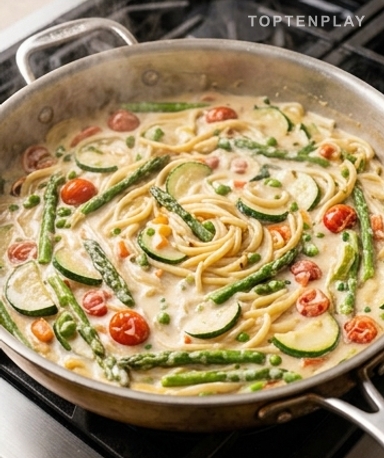
The cream goes into the pan, then the peas and cherry tomatoes. Two or three minutes of gentle simmering — you’ll see the tomatoes starting to wrinkle slightly. Meanwhile, prepare your slurry: cornstarch and a tablespoon of cold broth, whisk until no white lumps remain at the bottom. Pour into the pan while stirring. The sauce thickens in thirty seconds, reaching a consistency that coats the back of a spoon. The parmesan arrives now — but over very low heat, or with the heat off. Otherwise, it turns grainy.
Assembly, quick and easy
The pasta joins the pan. Mix well so every piece is coated. If the sauce is too thick, pour in a little of the reserved cooking water. If it’s too thin, let it simmer for another minute before adding the cheese. Salt and pepper to taste — the parmesan already adds salt, so go gradually. Serve immediately: pasta absorbs the sauce as it waits, and it’s not the same five minutes later.
Tips & Tricks
- Parmesan should always be added off the heat or at very low heat. At high temperatures, the cheese proteins contract and you end up with sticky bits instead of a smooth sauce — there is no fixing that.
- Keep your pasta cooking water in a cup before draining. It’s your best tool for adjusting the sauce texture at the last minute, much better than tap water — it’s loaded with starch and binds without diluting the flavor.
- A bit of grated lemon zest just before serving completely changes the dish. It cuts through the richness of the cream and gives a sense of lightness without changing the recipe.
How to store and reheat pasta primavera?
It keeps for up to 3 days in the refrigerator in an airtight container. To reheat, place it over low heat in a pan with a splash of milk or broth while stirring — this restores flexibility to the sauce without breaking it.
Can I replace heavy cream with something lighter?
Yes, but the sauce will be thinner. Half-and-half or whole milk works, provided you adjust the cornstarch (an extra half-teaspoon). Avoid plant-based alternatives like oat milk — they tend to split when heated.
Can I vary the vegetables by season?
Absolutely. Outside of spring: broccoli, fine green beans, sliced mushrooms, or spinach added at the very end. The basic rule remains the same — quick-cooking vegetables go in last, firmer ones at the start.
Why is my parmesan clumping in the sauce?
The temperature is too high when you add it. Cheese proteins contract above roughly 85°C. Turn off the heat or lower it significantly before incorporating the parmesan, and add it in several batches, stirring between each.
Can I add protein to make it a more complete meal?
Yes, and it works very well. Grilled chicken cubes added with the pasta at the end, or shrimp sautéed separately and folded in last. Roasted chickpeas are a great vegetarian option — they also add a bit of crunch.
Can I freeze this dish?
It’s not ideal. The cream tends to separate upon thawing and the vegetables lose their texture. It’s better to prepare only the sauce without the pasta and freeze that — it holds up better, then cook fresh pasta when serving.
Creamy Pasta Primavera
Italian
Main course
Pasta coated in a creamy parmesan sauce with tender-crisp spring vegetables. Everything is made in one pan in 40 minutes.
Ingredients
- 340g pasta (penne, rotini or farfalle)
- 45g butter (3 tbsp)
- 1 tsp minced garlic
- 120g zucchini, sliced
- 60g asparagus, woody ends removed and cut into thirds
- 75g red, orange or yellow bell peppers, diced
- 240ml chicken broth
- 240ml heavy cream (30-35% fat)
- 75g peas (frozen, no need to thaw)
- 75g snow peas, strings removed
- 100g cherry or grape tomatoes
- 1.5 tbsp cornstarch
- 50g freshly grated parmesan
- salt and pepper to taste
Instructions
- 1Cook the pasta al dente in a large pot of well-salted water according to package directions. Drain and set aside, reserving a cup of cooking water.
- 2In a large skillet, melt the butter over medium heat. Add the garlic and sauté for 1 minute until fragrant.
- 3Add the zucchini, asparagus, and bell peppers. Sauté for 1 minute while stirring.
- 4Pour in the broth, bring to a boil, and simmer for 2-3 minutes until the vegetables are tender yet still crisp.
- 5Stir in the heavy cream, peas, and cherry tomatoes. Allow to simmer for 2-3 minutes.
- 6Prepare the slurry: mix the cornstarch with 1 tbsp of cold broth or water. Pour into the skillet while whisking until the sauce coats the spoon.
- 7Lower the heat to minimum. Stir in the parmesan and the pasta, mixing to coat thoroughly. Adjust consistency with cooking water if necessary. Season with salt and pepper and serve immediately.
Notes
• Storage: keeps for 3 days in the refrigerator in an airtight container. Reheat over low heat with a splash of milk or broth while stirring.
• Adding protein: fold in grilled chicken cubes or sautéed shrimp just before the pasta. Roasted chickpeas work great for a vegetarian version.
• Fresh finish: some grated lemon zest at serving time elevates the dish and balances the richness of the cream.
Nutrition Facts (per serving, estimated)
| 695 kcalCalories | 19gProtein | 75gCarbs | 35gFat |