This is the kind of pot I like to prepare when it’s cool, or when you want a slightly special dinner without spending the evening in the kitchen. The Dieppe pot has that very comforting seaside side, but here it is still designed for everyday: short cooking, creamy sauce, and simple ingredients to find.
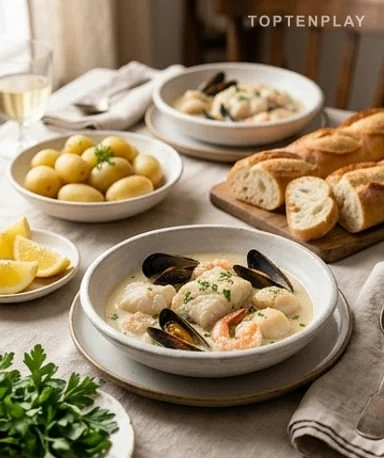
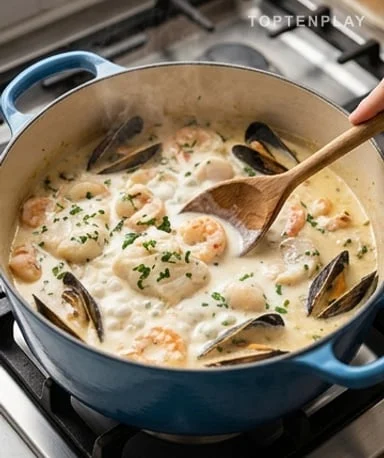
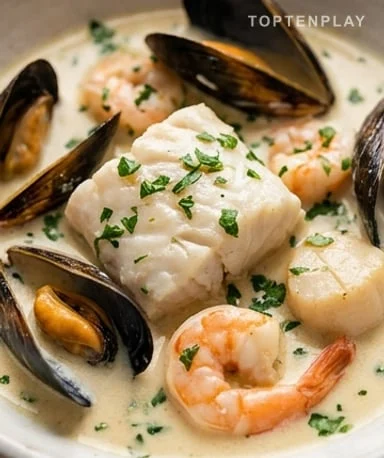
On the plate, the sauce is pale, shiny, almost velvety, with mussels providing texture and shrimp giving a pink touch. The fish should come off in large tender pieces, not end up in crumbs at the bottom of the pot. During cooking, you first smell the shallot melting in butter, then the iodized scent of seafood arrives gently. It’s generous, but not heavy if you keep a light hand on the cream and add a squeeze of lemon at the end.
Why you’ll love this recipe
Ingredient Notes
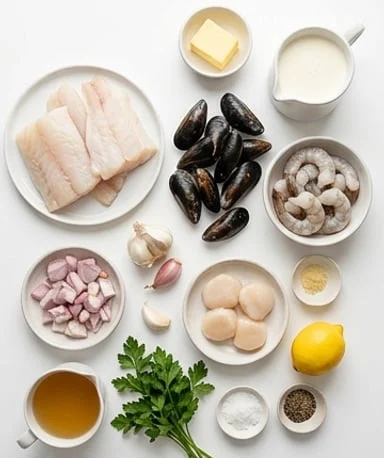
White fish, mussels, shrimp, scallops, cream, and a shallot-garlic base: simple, but you need good products.
- White fish : It provides tender, mild flesh that absorbs the sauce without dominating the dish. Choose cod, hake, or pollock in fairly thick fillets, as thin pieces break too easily during cooking.
- Mussels : They give the most pronounced sea flavor, especially thanks to their filtered juice. Take well-closed mussels and discard those that remain open before cooking or closed after cooking.
- Shrimp : They add firm texture and a slightly sweet note. Peeled shrimp save time, but avoid cooking them too long or they become dry.
- Scallops : They bring the melting and delicate side of the pot. If they are expensive or hard to find, replace them with more white fish or bay scallops.
- Crème fraîche : It transforms the cooking juices into a smooth and coating sauce. Full-fat cream holds better to heat, while light cream requires lower heat to avoid separating.
- Fish stock : It replaces white wine very well and adds depth without weighing down. Use a lightly salted stock if possible, because the mussels already provide real saltiness.
The right start is the mussel juice
Start by rinsing the mussels in cold water, removing the beards and damaged shells. Open them for a few minutes in a saucepan with a little water or fish stock, just enough time to hear the shells pop and see the flesh detach. This juice is precious: it smells strongly of the sea, but it may contain sand, so filter it before using. Do not pour it directly into the pot, otherwise a single impurity can ruin the silky texture of the sauce.
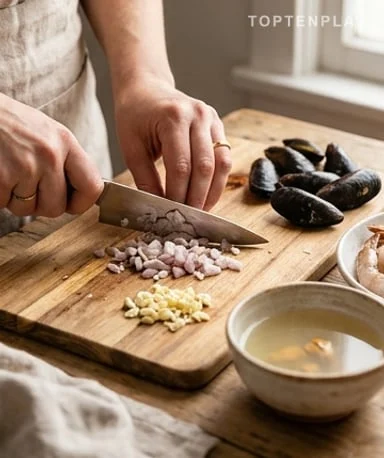
The shallot should melt, not color
In the pot, sauté the finely minced shallot and garlic in butter over low heat. The goal is not to brown them, but to make them translucent, almost confit, with a sweet aroma that rises without stinging the nose. If the garlic browns, it becomes bitter and takes up too much space against the fish. Then add the fish stock and a little filtered mussel juice, and let it reduce for a few minutes to concentrate the flavor before adding the delicate pieces.
The fish deserves a calm cooking
Add the white fish cut into large even pieces, then cook gently, without stirring excessively. At this stage, the surface of the fish changes from translucent to pearly white, and that is the best visual cue. A strong boil would break it and cloud the sauce, so keep only a small simmer. If you need to mix, do so with a wide spatula, lifting rather than turning.
The seafood goes in at the end
Shrimp and scallops cook quickly, so they should go into the pot when the fish is almost ready. Shrimp turn pink and firm, scallops become slightly elastic but remain tender in the center. Add the mussels last, as they are already cooked and only need to be reheated. It is this timing management that keeps the dish precise, with distinct pieces instead of an overcooked blend.
The cream should coat without smothering
Pour in the cream while lowering the heat, then stir gently to obtain a clear and creamy sauce. It should coat the spoon, not become thick like a béchamel. Taste before salting, because the mussel juice and stock may already be sufficient. A squeeze of lemon at the end wakes up the sauce: the briny taste is more noticeable, and the cream immediately feels lighter.
Tips & Tricks
- Cut the fish into fairly large pieces, because they handle gentle cooking better and remain visible in the sauce.
- Always filter the mussel juice, as it adds a lot of flavor but can also carry very unpleasant sand.
- Add the cream over low heat, because too high heat can cause it to seize and give a less smooth sauce.
- Serve with rice, steamed potatoes, or tagliatelle, as you need a side that can absorb the sauce without stealing the show from the seafood.
Which fish to use for a Dieppe pot?
A firm white fish works best: cod, hake, coley, or pollock. Avoid very thin fillets, which fall apart quickly in the sauce.
Can you prepare the Dieppe pot in advance?
Yes, but it is best just after cooking. If you prepare it in advance, reheat it gently over low heat so as not to toughen the seafood.
How to replace white wine in this recipe?
Use fish stock or a light broth. It keeps the sea flavor and gives a cleaner sauce, without bitterness.
Why is my sauce too thin?
It probably didn’t reduce enough before adding the cream, or there was too much cooking liquid. Let it simmer for a few minutes over low heat, without boiling hard.
Can I use frozen seafood?
Yes, it’s convenient for an everyday version. Thaw them in the refrigerator and pat them dry to avoid releasing too much water into the sauce.
What to serve with a Dieppe pot?
White rice, steamed potatoes, or fresh tagliatelle are the best choices. They absorb the creamy sauce without masking the fish flavor.
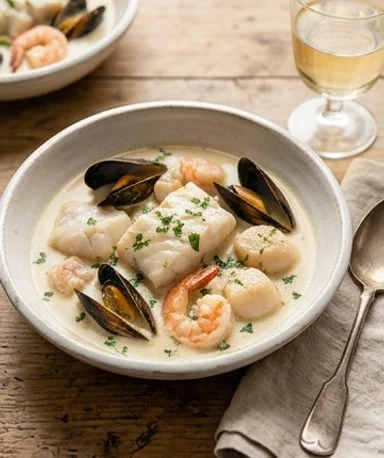
Creamy Dieppe Pot with Fish and Seafood
French
Main dish
A creamy fish and seafood pot, inspired by Norman cuisine, quick to prepare and perfect for a comforting dinner.
Ingredients
- 500g white fish fillets
- 200g cleaned mussels
- 200g peeled shrimp
- 200g scallops
- 1 shallot
- 1 clove of garlic
- 200ml fish stock
- 200ml crème fraîche
- 20g butter
- 1 tbsp lemon juice
- 2 tbsp chopped fresh parsley
- 1 pinch salt
- 1 pinch pepper
Instructions
- 1Rinse the mussels in cold water, remove the beards and discard damaged shells.
- 2Open the mussels in a saucepan with a little water or stock, then strain the cooking liquid and set aside.
- 3Mince the shallot and garlic, then sauté gently in butter until translucent.
- 4Pour in the fish stock and a little filtered mussel juice, then let reduce for 3 to 5 minutes.
- 5Add the white fish cut into large pieces and cook over low heat for 5 to 7 minutes.
- 6Add the shrimp and scallops, then continue cooking for 3 to 5 minutes.
- 7Add the mussels at the end of cooking to warm them without drying out.
- 8Pour in the crème fraîche, stir gently, and let thicken for a few minutes over low heat.
- 9Season with salt, pepper, lemon juice, and fresh parsley before serving hot.
Notes
• Do not boil the sauce vigorously after adding the cream; it should stay smooth.
• Always filter the mussel juice to avoid sand in the pot.
• Frozen seafood can be used if well thawed and patted dry.
• Serve with rice, steamed potatoes, or fresh tagliatelle.
Nutrition Facts (per serving, estimated)
| 400 kcalCalories | 35gProtein | 10gCarbs | 20gFat |