Who doesn’t need a hot, complete meal ready without turning the kitchen into a disaster zone on a weeknight? This creamy chicken and vegetable skillet does exactly the job: fast, generous, and frankly more interesting than a dry chicken breast next to three carrots.
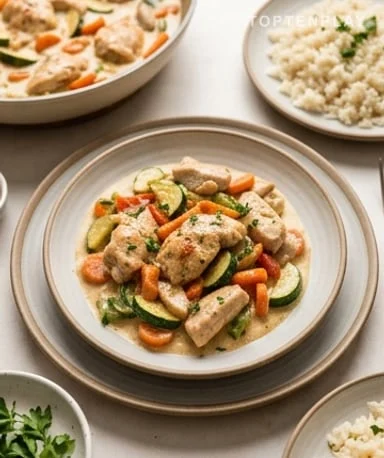
In the pan, the chicken takes on a golden color, the carrots stay slightly firm, and the bell pepper brings that sweet aroma that wakes everything up. The cream clings to the pieces without becoming heavy, with a pale, shiny sauce dotted with paprika. When the garlic heats up with the onion, it immediately smells like a serious homemade meal, not a sad emergency fix.
Why you’ll love this recipe
Ingredient Notes

Chicken, zucchini, carrots, bell pepper, garlic, onion, and cream: nothing complicated, but it works.
- Chicken breasts : They provide the tender and satisfying base of the dish, provided you cut them into even pieces to avoid dry bits. Choose thick, firm breasts, or substitute turkey for a similar texture.
- Zucchini : It brings sweetness and a tender texture, but it releases water quickly if it cooks too long. Pick a firm zucchini and add it after the carrots so it keeps some bite.
- Carrots : They add texture, a slightly sweet note, and a warm color to the skillet. Slice them finely or into small sticks, otherwise they’ll stay hard while the rest is already done.
- Bell pepper : It perfumes the sauce with a near-roasted sweetness as soon as it hits the hot pan. A red bell pepper is sweeter, yellow milder, and green more pungent.
- Heavy cream : It transforms the cooking juices into a coating sauce and gives the dish its comforting side. To lighten, use light cream or unsweetened plant-based cream, but avoid boiling vigorously to keep it smooth.
- Paprika : It adds gentle warmth and a more appetizing color to the sauce. Smoked paprika works very well if you want a deeper flavor without adding complicated ingredients.
Mise en place wins the dinner
Before turning on the heat, chop everything and keep ingredients within reach. It’s less glamorous than tossing things haphazardly into the pan, but it’s what prevents overcooked chicken and mushy vegetables. The chicken pieces should be roughly the same size, with clean edges that will cook evenly. Carrots can be thinner, as they offer more resistance. When the onion is sliced and garlic minced, you already have that pungent, fresh smell that promises a real flavor base.

Browning the chicken is non-negotiable
The pan must be hot, not scorching, with a thin layer of olive oil that shines slightly. Place the chicken and leave it alone for a few moments: if you stir immediately, it releases juice and turns pale. The good sign is a steady sizzle and a golden surface forming on the pieces. Salt, pepper, and paprika go on when the chicken starts to color, to stick to the juices without burning. Then remove it, because it will finish gently in the cream without becoming fibrous.
Vegetables should keep some bite
In the same pan, the onion picks up the chicken juices and becomes translucent, almost sweet in smell. Garlic goes in later, because it burns quickly and can give an unpleasant bitterness. Carrots go in first, then zucchini and bell pepper, to respect their cooking speed. Stir regularly, but without crushing: you want tender vegetables, not a compote. When colors are still bright and the spatula meets slight resistance, you’re in the right place.
The sauce should coat, not drown
When chicken returns to the pan, mix so it picks up the vegetables’ heat. Add cream over low heat, because too rapid a boil can make the sauce heavy and separate. It should become shiny, cling to the pieces, and leave a soft trail when you run the spatula across the bottom. Taste at this point, not before, as the vegetables and chicken have already released their own seasoning. If the sauce seems too thick, a small spoonful of hot water is enough to thin it without dulling the flavor.
Serving hot really makes the dish
Serve as soon as the sauce is ready, when it’s still fluid and aromas rise from the pan. Fresh herbs added at the end give a green, almost lemony note that prevents the dish from feeling too rich. With rice, the sauce seeps between the grains and makes everything more generous. With couscous, it’s faster and very effective for a busy evening. The dish reheats well, but it’s best right away, when the vegetables still have a little bite.

Tips & Tricks
- Do not overcrowd the pan, as the chicken needs to brown and not boil in its juice.
- Add vegetables according to their firmness, as a carrot doesn’t need the same time as a zucchini.
- Keep the cream over low heat, as too high a heat can break the texture and make the sauce less silky.
- Taste before serving, as the paprika, cream, and chicken juices modify the salt balance at the end of cooking.

How to prevent the chicken from becoming dry?
Cut the chicken into even pieces and only brown it at the beginning. It will finish cooking gently in the sauce, which keeps the texture tender.
Can this skillet be prepared in advance?
Yes, it keeps well for 2 days in the refrigerator in an airtight container. Reheat over low heat with a small spoonful of water or cream to loosen the sauce.
What vegetables can be used instead?
Mushrooms, broccoli, green beans, or peas work very well. Just keep the idea of adding the firmest vegetables first.
Can the sauce be lighter?
Yes, replace heavy cream with light cream or unsweetened plant-based cream. Just avoid boiling too hard to keep the sauce smooth.
What to serve with this creamy chicken skillet?
Rice, couscous, short pasta, or quinoa absorb the sauce well. For a lighter meal, serve it simply with a crisp green salad.
Creamy Chicken and Vegetable Skillet
Family
Main course
A complete and quick skillet with golden chicken, colorful vegetables, and a creamy paprika sauce. A simple, generous everyday dish ready in under 45 minutes.
Ingredients
- 600g chicken breasts
- 1 medium zucchini
- 2 carrots
- 1 red or yellow bell pepper
- 1 onion
- 2 garlic cloves
- 20cl heavy cream
- 1 tablespoon olive oil
- 1 teaspoon sweet paprika
- 1/2 teaspoon salt
- 1/4 teaspoon black pepper
- 2 tablespoons chopped parsley or chives
Instructions
- 1Cut the chicken breasts into even pieces.
- 2Wash the zucchini and bell pepper, then cut into medium-sized pieces.
- 3Peel the carrots and cut into thin rounds or small sticks.
- 4Slice the onion and finely chop the garlic.
- 5Heat the olive oil in a large skillet over medium heat.
- 6Add the chicken and brown for 5-6 minutes without stirring too much at the start.
- 7Season with salt, pepper, and paprika, then remove the chicken from the skillet.
- 8In the same skillet, sauté the onion for 2 minutes, then add the garlic.
- 9Add the carrots and cook for 5 minutes, stirring regularly.
- 10Add the zucchini and bell pepper, then continue cooking for 6-8 minutes.
- 11Return the chicken to the skillet and mix with the vegetables.
- 12Pour in the heavy cream, reduce the heat, and let simmer for 5 minutes until the sauce coats.
- 13Adjust seasoning, add fresh herbs, and serve hot.
Notes
• For a lighter sauce, use light cream or unsweetened plant-based cream.
• Do not boil the cream over high heat, or the sauce may become less smooth.
• Add the firmest vegetables first to maintain good texture.
• Serve with rice, couscous, short pasta, or quinoa.
Nutrition Facts (per serving, estimated)
| 390 kcalCalories | 39gProtein | 13gCarbs | 21gFat |