There are quick recipes that deliver and quick recipes that disappoint — creamy chicken and Boursin pasta clearly belongs to the first category. In less than thirty minutes, with no special technique, you get a sauce that has the richness of a slow-cooked dish. It’s the kind of recipe you make on repeat without even looking up the card.
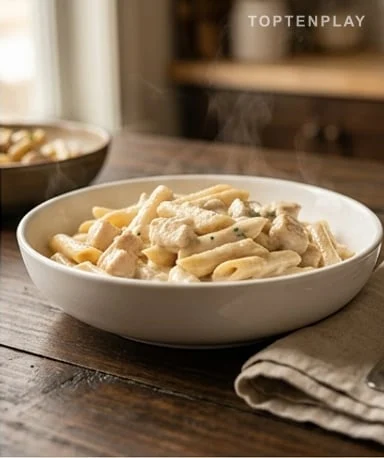
On the plate, the sauce takes on a golden ivory hue, generously coating each pasta strand with a shiny, creamy veil. The smell that rises from the pan as the Boursin starts to melt — garlic, fine herbs, warm cream — fills the kitchen convincingly. The chicken, golden on the surface but still tender inside, flakes easily with a fork. It’s the kind of dish that warms as much as it satisfies.
Why you’ll love this recipe
Ingredient Notes

Few ingredients, lots of flavor: the power of Boursin is that it does the work for you.
- Pasta (250 g) : Penne or fusilli are ideal because their shape captures the sauce in their grooves and ridges. Tagliatelle also works, but requires quicker plating to prevent sticking. Avoid very thin pasta like spaghetti — they tend to slip under the sauce rather than holding it.
- Chicken breasts (2) : The breast stays tender even with quick pan cooking, as long as you don’t overcook it. Cut into uniform pieces — about 3 cm — so heat penetrates evenly. If you only have boneless thighs, they will add even more moisture and flavor to the sauce.
- Boursin garlic and fine herbs (150 g) : This is what makes the dish. It melts into the cream, instantly providing a complete aromatic base — garlic, parsley, chives — without having to add them separately. Take it to room temperature if possible: it will melt faster and more evenly, without creating lumps.
- Heavy cream (10-15 cl) : Cream with at least 30% fat is essential for a stable sauce that won’t separate when heated. Light cream may curdle and become grainy at the first simmer. If you want to lighten the dish, reduce the amount of cream and compensate with a bit more pasta cooking water — this is more effective than switching creams.
- Shallot (1) : The shallot provides a milder, slightly sweeter aromatic base than regular onion, which is better for a delicate creamy sauce. If you don’t have one, half a yellow onion works, but mince it very finely so it cooks through without remaining crunchy.
- Olive oil (1 tbsp) : For searing the chicken over high heat without burning. It withstands intense heat better than butter alone, which would burn before the chicken is properly browned. You can add a small knob of butter at the end of searing for a subtle nutty note on the chicken crust.
The pasta, but not just that
Start by bringing a large pot of salted water to a boil — well salted water, that tastes slightly of the sea. Cook your pasta according to the package directions for al dente, meaning it still has slight resistance when bitten. Just before draining, reserve a large cup of pasta water. This step is often overlooked but is crucial: this starchy liquid is what allows the sauce to cling to the pasta instead of pooling at the bottom of the plate. Once drained, set the pasta aside — it will wait without issue for the two to three minutes needed for the final assembly.

Brown the chicken without drying it out
Heat the oil in a large skillet over medium-high heat. When it’s hot — you’ll hear the chicken sizzle immediately upon contact — add the pieces in a single layer without crowding. Crowding is the classic mistake: the pieces steam instead of searing, and you lose that caramelized crust that adds flavor to the entire sauce. Cook without moving for two to three minutes, then flip. The chicken is ready when firm to the touch and lightly amber on the surface. Season with salt and pepper at this stage, not before — salting too early draws out moisture and hinders browning.
The shallot that picks up everything
Once the chicken is browned, reduce the heat slightly and add the finely minced shallot directly to the pan, without cleaning it. It will pick up all the chicken cooking juices — those browned bits stuck to the bottom — and incorporate them into the sauce. Cook for two to three minutes, stirring regularly: it should become translucent and soft, with a sweet, mild aroma that replaces the raw pungency. If it sticks a bit, a tiny amount of water is enough to deglaze the pan without disrupting the process.
The sauce in two ingredients
Reduce the heat to low, really low — a creamy sauce that boils too vigorously will separate and become greasy on the surface. Add the Boursin by breaking it into several pieces, then pour in the cream. Stir gently with a spatula or small whisk: the cheese melts gradually, releasing its garlic and herb aromas into the warm cream. After just two minutes, you get a smooth, pearly, shiny, and already very fragrant sauce. If it seems too thick, add two or three tablespoons of pasta cooking water, stir — the sauce instantly regains the perfect coating consistency.
The assembly that changes everything
Pour the pasta directly into the pan with the sauce — not the other way around. Mix over low heat for one to two minutes: the pasta absorbs the sauce, the starch it releases slightly thickens everything, and everything becomes perfectly bound. If you have fresh parsley, add it now — off the heat, to preserve its bright color and slight bitterness that balances the richness of the sauce. Taste, adjust salt, and serve immediately: like all creamy pastas, they are best in the first few minutes.

Tips & Tricks
- Always reserve some pasta cooking water before draining, even if you think you won’t need it. It’s the best texture adjuster — without it, if the sauce thickens too much, you might be tempted to add more cream, which unnecessarily weighs down the dish.
- Never cook the sauce over high heat: the fat separates from the protein if the temperature rises too quickly, and the sauce becomes grainy and oily. Low heat, two minutes of patience — that’s all it takes.
- Brown the chicken well before adding the shallot — the caramelized juices left in the pan are a major source of flavor for the final sauce. A pale chicken cooked in its own moisture contributes nothing to the sauce.
- If you prepare this dish in advance, keep the pasta and sauce separate until serving. Reheat the sauce alone with a little water, then incorporate the pasta at the last minute: the creamy texture will be preserved, whereas pasta reheated directly with the sauce tends to absorb everything and become dry.

Can this dish be made ahead?
Yes, but keep the pasta and sauce separate until serving. Reheat the sauce over low heat with a little water or milk to loosen it, then stir in the pasta at the last minute. Pasta reheated directly in the sauce absorbs all the liquid and becomes dry.
Which pasta works best with a creamy sauce?
Penne and fusilli are ideal because their ridged surface and crevices hold the sauce in every bite. Tagliatelle also works well due to its large surface area for clinging. Avoid very thin pasta like spaghetti or vermicelli — the sauce slides off rather than coating them.
Can Boursin be replaced with another cheese?
Boursin is hard to replace in terms of exact aromatic identity, but seasoned cream cheese with a grated garlic clove, parsley, and chives comes close. Fresh goat cheese will bring more acidity and character — it won’t be the same sauce, but it will still be very good.
How to prevent the sauce from separating?
The critical point is heat: never let the sauce boil after adding the cheese and cream, or the fat will separate and the sauce will become grainy. Low heat, gentle stirring, and if it seems too thick, a little pasta cooking water is enough to smooth it without upsetting the balance.
How to tell if the chicken is cooked without drying it out?
Press lightly on a piece with the back of a fork: it should feel firm without being hard or rubbery. When cut, the meat should be white all the way through, with no pink visible, but still slightly moist. Overcooked chicken in a creamy sauce becomes stringy — better to stop a minute too early.
Can this dish be lightened without sacrificing creaminess?
Reducing the amount of cream is the best approach: compensate with more pasta cooking water, which binds the sauce thanks to its starch without adding fat. Replacing heavy cream with light cream doesn’t work as well — it tends to curdle when heated.
Creamy Chicken and Boursin Pasta
French
Main dishes
An ivory, fragrant sauce, golden chicken, and pasta that absorbs every nuance of flavor — this dish is ready in thirty minutes and tastes like it has been simmering much longer.
Ingredients
- 250 g pasta (penne, fusilli or tagliatelle)
- 2 chicken breasts (about 300 g total)
- 1 shallot, finely minced
- 150 g Boursin garlic and fine herbs, at room temperature
- 15 cl heavy cream (30% fat min.)
- 1 tbsp olive oil
- salt and freshly ground black pepper
- a few sprigs fresh parsley (optional, for serving)
Instructions
- 1Bring a large pot of generously salted water to a boil. Cook the pasta according to package directions for al dente. Before draining, reserve a large cup of pasta water and set aside.
- 2Meanwhile, cut the chicken breasts into pieces of about 3 cm, ensuring uniform size for even cooking.
- 3Heat the olive oil in a large skillet over medium-high heat. Add the chicken pieces in a single layer without crowding. Let brown for 2 to 3 minutes without moving, flip, then continue until golden. Season with salt and pepper.
- 4Reduce the heat slightly. Add the minced shallot to the pan without cleaning it. Sauté for 2 to 3 minutes, stirring, until soft and translucent.
- 5Reduce the heat to low. Add the Boursin by breaking it into pieces, then pour in the heavy cream. Stir gently until smooth and homogeneous, about 2 minutes. Adjust consistency with a bit of pasta water if the sauce seems too thick.
- 6Pour the drained pasta directly into the pan. Toss over low heat for 1 to 2 minutes until well coated. Adjust seasoning, sprinkle with fresh parsley if desired, and serve immediately.
Notes
• Never throw away the pasta cooking water without reserving at least one cup: it’s the best tool to adjust the sauce texture without weighing it down.
• Boursin melts better if taken out of the refrigerator 15 to 20 minutes before starting — it will give a smoother sauce without lumps.
• For extra flavor, add a small knob of butter at the end of searing the chicken: it enriches the cooking juices that will flavor the entire sauce.
• Mushroom variation: sauté 150 g of sliced button mushrooms with the chicken to add an earthy note to the sauce.
Nutrition Facts (per serving, estimated)
| 680 kcalCalories | 38 gProtein | 61 gCarbs | 29 gFat |