Have you ever watched a pan smoking on high heat on a Saturday night, telling yourself it’ll only take twenty minutes — and that it would be exactly what you need? Cowboy butter steak bites are precisely that kind of recipe. No complex technique, no special equipment: just well-seared beef, a compound butter that smells of herbs and garlic, and that characteristic sound of meat sizzling in the pan.
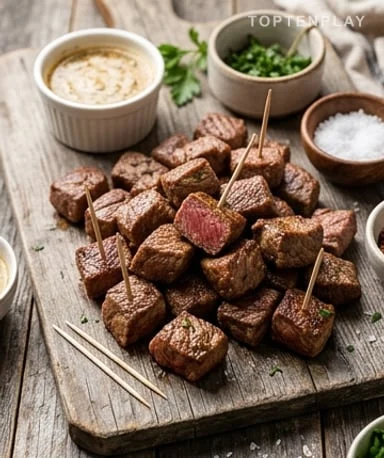
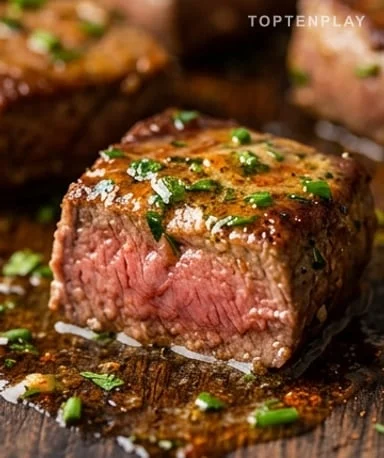
What strikes first is the crust. Golden, slightly caramelized on the edges, with those little bits of melted butter shining between green herbs. The smell of smoked paprika rising from the hot pan, mingled with garlic browned in butter, is the kind of thing that brings people from the next room. Inside, the meat remains pink — tender, juicy, with that slight resistance under the tooth that distinguishes a good piece from an overcooked steak. The cowboy butter isn’t just a drizzle: it settles into every crevice, picks up the pan juices, and turns a simple dish into something truly memorable.
Why you’ll love this recipe
Ingredient Notes
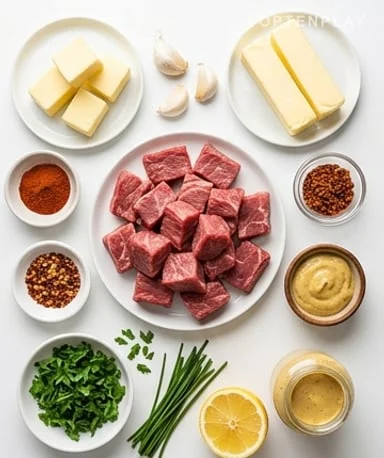
Sirloin, butter, garlic, fresh herbs and spices: everything you need for a compound butter that delivers on its promises.
- Sirloin (or strip steak) : Sirloin offers a good balance of tenderness and flavor — it has enough chew not to fall apart under high heat, yet stays tender if not overcooked. Strip steak is more marbled and flavorful, but a bit pricier. Avoid: eye of round or any braising cut, which requires long cooking to be enjoyable. Ask your butcher for a piece 2 to 3 cm thick so you can cut it into even cubes.
- Unsalted butter : Unsalted butter lets you control the final seasoning — this is important because cowboy butter already contains Worcestershire sauce and mustard, which have their own salt. The butter should be soft, taken out of the fridge 30 minutes before, to blend easily with herbs and spices without clumping. Quality butter (82% minimum fat) melts better and has more flavor.
- Fresh garlic : Two garlic cloves, finely minced — not pressed, not powdered. Pressed garlic releases too much moisture and makes the butter runny. Garlic powder lacks both the bite and the aroma of raw garlic incorporated directly into cold butter. Mince it finely so it distributes evenly in every bite.
- Dijon mustard : It acts as an emulsifier in the compound butter: it helps liquid ingredients (Worcestershire, lemon juice) incorporate into the butter without separating. Its sharpness is subtle once mixed, but essential for depth of flavor. Whole-grain mustard also works — it brings a different texture and a slightly milder taste.
- Smoked paprika : This is the spice that gives cowboy butter its signature — a smoky note reminiscent of embers without having lit a grill. One teaspoon is enough: too much and it overpowers everything else. If you don’t have it, sweet regular paprika adds color but no smoke — not the same, but usable.
- Flat-leaf parsley and fresh chives : Fresh herbs bring freshness and color to a compound butter that would otherwise be a bit heavy. Flat-leaf parsley has more flavor than curly parsley — go with it. Chives add a mild onion note that complements garlic. If you have only one of the two, use parsley; if you have neither, fresh thyme works in a different register but just as interesting.
The meat needs time
Take the steak out of the refrigerator at least 20 to 30 minutes before cooking. This isn’t a vague precaution: cold meat plunged into a hot pan creates a thermal shock that results in uneven cooking — the outside burns while the center stays cold. At room temperature, the heat penetrates evenly and you get that uniform pink inside that everyone seeks. During this rest time, cut the steak into cubes about 3 cm on each side — large enough to have chew, small enough to cook quickly and absorb butter. Season generously with salt and freshly ground black pepper, making sure to cover all sides.
Cowboy butter, now
In a medium bowl, combine the softened butter, minced garlic, Worcestershire sauce, Dijon mustard, parsley, chives, smoked paprika, red pepper flakes, and lemon juice. Mix with a fork — not a mixer, not a blender — until smooth and homogeneous. This cold mixing is important: if the butter is too soft or too warm, the liquid ingredients will separate instead of incorporating. Taste: it should be well-seasoned, slightly spicy, with a smoky dominance and a hint of lemon acidity. You can prepare this butter up to two days in advance and keep it chilled, rolled in plastic wrap into a log — it will be even better once the flavors meld.
The sear that leaves no room for hesitation
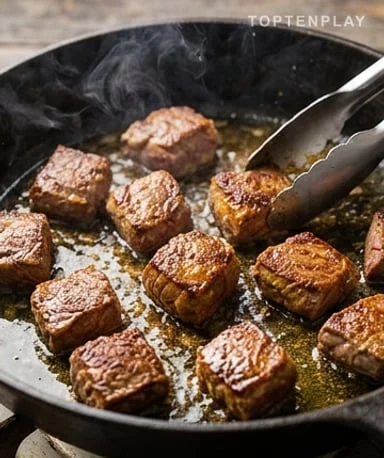
Heat a large pan — ideally stainless steel or cast iron, not nonstick — over high heat with two tablespoons of olive oil. Wait until the oil shimmers and begins to smoke slightly: that’s the sign the pan is hot enough to create a real crust. Place the steak cubes in a single layer without crowding. This is where many go wrong: if the cubes touch, they steam instead of searing, and you get gray, flabby meat instead of golden and crisp. Work in two or three batches if needed. Cook for 3 to 4 minutes without touching — resist the urge to stir — then flip each cube with tongs. You’re aiming for medium-rare to medium (60–65°C internal): the cubes should offer slight resistance when pressed, not collapse. That intense sizzle and smell of meat caramel is the Maillard reaction at work — it builds the flavor.
The final coating, a quick move
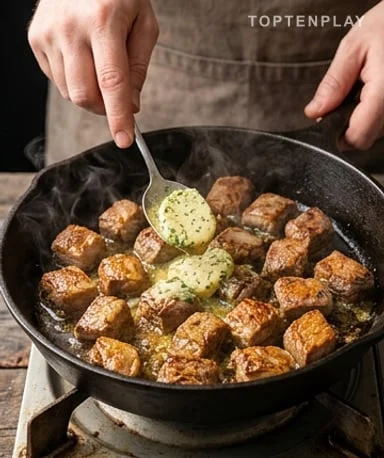
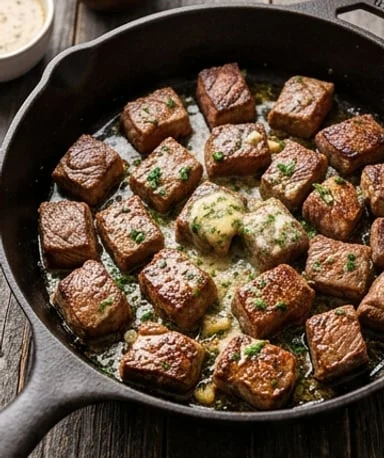
Once all cubes are seared, reduce the heat to medium-low and gather them in the pan. Add a generous spoonful of cowboy butter — about one-third of your preparation — directly into the hot pan. It melts almost instantly, sizzling, mixing with the pan juices stuck to the bottom, and creates a short, shiny sauce in seconds. Stir the cubes to coat them all over, scraping the bottom with a spatula to release the browned bits. Those little golden bits stuck to the pan concentrate much of the flavor: don’t leave them. Take about a minute — no longer, otherwise the butter might burn and lose its aroma. Transfer immediately to a serving dish and pour over any remaining butter from the pan.
What to do with the leftovers
Leftover cowboy butter keeps in the fridge and can be used for other things — on a whole steak, melted over steamed potatoes, or simply spread on a slice of toast. This is not a one-use butter. Steak bites are best served within a minute of leaving the pan, when the crust is still crunchy and the center hot. If you’re making them for an appetizer, wait until the last minute to sear — it’s better to keep people waiting a minute than to serve cold, soft meat.
Tips & Tricks
- Pat the meat dry with paper towels before searing — surface moisture evaporates before the crust forms, lowering the pan temperature and resulting in boiled rather than seared meat. A dry cube in a hot pan gets its crust in under a minute.
- Don’t salt the meat too far in advance — beyond 10 minutes, salt starts to draw out internal moisture via osmosis. Salt just before hitting the pan, or at least 45 minutes beforehand if you want the salt to be reabsorbed deep into the meat.
- Let the cubes rest for 2 to 3 minutes on the plate before serving — even for small pieces, the muscle fibers relax and retain juices better when cut. Cutting too soon means losing half the tenderness.
- Keep batches separate and wipe the pan between them if the fond starts to blacken — dark brown bits enrich the sauce, black bits make it bitter. A quick wipe with paper towel between batches is enough.
What cut of beef to choose for steak bites?
Sirloin (strip steak) is the best compromise: tender enough for quick cooking, flavorful enough not to be lost behind the butter. Strip steak also works, with a bit more marbling and richness. Avoid braising cuts like chuck or shank — they require long cooking and will remain tough over high heat.
Can cowboy butter be made in advance?
Yes, and it’s even recommended. Made the day before and rolled into a log in plastic wrap, the butter rests in the fridge and the flavors meld — garlic, herbs, paprika — much better than if used immediately. It keeps up to 5 days in the refrigerator or 2 months in the freezer.
How to know if the cubes are cooked to the right doneness?
The most reliable method is a probe thermometer: 57°C for rare, 63°C for medium. Without a thermometer, press lightly on a cube with your finger — a slight resistance with a bit of bounce indicates a pink center. If the cube collapses, it’s overcooked.
Can steak bites be reheated the next day?
Technically yes, but it’s not their finest moment: recooking the meat hardens it and loses tenderness. If you must reheat, do it quickly in a hot pan — 30 seconds per side — rather than in the microwave, which steams and makes the crust rubbery.
What to serve with these steak bites?
As an appetizer, toothpicks suffice. As a main, they pair well with roasted baby potatoes, basmati rice, or a crisp green salad that balances the butter’s richness. Grilled country bread to sop up the remaining butter in the pan is a hard-to-refuse option.
Why did my meat release water instead of searing?
Two possible causes: the pan wasn’t hot enough before adding the meat, or the cubes were too crowded. When pieces touch, steam can’t escape and the meat steams rather than caramelizing. Work in two batches if needed, and wait until the oil smokes lightly before adding the meat.
Cowboy Butter Steak Bites
American
Meat
Cubes of sirloin seared over high heat, coated with a compound butter of garlic, fresh herbs, and smoked paprika. Ready in 30 minutes, easily adaptable as an appetizer or main course.
Ingredients
- 450g sirloin (or strip steak), cut into 3 cm cubes
- 2 tbsp olive oil
- salt and freshly ground black pepper
- 115g unsalted butter, softened at room temperature
- 2 garlic cloves, finely minced
- 1 tbsp Worcestershire sauce
- 1 tbsp Dijon mustard
- 1 tbsp fresh flat-leaf parsley, chopped
- 1 tbsp fresh chives, snipped
- 1 tsp smoked paprika
- ½ tsp red pepper flakes
- 1 tsp freshly squeezed lemon juice
Instructions
- 1Take the steak out of the refrigerator 20 to 30 minutes before cooking. Cut it into cubes about 3 cm, pat them dry with paper towels, then season generously with salt and pepper on all sides.
- 2In a bowl, mix with a fork the softened butter, minced garlic, Worcestershire sauce, Dijon mustard, parsley, chives, smoked paprika, red pepper flakes, and lemon juice until smooth and homogeneous. Set aside.
- 3Heat the olive oil in a large pan (stainless steel or cast iron) over high heat until it begins to smoke slightly. Place the steak cubes in a single layer without touching — work in two batches if necessary.
- 4Let sear for 3 to 4 minutes without stirring until a golden crust forms, then flip each cube with tongs. Continue cooking for 2 to 3 minutes depending on desired doneness (57°C for rare, 63°C for medium). Repeat with remaining cubes.
- 5Reduce the heat to medium-low, gather all the cubes in the pan, and add one-third of the cowboy butter. Stir quickly while scraping the bottom to release the pan juices, for about 1 minute, until all cubes are well coated.
- 6Transfer to a serving dish and pour over any remaining melted butter from the pan. Serve immediately.
Notes
• Cowboy butter can be prepared up to 5 days in advance and stored in the refrigerator, wrapped in plastic wrap. It also freezes well for 2 months.
• For a lighter version, replace half the butter with garlic-infused olive oil — the result is less rich but still tasty.
• If adding vegetables (zucchini, diced bell pepper), sauté them in the empty pan after reserving the meat, then combine everything for the butter coating.
• Leftover butter is excellent on steamed potatoes, rice, or a slice of toasted bread.
Nutrition Facts (per serving, estimated)
| 320 kcalCalories | 25gProtein | 1gCarbs | 23gFat |