We often imagine Alfredo sauce as something heavy, finicky, reserved for restaurants or Sunday evenings. In reality, with cottage cheese and a blender, it becomes an everyday sauce, quick, creamy, and frankly easier to handle than a classic cream sauce.
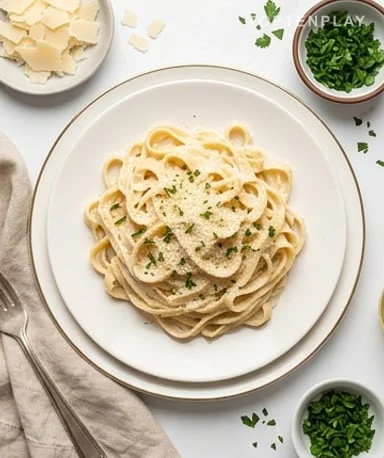
The sauce comes out of the blender pale, smooth, with a mild scent of fresh milk and Parmesan. In the pan, garlic warms in the oil and immediately perfumes the kitchen without overpowering. When the fettuccine join the sauce, they become glossy, supple, almost silky. A bit of pasta water transforms everything into a fluid coating, not a thick clump stuck to the pasta.
Why you’ll love this recipe
Ingredient Notes
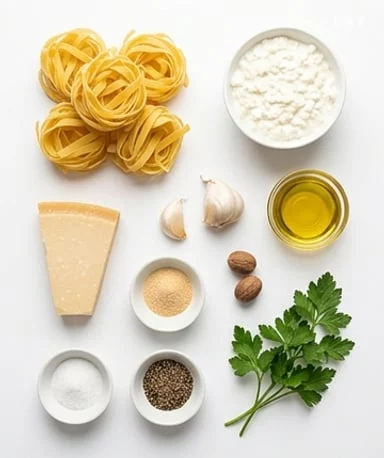
Cottage cheese, Parmesan, garlic, a bit of nutmeg, and long pasta: simple, but good basics are key.
- Fettuccine : Their width catches the sauce well, giving that classic Alfredo feel with nicely coated, shiny ribbons. If you don’t have them, use linguine, spaghetti, or bucatini; just avoid very small pasta, which loses some of the creamy, generous feel.
- Cottage cheese : This provides the creamy base and lightness, as long as you blend it long enough to break the grainy texture. Choose full-fat for a rounder texture; low-fat works but the sauce will be less velvety.
- Parmesan : It gives the salty, nutty, deep flavor that really recalls Alfredo. Use freshly grated if possible: it melts better, gives more flavor, and avoids dry grains from pre-grated packets.
- Garlic : It brings the warm aroma that wakes up the sauce, especially when gently heated in oil. Mince it finely and don’t let it brown: as soon as it smells good and turns slightly golden, it’s done.
- Pasta cooking water : It loosens the sauce while helping it cling to the pasta thanks to its starch. Reserve it before draining, because once it’s gone down the sink, you’d have to improvise with salted hot water, which is less natural.
- Nutmeg : A tiny pinch rounds out the milky taste of cottage cheese and adds a subtle warmth. Don’t overdo it: it should be a hint, not turning the sauce into a winter gratin.
Blend until it becomes a true sauce
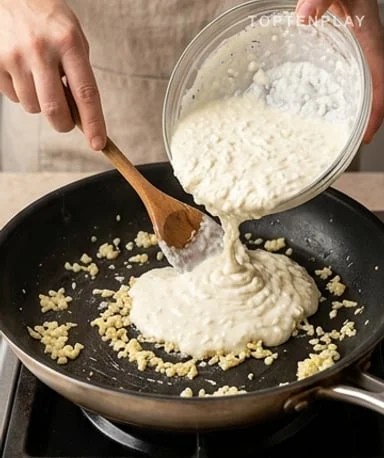
Pour the cottage cheese, Parmesan, onion powder, and nutmeg into a blender or food processor, then blend longer than you instinctively would. Initially, the texture may seem a bit thick and slightly grainy, but it becomes smoother with a few extra seconds. This is important because the sauce won’t cook much afterwards: if it’s not well blended now, it will feel gritty in the mouth. You should get a pale, shiny cream that flows slowly from the spoon.
Save pasta water before draining
The pasta should cook in a large pot of well-salted water until al dente, still a bit firm to the tooth. Before draining, reserve a cup of pasta water: it seems ordinary, but it’s what will give the sauce the right fluidity. Its starch acts as a subtle binder, making the fettuccine supple and coated instead of dry or compact. When you stir the pasta, you should hear a soft, moist sound, not a heavy rubbing of stuck pasta.
Gently reheat to preserve creaminess
Heat the olive oil in a nonstick pan, then add the garlic just long enough to perfume the oil. The smell should become round and appetizing, never sharp or burnt. Then lower the heat before adding the cottage cheese sauce, because too high heat can make it tighten and lose its velvety quality. Stir constantly for two to three minutes: the sauce should only warm up, not boil like a nervous soup.
Loosen the sauce bit by bit
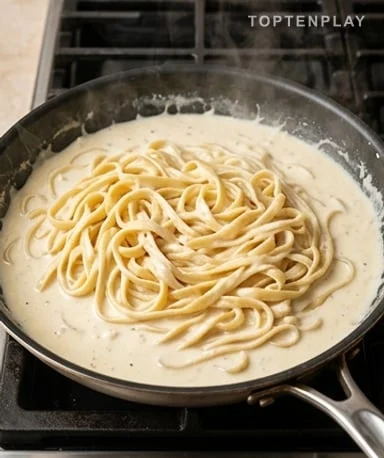
Add the cooked pasta directly to the pan and toss with tongs or two spoons to coat well. Add the pasta water in small amounts, not all at once, because the sauce changes texture quickly. A good Alfredo should glide around the pasta and form a creamy veil, not a watery puddle at the bottom of the plate. Taste at this point: the Parmesan already salts the sauce, so it’s better to adjust salt and pepper at the end.
Serve while the texture is at its best
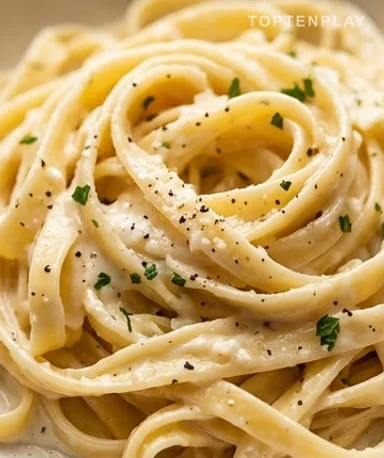
This sauce is truly best right after mixing, when the pasta is hot and the coating remains supple. Add chopped parsley for freshness, a bit more Parmesan if you want a stronger flavor, and a twist of pepper to wake up the milky side. If you add chicken, shrimp, or steamed broccoli, fold them in at the end to avoid unnecessarily thickening the sauce. On the plate, you’re looking for a simple contrast: creamy pasta, fresh herbs, mild garlic aroma, and prominent Parmesan.
Tips & Tricks
- Blend the sauce until perfectly smooth, because poorly blended cottage cheese gives a grainy texture that’s immediately noticeable on the pasta.
- Keep the heat medium-low when reheating the sauce, because too high heat can make it thicken suddenly and lose its silky quality.
- Add the pasta water one small ladle at a time, because the sauce quickly goes from too thick to too thin, and it’s easier to adjust than to fix.
- Reheat leftovers with a little milk or water over low heat, because the pasta absorbs the sauce in the fridge and needs moisture to become creamy again.
Does the cottage cheese Alfredo sauce taste like cottage cheese?
Not really, especially if well blended with Parmesan, garlic, and nutmeg. Cottage cheese mainly provides a creamy texture and a mild milky note without dominating the dish.
How to avoid a grainy sauce?
Blend long enough until perfectly smooth. Also use a creamy cottage cheese and avoid boiling the sauce in the pan, as too high heat can harden the texture.
Can you prepare this sauce in advance?
Yes, you can blend the sauce a few hours ahead and keep it in the fridge. Reheat gently with a little pasta water or milk to restore a supple texture.
What pasta to use with this sauce?
Fettuccine are ideal because they hold the sauce well. Linguine, spaghetti, bucatini, or even short pasta work too, as long as you adjust the sauce with pasta water.
Can you add proteins or vegetables?
Yes, this sauce accepts shredded chicken, shrimp, peas, spinach, or steamed broccoli very well. Add them towards the end to keep the sauce smooth and avoid thickening it too much.
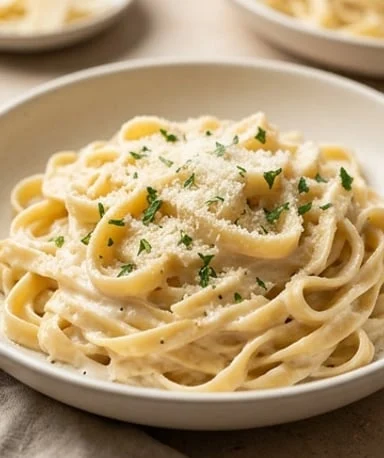
Cottage Cheese Alfredo Sauce
Italian-inspired
Pasta
A quick, creamy, and lighter Alfredo sauce made with blended cottage cheese, Parmesan, and garlic. Perfect with fettuccine for a weekday meal ready in under 20 minutes.
Ingredients
- 225g fettuccine or long pasta
- 340g cottage cheese, preferably full-fat
- 25g freshly grated Parmesan, plus more for serving
- 1/4 teaspoon onion powder
- 1 pinch ground nutmeg
- 1 tablespoon olive oil
- 1 clove garlic, finely minced
- 1/2 teaspoon salt
- 1/4 teaspoon black pepper
- 1 tablespoon fresh parsley, chopped (optional)
- 240ml reserved pasta cooking water, as needed
Instructions
- 1Bring a large pot of salted water to a boil and cook fettuccine until al dente.
- 2Reserve about 240ml of pasta cooking water before draining.
- 3Blend the cottage cheese, Parmesan, onion powder, and nutmeg until very smooth.
- 4Heat olive oil in a nonstick skillet over medium heat, add garlic and cook about 1 minute, until fragrant.
- 5Reduce heat to medium-low, add the cottage cheese sauce and warm for 2-3 minutes, stirring, without boiling.
- 6Season with salt and pepper, then add drained pasta to the skillet.
- 7Toss, adding pasta water little by little until a creamy sauce coats the pasta well.
- 8Serve immediately with fresh parsley and extra Parmesan.
Notes
• Full-fat cottage cheese gives a rounder, silkier sauce than low-fat.
• Do not boil the sauce: gentle heat keeps it creamier.
• Leftovers keep up to 4 days in the fridge in an airtight container.
• To reheat, add a little milk or water and warm gently while stirring.
• Freezing is not ideal, as creamy sauces can become grainy after thawing.
Nutrition Facts (per serving, estimated)
| 355 kcalCalories | 19gProtein | 44gCarbs | 11gFat |