Suivez-nous
1 June 2026

Coconut Milk Shrimp and Vegetable Curry

Prep Time
15 minutes
Cook Time
20 minutes
Total Time
35 minutes
Servings
4 servings

Have you ever smelled fresh ginger hitting a hot pan? This coconut milk shrimp curry is the kind of dish that turns an ordinary Tuesday night into something memorable. Thirty-five minutes, one pan, and a sauce that makes you want to soak up every last drop.
Publicité
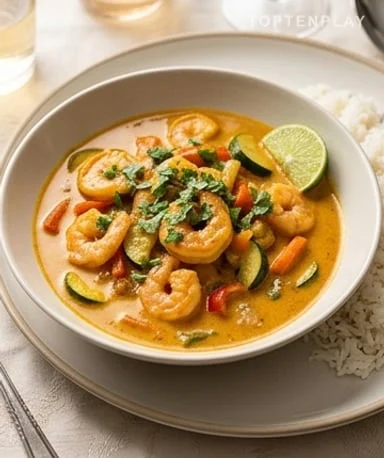
Final result
A fragrant and creamy curry where pink shrimp nestle in a golden coconut milk sauce, surrounded by colorful vegetables.

The sauce, first. Golden, slightly translucent, it coats the vegetables with that consistency only coconut milk can give — not too thick, not too thin, just velvety enough to cling. The pink shrimp stand out against the amber background, tender, still slightly firm to the bite. The aroma blends warm curry, fresh lime, and something softly sweet from the coconut. It’s a dish that smells good before you even touch it.

Why you’ll love this recipe

Ready in 35 minutes with no shortcuts : No prep the night before, no marinating. Everything happens in one go, from the first chop to the steaming bowl on the table.
A sauce that forgives mistakes : Too much curry? The coconut milk mellows it. Vegetables a bit soft? The sauce wraps them up and it works. This dish is structurally hard to mess up.
Shrimp stay tender — on one condition : They go in at the very end and come out as soon as they turn pink. Three minutes, no more. After that, the flesh turns rubbery and there’s no fixing it.
Adaptable to whatever’s in the fridge : No zucchini? Use green beans. No bell pepper? Add spinach off the heat. The recipe’s structure holds no matter the vegetable combination.

Ingredient Notes

Ingredients

Everything you need: raw peeled shrimp, coconut milk, a trio of crunchy vegetables, and a good mild curry paste.

Publicité
  • Raw peeled shrimp : The raw ingredient makes all the difference. Raw shrimp absorb the sauce during cooking and stay tender in the center. Pre-cooked shrimp soften without taking on any flavor — avoid them.
  • Full-fat coconut milk : No light version. The fat in full-fat coconut milk gives the sauce its velvety texture and ability to bind the spices. A light version gives a watery sauce, and it shows immediately.
  • Mild curry paste : More complex than curry powder alone, it already contains lemongrass, galangal, and toasted spices. Two tablespoons are enough to perfume the whole dish without overwhelming the palate.
  • Fresh ginger : Not powdered. Freshly grated ginger brings a slightly spicy freshness that cuts through the sweetness of coconut milk — this contrast makes the sauce interesting rather than just sweet.
  • Lime : Squeezed at the very end, just before serving. The acidity wakes up the whole dish and prevents the sauce from feeling heavy. A detail that really changes the final result.

The aromatic base is where it all builds

Onion, garlic, ginger. It sounds simple, but it’s the foundation of all the dish’s flavor. Start with the onion over medium heat, taking the time for it to become translucent and lightly golden on the edges — four to five minutes, and it’s worth the wait. The smell shifts from pungent to something sweet and caramelized. Garlic and grated ginger go in next. Thirty seconds is enough, just time for the kitchen to smell amazing. Then the curry paste hits the hot oil. It sizzles, releases its aromas in seconds, and at that precise moment, the sauce already has a depth nothing else can give.

The aromatic base is where it all builds
The aromatic base — onion, garlic, ginger — gently cooks in oil before welcoming the spices. This is where all the flavor builds.

Vegetables deserve better than boiling in the sauce

Carrots sliced thin, zucchini and bell pepper cut into even pieces. Add them after the spices and let them sauté for two to three minutes over high heat before pouring in the coconut milk. This step changes everything. The lightly seared vegetables have more structure and flavor than if they had simply simmered in the liquid from the start. The red bell pepper keeps its bright color and slight crunch. The carrots stay firm to the bite. Once the coconut milk is in, lower the heat and let it simmer for ten minutes — not a rolling boil, just a simmer so the sauce thickens without the vegetables falling apart.

Shrimp go in last, and that’s intentional

This is where many people go wrong. They think longer cooking gives more flavor. With shrimp, it’s the opposite. Drop them into the simmering sauce, flip once, and as soon as the flesh turns from gray translucent to opaque pink, turn off the heat. Three minutes, sometimes less depending on their size. They finish cooking in the residual heat of the sauce. The result: supple flesh that yields without resistance, tender all the way through. Squeeze the lime at this point, taste, adjust salt, and serve immediately over steaming basmati rice.

Shrimp go in last, and that's intentional
Vegetables simmer in the creamy coconut milk sauce before adding the shrimp at the very end of cooking.

Tips & Tricks
  • Never cover the pan while the coconut milk is reducing. Steam prevents the sauce from concentrating its flavors and it stays too thin. Leave it uncovered over low heat and let it work.
  • If using frozen shrimp, thaw them completely and pat dry with paper towels before adding. Excess water thins the sauce and unnecessarily lengthens cooking time.
  • Fresh cilantro goes on the bowl at serving, not in the pan. Its herbal aroma evaporates with heat — added raw, it really changes the perception of the dish.
  • For perfect basmati rice: rinse three times, cover with cold water to the depth of one knuckle, bring to a boil, then cover and turn off the heat. Let sit covered for ten minutes without disturbing. Separate grains every time.
Close-up
The sauce coats each shrimp with a velvety, slightly sweet veil — exactly what you want in a good curry.
FAQs

Publicité

Can I use pre-cooked shrimp?

Technically yes, but the result is clearly inferior. Pre-cooked shrimp don’t absorb the sauce and turn rubbery as soon as they heat up. If that’s all you have, add them off the heat, just to warm them for thirty seconds in the hot sauce.

What’s the difference between curry paste and curry powder?

Paste already contains ground fresh aromatics — lemongrass, galangal, chilies — which gives it a complexity that powder alone can’t replicate. Powder is a decent backup: two tablespoons for this recipe, but you’ll need to add a bit more ginger to compensate for the lack of freshness.

Publicité

How to store and reheat leftovers?

Publicité
Publicité
Partager sur Facebook