📌 Coconut milk ramen: how this homemade aromatic paste transforms an express dish into an Asian feast
Posted 9 March 2026 by: Admin
Aromatic Paste Preparation: The Essential Base of the Broth
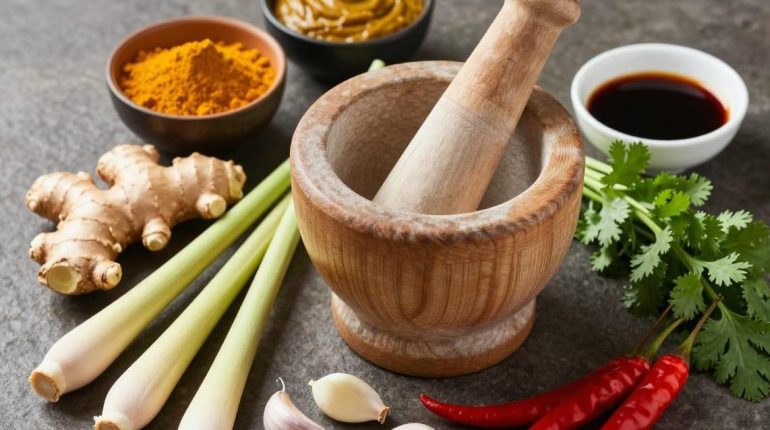
It all begins with an ancestral gesture: pounding. In a mortar, coriander stems, garlic, lemongrass, ginger, and chili are transformed under the repeated pressure of the pestle. This millenary technique is not just a matter of tradition: it breaks the plant fibers to release the essential oils and aromatic compounds trapped within the cells. A blender would chop without extracting, whereas the pestle crushes and presses, revealing a taste intensity impossible to obtain otherwise.
Once the aromatic puree is obtained, the assembly continues in successive layers. Tomato paste brings umami, sugar balances the acidity, turmeric adds color and softens, and nuoc mam sauce injects that typically Vietnamese fermented salinity. The curry arrives last, coating the whole with its warm and complex notes.
This spicy paste constitutes the aromatic heart of the broth. Each ingredient has been integrated in a precise order to build a flavor architecture: the fresh pounded aromatics form the foundation, the condiments provide structure, and the curry crowns it. Five minutes of sautéing over moderate heat in hot oil will activate these compounds, creating Maillard reactions that will multiply the depth of flavor. It is this initial alchemy that will determine the final success of the dish.
Building the Broth: The Balance Between Spices and Creaminess
This aromatic paste now demands to be revealed by heat. In a large saucepan, a drizzle of oil heats over moderate heat before welcoming the prepared curry. For exactly five minutes, the fat amplifies every spicy note: the aromatic molecules become fat-soluble, disperse uniformly, and create new flavor combinations through light caramelization. The fragrance that fills the kitchen signals this essential chemical transformation.
The vegetable broth then enters the scene, brought to a boil to dilute and diffuse the spices into the liquid. The high temperature extracts the last soluble compounds from the sautéed curry. Then comes the crucial moment: the addition of coconut milk, which radically transforms the texture and flavor profile. Its vegetable fats coat the palate, soften the heat, and bring that characteristic roundness of Thai and Vietnamese cuisines.
The final seasoning reveals a professional tip: if the broth lacks depth, nuoc mam sauce advantageously replaces classic salt. This fermented anchovy-based sauce injects a complex salinity, enriched with umami and slightly sweet notes. A spoonful is often enough to balance the whole, revealing the dish’s Asian authenticity. The broth is ready: creamy, fragrant, balanced between spicy heat and milky sweetness.
Separate Cooking of Components: The Key to Perfect Texture
While the broth infuses its aromas, the other elements require simultaneous but distinct attention. Two pots of boiling salted water separately welcome noodles and vegetables, according to a precise timing that preserves the integrity of each ingredient.
The ramen noodles dive for exactly five minutes into the first pot. This precise duration guarantees a supple but resistant texture, avoiding excessive softening that would ruin the dish. Once drained, they are arranged in a nest at the bottom of two large bowls, forming the structural base that will receive the creamy broth.
In the second pot, the pak choi undergoes a two-minute flash blanching. This ultra-fast cooking preserves their characteristic crunch and bright green color, while neutralizing residual bitterness. Drained immediately, they are cut lengthwise or into pieces depending on their size, then distributed harmoniously with the noodles.
This separation of cooking processes is the difference between amateur and professional ramen. Each component reaches its optimal point individually: tender but firm noodles, crunchy but accessible vegetables. Combined in the bowl, they retain their distinct textural properties rather than merging into a uniform softened mass. The broth can now join this perfectly prepared base.
Final Assembly and Garnishes: The Visual and Gustatory Signature
The steaming broth now flows over the plated noodles, instantly enveloping each component in a golden and fragrant coat. This liquid fusion awakens the aromas trapped in the ramen nests and pak choi pieces, creating a first olfactory wave characteristic of Southeast Asian cuisines.
The garnish then transforms this substantial dish into a layered sensory experience. Sliced scallions bring immediate alliacious freshness, while coriander disperses its lemony herbal notes on the surface. These fresh herbs contrast radically with the creamy richness of the coconut milk broth, balancing the whole with their vivid plant tones.
The lime wedge, squeezed at the last moment, introduces the indispensable acidity that awakens every flavor. A few drops are enough to clear the palate, revealing nuances masked by the creaminess of the coconut milk and the power of the curry. This lemony touch acts as a chemical developer, intensifying the overall taste perception.
Fried onions finally crown the composition, providing the crunch absent in this mostly liquid bowl. Their golden and crumbly texture contrasts with the suppleness of the noodles and the tenderness of the vegetables, creating a play of consistencies that maintains interest in every bite. This final stratification—freshness, acidity, crunch—elevates a simple ramen to the rank of a balanced gastronomic dish.